The widow who stood at a Virginia podium and said what 10 families could not
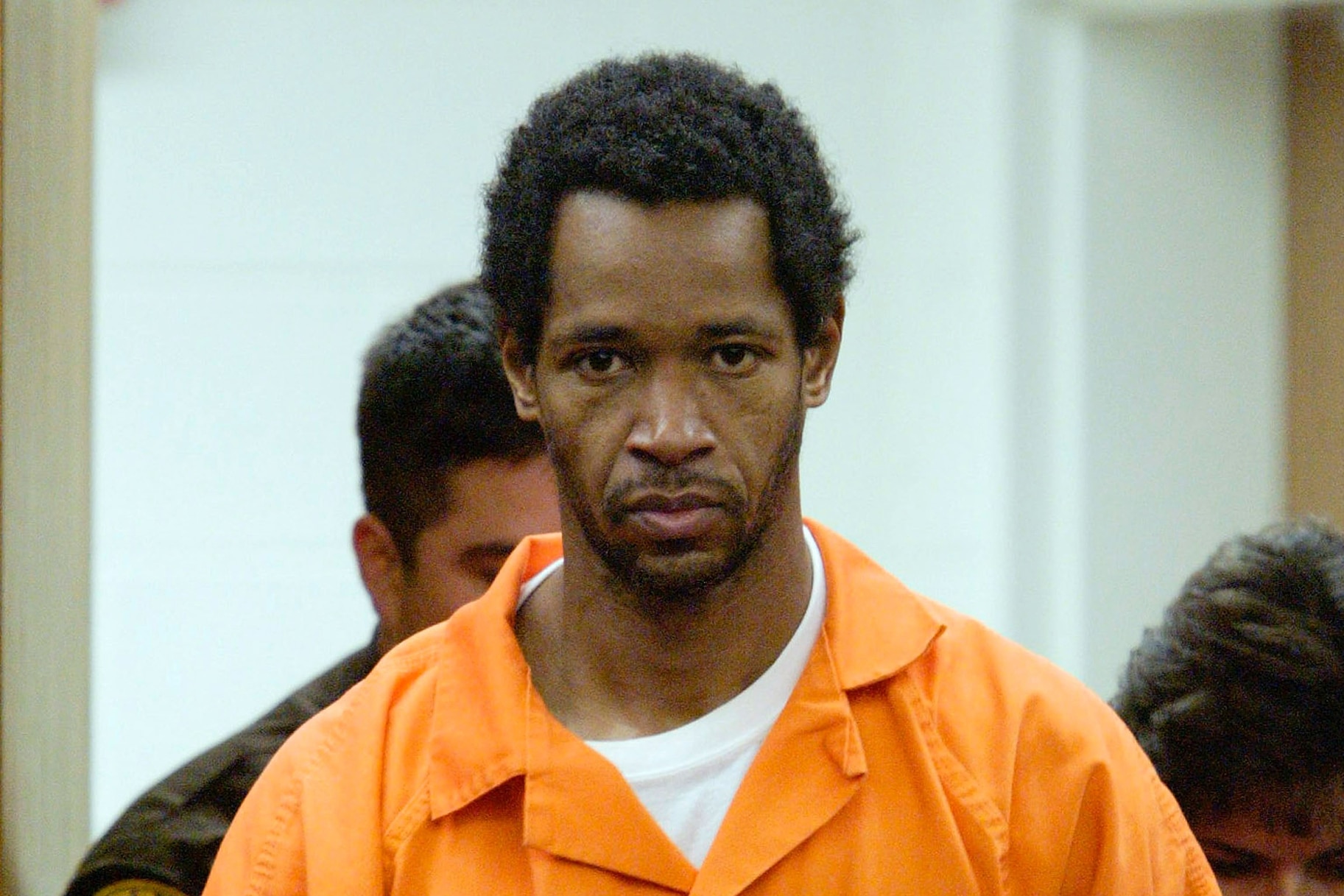
A widow of one of the ten people killed stood at a Virginia podium.
The source records that she spoke publicly. It does not record her name, her exact words, or the precise date and venue of her appearance.
Her husband was Kenneth Bridges, killed in Fredericksburg, Virginia. The source names him as a victim; it does not record any detail about her personal life.
The attacks killed ten people and wounded three others between October 2 and October 24, 2002. The victims were struck across Maryland, Virginia, and the District of Columbia.
She was not alone in speaking. The mother of Linda Franklin gave an emotional statement. The son of James Martin also spoke to media.
Her statement came while the case was still unresolved. The perpetrators were not arrested until October 24, 2002, the day the last victim was buried and the day the car was found.
What did she say at that podium?
What did her voice carry for the other nine families who had lost someone?
What did the record keep, and what did it let slip?
That would require evidence. The record holds only that she stood and spoke.
She was one of ten. Her words were part of a pattern of grief made public. The case was still open. The men were not yet caught.
She was on the ground below the podium, a widow among widows, and the source does not say what she said.
THE 23 DAYS
The first fatal shooting occurred on October 2, 2002, outside a grocery store in Wheaton, Maryland.
The victim was a 55-year-old man.
Over the next three weeks, the attacks continued across the Washington, D.C. metro area.
Ten people were killed. Three more were wounded.
A 13-year-old boy was shot outside his middle school in Bowie, Maryland.
Victims were struck while pumping gas.
Walking into stores.
Sitting on benches.
Mowing grass.
The attacks appeared random.
They were not random in the way the public could see — they were random in where they landed.
The final killing came on October 22, when a bus driver was shot in Aspen Hill, Maryland.
Two days later, the men were caught.
That came later.
For those 23 days, there was only the pattern of ordinary life interrupted.
The investigation was led by Montgomery County Police Chief Charles Moose, who became the public face of the manhunt.
Police initially focused on a white van reported at several scenes.
The actual vehicle was a blue Chevrolet Caprice.
That was not known then.
It was known only that a shooter could be anywhere — at a gas pump, a storefront, a bench, a lawn.
The specific movements of the perpetrators during these 23 days are not detailed in the source beyond the shootings themselves.
What is documented is the sequence of the dead.
What remains is the pause between each shot, the days stretching, the families waiting for a name.
The widow stood at the podium later.
But first came the waiting.
THE CAPRICE
A witness at the shooting of Linda Franklin reported seeing a Caprice fleeing the scene.

Not a white van. A blue Chevrolet Caprice.
That witness statement was the key break, according to the record of the investigation.
On October 24, 2002, a motorist alerted police to a car parked at a rest stop near Myersville, Maryland.
Officers found John Allen Muhammad and Lee Boyd Malvo sleeping inside a 1990 Chevrolet Caprice.
The identity of that motorist is not named in the source.
The exact sequence of events at the rest stop is not fully detailed in the record.
A Bushmaster .223-caliber rifle was recovered from the trunk.
A scope was in the trunk with it.
A tripod was in the trunk with it.
Ballistics matched the rifle to bullets from multiple shootings.
The rifle tied the two men to the shots that had paused a region for 23 days.
The record also links them to earlier shootings in Alabama, Louisiana, and Georgia.
That includes a killing at a liquor store in Montgomery, Alabama.
They were asleep when the officers arrived.
The car that had been the subject of a regional manhunt was parked at a rest stop, and the men inside were sleeping.
The rifle was in the trunk.
The scope was in the trunk.
The tripod was in the trunk.
The evidence was there, documented, weighed, and matched.
The relief came later.
The disbelief came later.
The trials came later.
First came the capture.
THE TWO TRIALS
The trials came in two parts, in two Virginia cities, for two killings.
Muhammad was tried first in Virginia Beach for the murder of the man shot at a Manassas gas station, Dean Harold Meyers.
He was convicted of capital murder and sentenced to death.
Malvo was tried separately in Chesapeake for the killing of Linda Franklin, the FBI analyst shot outside a Home Depot.
He was convicted and sentenced to life in prison without parole.
Both trials featured testimony from Malvo, who described the shootings and the pair's travels.
The prosecution argued that Muhammad was the mastermind.
Paul Ebert led the case in Prince William County.
Robert F. Horan Jr. led the case in Fairfax County.
The defense, led by Peter Greenspun for Muhammad and Jonathan Shapiro for Malvo, argued that Malvo was a manipulated teenager.
That is what the defense argued.
The specific arguments they made are not in the record.
The widow of Kenneth Bridges spoke publicly during this period.
The mother of Linda Franklin gave an emotional statement.
The son of James Martin also spoke to media.
They stood where the record keeps them: in public, in grief, in the middle of a prosecution.

Their words were recorded.
Their motives were not.
What they said in court, what they said to reporters, what they whispered to each other — the source does not say.
It says only that they spoke.
It says only that several family members testified during the penalty phases.
The trials ended.
The story did not.
AND THE STORY STILL ISN'T OVER
Muhammad was executed by lethal injection on November 10, 2009, in Virginia.
Malvo remains in prison.
In 2017, the U.S. Supreme Court declined to hear his appeal challenging his life sentence, which was based on a ruling that mandatory life sentences for juveniles were unconstitutional.
His sentence was later reconsidered.
The source does not specify the outcome of that reconsideration.
It says only that his sentence was reconsidered and that he remains incarcerated.
That is what the record establishes.
What did the reconsideration decide?
What term did it set?
What arguments did his lawyers make?
That would require evidence the record does not provide.
The victims' families have continued to speak publicly about their losses.
Several have advocated for victims' rights legislation.
The widow of Kenneth Bridges stood at a Virginia podium.
She said what ten families could not.
The mother of Linda Franklin gave emotional statements.
The son of James Martin spoke to media.
They testified during the penalty phases of the trials.
The trials ended.
The families did not.
The case remains one of the most studied examples of random sniper attacks in American history.
It is studied for the randomness.
It is studied for the fear.
It is studied for what happened after the verdicts.
Muhammad is gone.
Malvo remains.
The families remain.
The record holds what they said, and it holds what they did.
It does not hold every claim made about them online.
It does not hold their motives or their private thoughts.
It holds the podium, the statements, and the testimony.
The story is not over because the families are still speaking.
Advertisement
You may also like
The cellmate confession that cracked the Manson murders
The cellmate was in jail on a charge of her own. Susan Atkins was there too, held on something unrelated to Cielo Drive. The…
The psychologist's mistress who heard a confession and changed a murder case
The tape recorder was running. Erik Menendez was in a therapy session with Dr. Jerome Oziel, his psychologist, when he confessed to the murders…
The cotton gin fan tied to Emmett Till's neck — and the evidence that didn't convict
The Tallahatchie River gave up its weight on August 31, 1955. Emmett Till's body surfaced with a cotton gin fan tied to his neck…
A Splash in the Chattahoochee — the Fiber Evidence That Tied Wayne Williams to Two Murders
The bridge over the Chattahoochee was quiet that night in May 1981. Police had staked it out after a tip, waiting on the dark…
The slumber party interrupted: Polly Klaas's last night before the intruder came
The party was a sleepover. Three girls, twelve years old, in the bedroom of a house in Petaluma, California. It was October 1, 1993.…
The .40-caliber pistol traced to New Jersey that linked Andrew Cunanan to Versace's killing
A .40-caliber pistol ended Gianni Versace’s life on the steps of his Miami Beach mansion. That same pistol had been stolen from a prior…