The 1965 confession that named 13 victims but never faced a courtroom
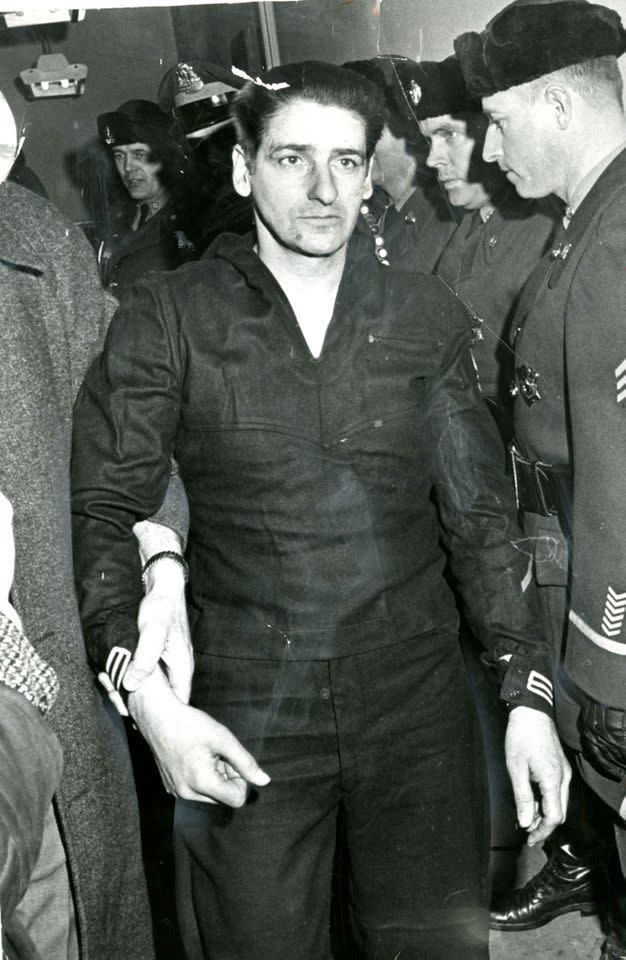
In 1965, Albert DeSalvo was already in custody, held on charges of robbery and sexual assault.
He gave a detailed confession to being the Boston Strangler.
The confession was arranged through his attorney, F. Lee Bailey, and taken by a Massachusetts Attorney General's office prosecutor.
DeSalvo described crime scenes in detail, information that was not public knowledge.
That lent credibility to his words.
No physical evidence ever tied DeSalvo to the murder scenes.
Not a fingerprint.
Not a fiber.
Not a single item placed at any of the thirteen apartments.
So how could a confession so specific never be tested in court?
How could a man describe rooms he had never seen?
How could the record hold his words and nothing else?
The answer is that the confession was never tested in court at all.
Whether the confession was truthful is not established by the record.
DeSalvo was never charged with the strangling murders.
He was never tried for them.
His confession was arranged, taken, and recorded — and then it sat.
It sat while the case remained open.
It sat while investigators doubted him.
It sat until a DNA match in 2013, decades after his death, tied him to one victim only.
The other twelve cases remain officially unsolved.
The detailed confession names thirteen victims.
It names the scenes.
It names the method.
But it names no physical proof.
That would require evidence.
THE STRANGLINGS
The first widely attributed victim was found in her Boston apartment on June 14, 1962.
She was 55 years old, strangled in her own home.
Between June 1962 and January 1964, thirteen women were killed in the Boston area.
The case record names them as the Boston Strangler's victims.
The victims ranged in age from 19 to 85.
Most were strangled in their own apartments, often with items of their own clothing.
The last of the thirteen was found on January 4, 1964.
She was 19.
The exact number officially attributed to a single offender is debated.
That is not established by the record.
What the record does establish is the terror.
The crimes terrorized the Boston area.
Women changed their habits.
Women locked their doors.
They checked locks twice.
They stopped walking alone at dusk.
They looked at each other's apartments differently, wondering which door would be next.
The crimes were not random in the way of a street attack.
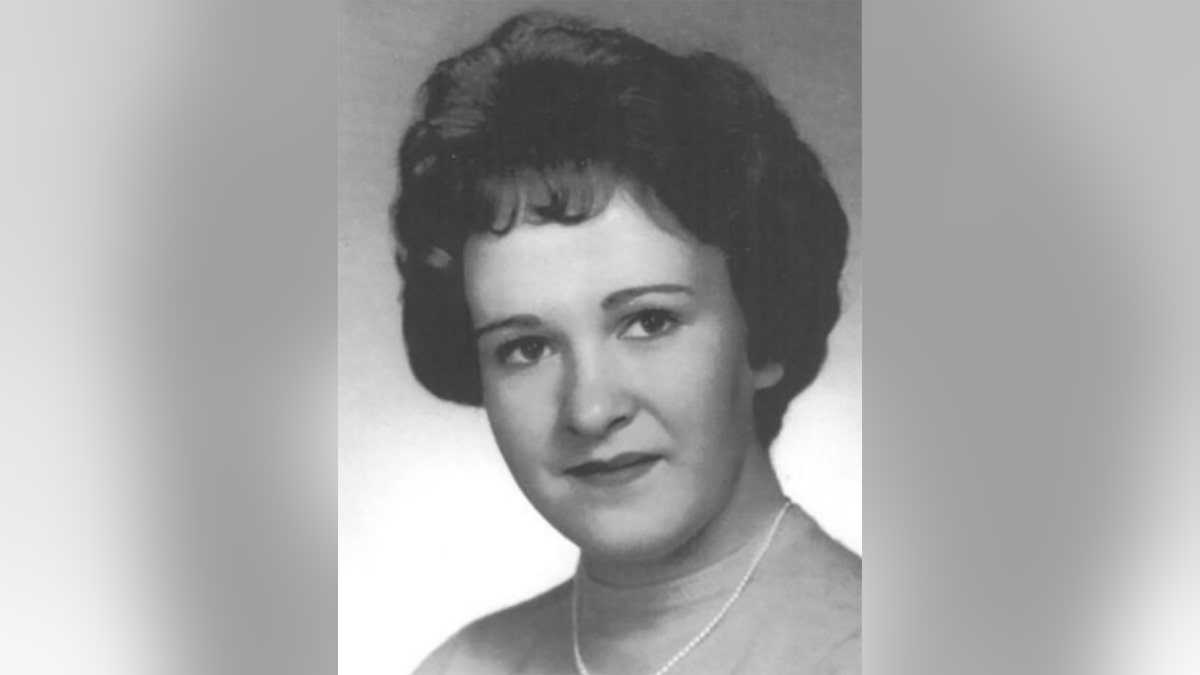
They happened inside, in the private rooms where women expected safety.
A stranger got in.
Or someone they trusted got in.
The record does not say which, and the record does not resolve it.
It names the method: strangulation.
It names the places: their own apartments.
It names the span: nineteen months.
What it does not name is a single suspect tied to all thirteen scenes.
No physical evidence linked any one man to every killing.
The investigation was hampered by that absence.
The murders were initially investigated by separate city and state agencies.
Coordination problems followed.
A special task force was formed in 1964.
Still, the doors stayed locked.
The habits stayed changed.
The fear stayed.
THE INVESTIGATION
The investigation ran on fragments.
It ran on separate city and state agencies, each holding its own files, its own theories, its own silences.
Coordination problems were built into the case from the start, the record shows.
No physical evidence linked any single suspect to all thirteen murders.
The record states that plainly.
In 1964, a special task force was finally formed.
It was late, and it was under-resourced.
A self-described psychic was brought in to assist police.
His claims of insight were never substantiated.
That is not established anywhere in the record.
Then came DeSalvo's confession in 1965.
It was a dramatic turn, a man in custody naming scenes he should not have known.
But some investigators doubted it.
They doubted the details.
They doubted the man.
They had no physical evidence to check against his words.
What did the confession actually prove?
What did the task force actually find?
What did the psychic actually see?
The record does not answer.
The record shows a case that moved on belief, not proof.
It shows a confession taken but never tested.
It shows thirteen women, and a hunt that kept starting over.
The doors stayed locked.
The fear stayed.
The files stayed open.
THE TRIAL THAT WASN'T
The confession was never tested in court.
DeSalvo was never charged with the strangling murders.
He was never tried for them.
The case record states this plainly: no charge, no trial, no conviction for the murders.
Instead, in 1967, DeSalvo stood trial for a series of robberies and sexual assaults in the Boston area.
He was convicted and sentenced to life in prison.
That was the only trial he ever faced.
His confession to the thirteen killings was arranged through his attorney, F. Lee Bailey, and taken by a prosecutor.
It was detailed.
It matched crime-scene details that were not public knowledge.
But it was never entered into a courtroom as evidence against him.
No judge weighed it.
No jury heard it.
The prosecution never had to prove it, and the defense never had to break it.
So the confession remained what it was: a statement, on record, untested.
For decades, that was all there was.
Then, in 2013, DNA evidence linked DeSalvo to the murder of the last victim.
It was the first physical evidence connecting him to any of the killings.
One case.
One match.
The other twelve remain officially unsolved.
Whether DeSalvo was responsible for those twelve is not established.
The record does not resolve it.
Not because the confession was thin.
But because the law requires more than a confession to convict.
That would require evidence.
That would require a trial.
Neither happened.
AND THE STORY STILL ISN'T OVER
DeSalvo was stabbed to death in Walpole State Prison on November 26, 1973.
He was 42 years old.
His killer was never identified.
That is not established; the case record says only that it happened.
Decades after his death, the debate continued.
Was he truly the Boston Strangler?
Was his confession a fabrication, a performance, a truth?
The 2013 DNA match linked him to the murder of Mary Sullivan, the last victim.
That was strong evidence for at least that murder.
Questions about the other twelve persist.
They are not answered by the match.
The case record does not close them.
The full truth of DeSalvo's involvement was never definitively established in a court of law.
No trial tested the confession.
No verdict resolved it.
Death ended the story, but not the question.
The case closed by death, not by justice.
That is the ache that remains.
Advertisement
You may also like
The 31 days Casey Anthony never reported her toddler missing
The 911 call came from a house in Orlando, Florida, on July 15, 2008. Cindy Anthony was on the line, and she told the…
The handwritten note Tsarnaev left inside the boat before capture
The boat sat in a Watertown backyard, dry-docked and winter-covered, on the morning of April 19, 2013. Inside it, police found Dzhokhar Tsarnaev, hiding…
A non-prosecution deal in 2007 that still haunts the Epstein case — how one promise shielded him for years
It begins with a signature. In 2007, federal prosecutors in Miami negotiated a non-prosecution agreement with Jeffrey Epstein, the wealthy financier accused of sexually…
The confession Ottis Toole made four times that police still wouldn't believe
He said he did it. Then he said he didn't. Ottis Toole was a serial killer. He confessed to the murder of six-year-old Adam…
The calling card left on a choir singer's body that police couldn't explain
The morning of September 15, 1922, a local man found two bodies beneath a crabapple tree in a secluded lane known as "Lovers' Lane"…
The two-word confession that cracked the Hillside Strangler case
He was arrested in Bellingham, Washington, in January 1979, for the murders of two women there. Under interrogation, Kenneth Bianchi confessed to those killings.…