The 1981 bridge stakeout that cracked Atlanta's child murders — but left 26 unsolved
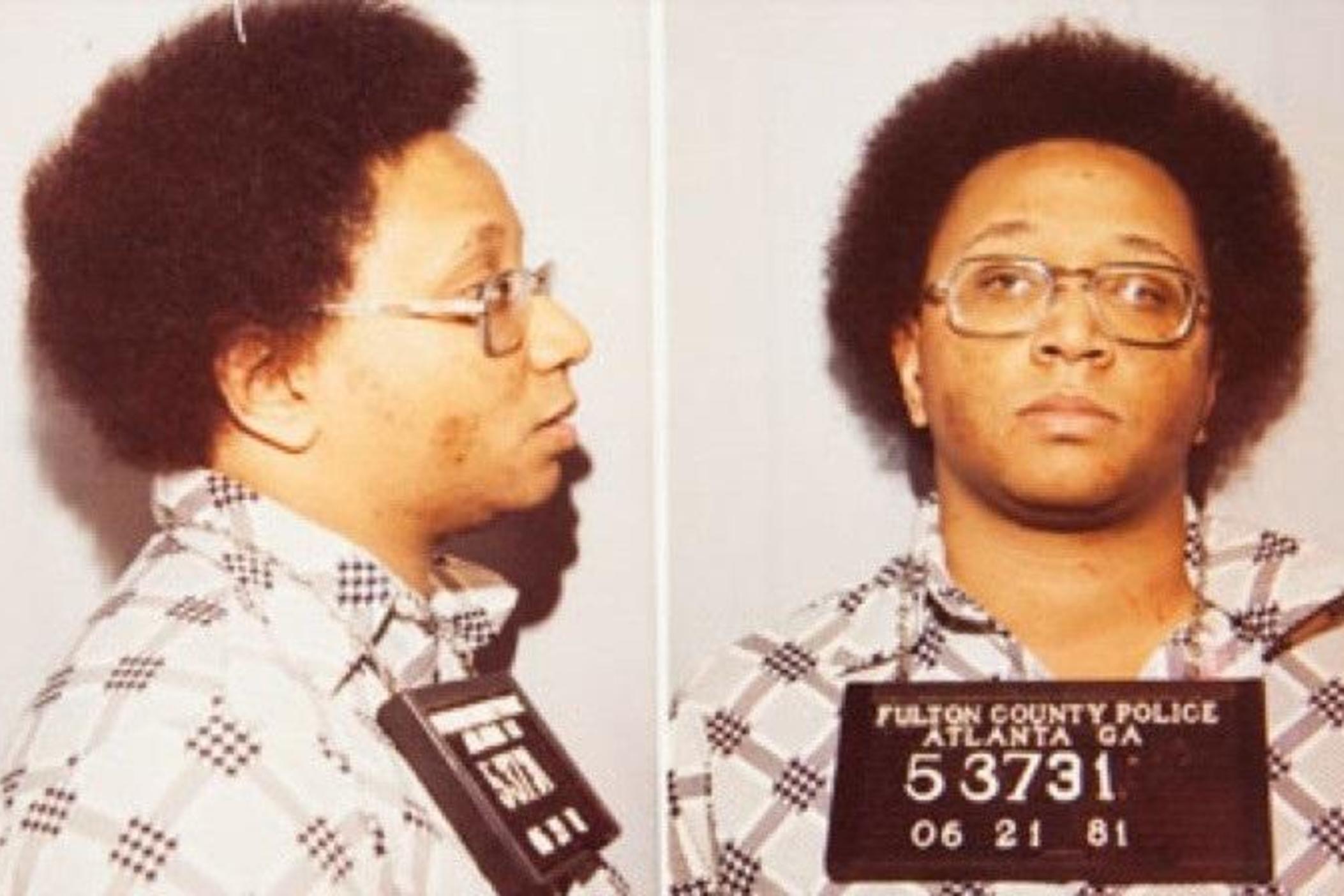
The sound came first.
On May 22, 1981, police on a stakeout over the Chattahoochee River heard a splash in the water below.
They stopped a 23-year-old freelance photographer and music promoter driving a 1970 Chevrolet station wagon and questioned him.
Days later, the body of a 27-year-old man was found downstream — one of at least 28 Black children, teenagers, and young adults murdered or disappeared in Atlanta between 1979 and 1981.
The case was known as the Atlanta Child Murders, terrorizing the city's Black community, with bodies found in wooded areas, rivers, and vacant lots.
What exactly made the splash is not established by the record — it is the detail that launched the stakeout, not a proven fact.
The splash is the moment the investigation changed.
But what the record establishes from that night is narrower than what the public came to believe.
It is a sound without a source.
It is a stop without an arrest.
It is a question the river never answered.
TWO YEARS OF FEAR
Between 1979 and 1981, at least 28 Black children, teenagers, and young adults were murdered or disappeared in Atlanta, Georgia.
The victims were mostly male, ranging in age from 7 to 17, though some were in their early 20s.
The official task force eventually included victims up to age 21.
The disappearances were discovered gradually.
Families reported missing children one by one, and only in 1980 did police begin to notice a pattern.
The exact number of victims and the full scope of the pattern were not clear to police at the time.
It was a pattern noticed gradually, not a list handed over whole.
By 1980, a joint task force formed.
Atlanta Police Chief Lee P. Brown and GBI Director Phil Peters led it, with FBI assistance.
A massive multi-agency effort, it was one of the largest investigations Georgia had seen.
The terror settled into the city's Black community as bodies were found in wooded areas, rivers, and vacant lots.
The media covered each discovery, and the coverage built its own dread.
Headlines counted, and the count climbed.
Journalist James Baldwin wrote about the case in "The Evidence of Things Not Seen."
He was not directly involved in the investigation.
He watched it the way the city watched it.
The investigation was criticized for focusing heavily on one suspect.
Other leads were pursued less aggressively, some families and activists believed.
They believed the task force missed opportunities to catch the killer earlier.
Was that true?
That would require evidence.
What the record shows is a city living under a count it could not stop.
Two years of fear, measured in missing posters and riverbanks.
The task force worked.
It was also under pressure no one could name.
THE FIBERS
The fibers were the hinge.
After the bridge stop, forensic examiners found carpet fibers and dog hairs on victims that matched the suspect’s home and his 1970 Chevrolet station wagon.
The FBI’s fiber analysis was pioneering at the time.
It was a new science, and the prosecution made it the cornerstone of the case.
The suspect was charged with two murders.
Those of a 27-year-old man and a 21-year-old man.
Police and prosecutors stated they believed the fibers linked him to as many as 23 of the 28 deaths.
He was never tried for those.
The link to the other deaths was stated, not established by trial.
The trial opened in Fulton County Superior Court in early 1982.
The district attorney led the prosecution.
Two attorneys led the defense.
The defense argued the fibers were circumstantial.
They called the suspect a scapegoat.
The media watched closely.
Was this the answer to two years of fear?
Was one man responsible for the riverbanks and the vacant lots?
Was the science enough?
The jury said yes.
On February 27, 1982, they found the suspect guilty of both murders.
The judge sentenced him to two consecutive life terms in prison.
The splash became a conviction.
The fibers made it so.
But the other 26 deaths remained unsolved, tied only by a theory.
THE VERDICT AND THE QUESTIONS
The prosecution told the jury the fibers were the story.
The fibers from the suspect's home and car matched the victims.
The bridge stakeout was the break, they said, the moment the case cracked.
The defense answered differently.
The fibers were circumstantial, they argued, a web of coincidence.
The suspect was a scapegoat, they said, chosen by a task force under immense public pressure.
The jury deliberated, and the verdict came back guilty.
Two consecutive life sentences followed.
The suspect has maintained his innocence ever since.
He filed multiple appeals.
All of them were denied.
He was never charged with the other deaths attributed to the Atlanta Child Murders.
Police and prosecutors have stated they believe he was responsible for many of them.
That belief is not the same as a finding.
Whether the suspect was responsible for all the deaths is not established.
It is a belief held by police and prosecutors.
It is a question raised by families and advocates.
Some of those families still ask whether other perpetrators were involved.
They ask whether the task force, under pressure, stopped looking once it had a name.
They ask whether the fibers proved one man or merely pointed at one.
The case remains officially closed.
The questions from the trial have never fully closed for the families.
The record holds a conviction.
It does not hold an answer.
AND THE STORY STILL ISN'T OVER
He is still in a Georgia state prison, serving two consecutive life sentences.
He has asked for parole. He has asked for a new trial. Both have been denied.
In 2019, Atlanta Mayor Keisha Lance Bottoms ordered a new review of the case using DNA evidence.
The results were inconclusive.
The case was not reopened. No new charges were filed.
That is what the record shows: a review ordered, a review completed, a review that changed nothing.
The families have kept their own calendar. Memorials stand in Atlanta. Annual remembrances mark the names.
The one man convicted in connection with the Atlanta Child Murders is now in his 60s. He is still the only one.
The case is officially closed.
It is also not closed.
Not because the appeals have ended — they have, repeatedly. But because the families still ask who did this, and whether one man did all of it.
The advocates still ask whether other leads were pursued less aggressively than the fiber trail.
The record does not settle that. The record shows a conviction and a fiber link to many victims. It does not show a complete accounting of 28 deaths.
So the questions from the trial have never fully closed for the families.
The record holds a conviction.
It does not hold an answer.
It holds a man in prison, two life sentences, a DNA review with no result, and the weight of an ending that isn't one.
Advertisement
You may also like
The desert graves that were found three years after a family vanished
The television was still on. Uneaten dinner sat on the table. The family dog was in the backyard. Both vehicles were still at the…
The false babysitter story that unraveled Casey Anthony's defense
She gave them a name. A babysitter named Zenaida Fernandez-Gonzalez, she told investigators, had taken her daughter. The name was repeated in news coverage.…
How a 14-year-old's open-casket funeral forced a nation to look at Emmett Till
She had the casket opened. Emmett Till's body came back to Chicago from the Tallahatchie River, where it was pulled from the water on…
The package to the Los Angeles Examiner that claimed to hold Black Dahlia clues
The package sat in a pile of mail at the Los Angeles Examiner, unremarkable until someone opened it. Inside were Elizabeth Short's address book…
Inside the taunting Zodiac letter that made a reporter a target
The envelopes arrived at the San Francisco Chronicle with return addresses that did not exist. Inside were letters, each one a taunt, each one…
The 'bushy-haired' intruder Sheppard said he chased — and the question that haunted a courtroom
He told police he was asleep on a downstairs daybed when he heard noises. Dr. Sam Sheppard said he went upstairs, struggled with an…