The 2023 arrest that reopened Tupac's murder case — 27 years after the drive-by
September 7, 1996, at the intersection of Flamingo Road and Koval Lane in Las Vegas, Nevada.
Tupac Shakur was riding in a black BMW sedan with Death Row Records CEO Marion "Suge" Knight when a white Cadillac pulled alongside and fired into the vehicle.
The white Cadillac was reported as a 1996 Cadillac DeVille.
Shakur was struck four times. Knight was wounded in the same attack. Shakur died on September 13, 1996, at University Medical Center. He was 25.
For 27 years, no one was arrested in the shooting.
The car drove on. The case sat. The intersection became a marker, a place people visit and point at, a piece of asphalt that holds a story.
What finally changed?
What made the record move?
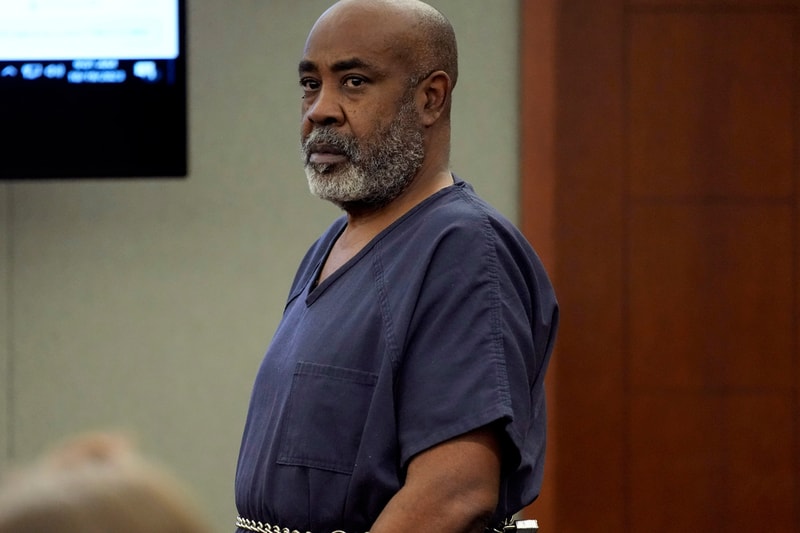
In 2023, Duane "Keffe D" Davis was arrested and charged with murder.
Prosecutors say Davis's own admissions — in a memoir, in a documentary interview — form the basis of the case. Not forensic evidence. No forensic evidence has been publicly confirmed linking any suspect to the shooting. That is what the record does not establish.
The white Cadillac is a vehicle in a case file. It is also a name that has followed Las Vegas for nearly three decades.
A car pulled up. A car drove away.
For 27 years, that was the whole story.
SEPTEMBER 7, 1996 — THE DRIVE-BY
The intersection of Flamingo Road and Koval Lane was busy that night.
A black BMW sedan stopped at the red light.
Shakur was in the passenger seat.
Marion "Suge" Knight, the CEO of Death Row Records, was driving.
A white Cadillac pulled up on the passenger side.
A car pulled up. A car drove away.
Shakur was struck four times.
Knight was wounded in the same attack.
Shakur was rushed to University Medical Center.
He was 25 years old.
He died there on September 13, 1996.
Six days after the shooting. Six days after the red light.
The Las Vegas Metropolitan Police Department investigated.
They took reports. They collected statements. They logged the white Cadillac as a 1996 DeVille.
Who fired the shots is not established by the record.
No arrests were made.
Not that month. Not that year. Not for 27 years.
The case file sat.
It was a vehicle in a case file. It was also a name that followed Las Vegas for nearly three decades.
For 27 years, that was the whole story.
A car pulled up. A car drove away.
2018 — THE ADMISSION
For 27 years, that was the whole story — a car, a gun, a name nobody could prove.
Then, in 2018, Duane Davis gave an interview to a documentary producer.

In that interview, Davis described being in the Cadillac from which shots were fired.
That description was his own.
Davis was a member of the South Side Compton Crips.
He had long been publicly linked to the shooting.
The link had been talk. The interview was a voice on record.
Prosecutors said Davis's own admissions — including in a memoir — formed the basis of the case.
Not forensic evidence. Not a fingerprint. Not a bullet matched to a gun.
His words.
The exact content of the 2018 interview beyond his description of being in the Cadillac is not in the record.
What he said about the drive-by — who drove, who fired, who decided — the record does not establish.
That would require evidence.
In 2023, Las Vegas police arrested Davis.
They charged him with murder.
One count of murder with a gang enhancement.
A man's own account, given years later, became the hinge.
The case file had a name at last.
The car pulled up. The car drove away. And then a man talked.
THE CHARGE AND THE PLEA
On September 29, 2023, a Las Vegas grand jury indicted Duane Davis.
He was charged with one count of murder with a gang enhancement.
The charge concerned the 1996 killing of Tupac Shakur.
Davis was 60 years old at the time of his arrest.
He pleaded not guilty.
Prosecutors said his own admissions, including in a memoir, formed the basis of the case.
Not forensic evidence. Not eyewitness testimony.
His words were the hinge.
Davis had long been publicly linked to the shooting.
He was a member of the South Side Compton Crips.
In 2018, he gave an interview to a documentary producer in which he described being in the Cadillac from which shots were fired.
That account, years later, became the case.
Davis remained in custody in Clark County, Nevada, awaiting trial.
His trial date has been repeatedly postponed.
As of the time of this writing, the case had not gone to trial.
Whether Davis is guilty is not established.
He has pleaded not guilty and has not been convicted.
He was the only person ever charged in either killing.
Not in the Shakur case. Not in the killing of Christopher Wallace.
The charge stands. The plea stands.

And the question of what happens next remains open.
AND THE STORY STILL ISN'T OVER
The trial date has been postponed again.
Davis remains in custody in Las Vegas, waiting.
No trial date is set in the record.
That is not a detail. It is the shape of the case now.
The case is not closed. It is waiting.
Waiting is what this case has always done.
The Shakur case waited 27 years for an arrest.
The other killing — the one from March 1997 — has waited longer.
No one has ever been charged in the killing of Christopher Wallace.
That case waits too.
Both killings remain the subject of documentaries, books and ongoing public debate.
The record does not establish what a trial would resolve.
It establishes only what is pending.
Davis is charged. He pleaded not guilty. He waits.
Marion Knight is serving a prison sentence in California on an unrelated manslaughter conviction.
He is not part of this waiting.
He is elsewhere.
The mothers of both men are gone now.
The witnesses from that night are not getting younger.
The cameras that documented the admissions have been rolling for years.
The memoir was published.
The interview was given.
The charge was filed.
The plea was entered.
And then the postponements began.
Not because the case collapsed.
Because the case is still moving.
Slowly.
A trial date is not set in the record.
That is what the record says.
That would require evidence.
The evidence that exists is what prosecutors say it is: a man's own words.
The words are on tape.
The words are in print.
The words are the case.
And the case waits.
Advertisement
You may also like
The tarot card left at a D.C. sniper crime scene that said 'Call me God'
The card was on the ground at a crime scene in Montgomery County. A tarot card, face up, with a message written across it:…
The cell phone records that placed a suspect near Leakin Park — but one witness kept changing his story
January 13, 1999, was a school day. Hae Min Lee, an 18-year-old senior at Woodlawn High School in Baltimore County, Maryland, was last seen…
The parole agent who saw a sketch and stopped a car — then Polly Klaas's killer led police to her body
The parole agent saw the car first. A sketch, a tip, and a car on the road — that was the break. On November…
The cellmate tip that cracked the Clutter case after investigators ignored a footprint
The footprint was there on the night of November 15, 1959, inside the farmhouse near Holcomb, Kansas. Four members of the Clutter family were…
The cell tower records that placed Adnan Syed at Leakin Park — and the witness who changed his story
The phone call came on February 12, 1999. Baltimore County police picked up an anonymous tip that day, and the voice on the line…
The jailhouse informant's testimony that could not save Casey Anthony
She sat in the witness box and testified that Casey Anthony had made incriminating statements while in jail. Her name was Robyn Adams, a…