The 31 days Casey Anthony said nothing, and the trunk evidence that turned a missing-child case into a homicide charge
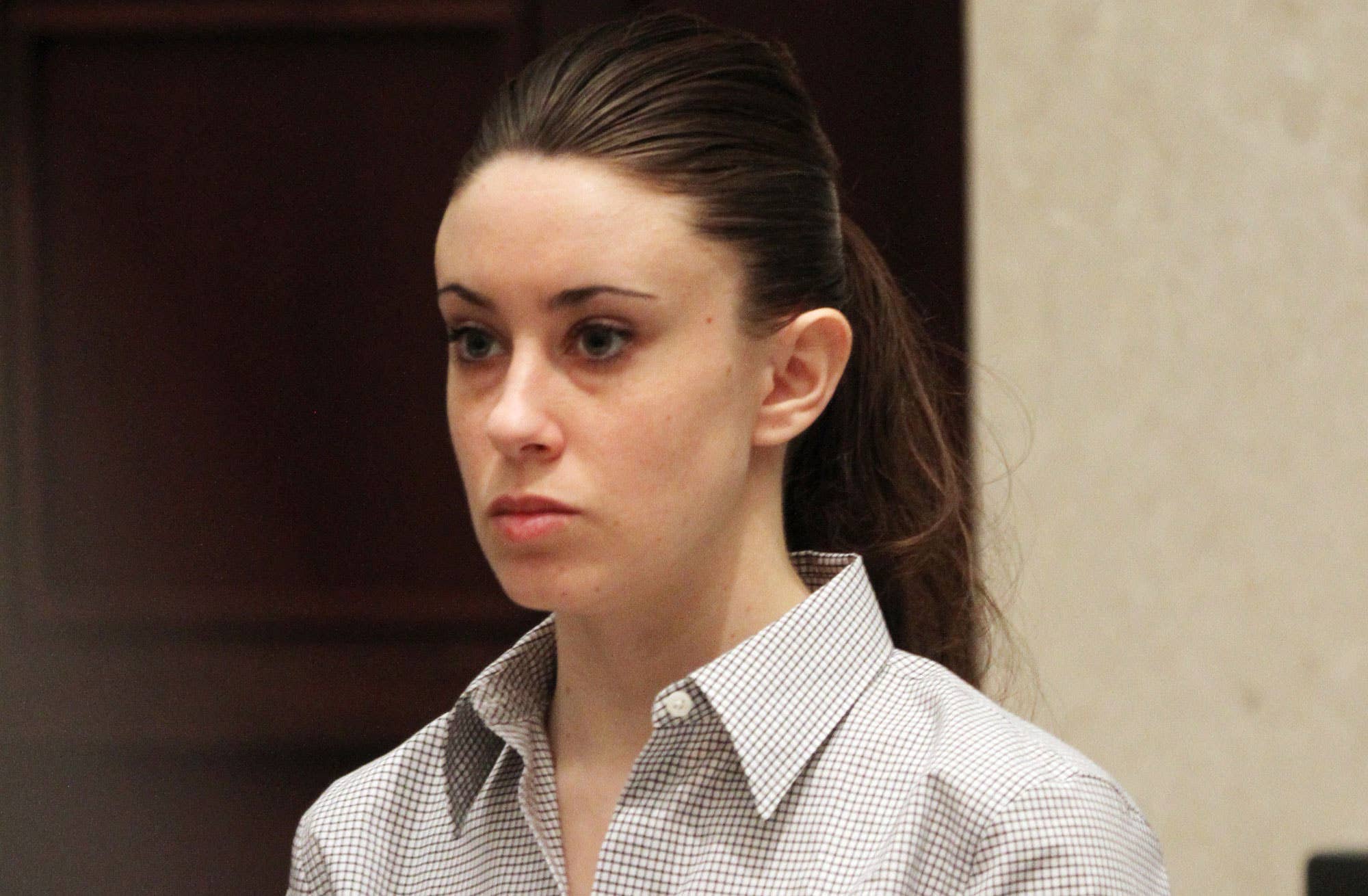
The 911 call came on July 15, 2008, from a grandmother named Cindy Anthony.
She told the dispatcher her daughter, Casey Anthony, had not seen two-year-old Caylee for 31 days.
Thirty-one days.
A child not seen by her mother for a month, and no one had called before that afternoon.
The record shows no call from Casey Anthony reporting her own daughter missing.
No call to police. No call to anyone that exists in the file.
Why she did not report it is not established in the record.
Her stated reason for the 31-day gap does not appear in the source material.
That silence became the story before any trial began.
Cable news filled the hours with the question: what mother waits a month?
Commentators asked it. Legal analysts asked it. Strangers in grocery stores asked it.
The public answered before the jury ever did.
The reaction was overwhelmingly hostile toward Casey Anthony, and the hostility arrived early.
It arrived while the child was still listed as missing, before remains were found, before charges were filed.
It arrived in the comment sections, in the picket lines outside the courthouse, in the nightly roundtables where the word "monster" did the work of evidence.
The case drew intense national media attention, and the press followed every development.
Every motion. Every sighting. Every facial expression in the back of a patrol car.
The public was convinced of her guilt before the trial began.
That is a documented fact about the public.
It is not a fact about what happened to Caylee Anthony.
The weight of that month — the silence, the unanswered question — pressed down on everything that followed.
The trunk. The remains. The verdict.
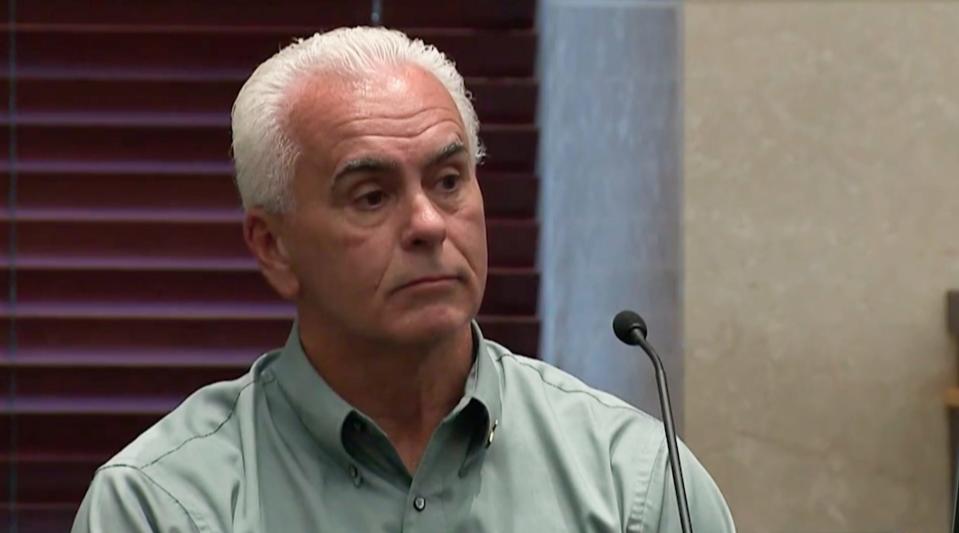
But the record does not say why she stayed silent.
That would require evidence the case never produced.
THE TRUNK
The car was a white Pontiac Sunfire.
It sat in the Anthony family garage, and it became the center of the investigation.
The lead detective, Yuri Melich of the Orange County Sheriff's Office, had a missing two-year-old and a mother who gave him inconsistent statements.
Casey Anthony had not reported her daughter missing.
Her mother, Cindy Anthony, had made that call.
Detective Melich found the behavior suspicious.
The record shows the 31 days of silence.
It shows the inconsistent statements.
It does not show a reason for them.
Then the trunk was examined.
A forensic examination of the vehicle revealed the presence of chloroform.
It revealed a decomposition odor.
Prosecutors would argue the trunk evidence indicated a body had been transported there.
A body in the trunk.
A child's body.
The source does not establish what exactly was in the trunk.
It does not establish how the chloroform got there.
The presence of chloroform and the odor are documented.
Their meaning is argued.

That is the line.
The public heard "chloroform" and heard "decomposition" and heard a story.
The record holds the chemicals and the smell.
It holds the prosecution's argument.
It holds the defense's counter.
It does not hold the thing itself.
The trunk was a fact.
What happened in it was not.
The media treated the Sunfire as the smoking gun.
Cable news ran the same images for weeks.
Commentators speculated about the chemicals.
They speculated about the smell.
They speculated about what a mother must have done.
That would require evidence.
The forensic examination documented the presence.
It documented the odor.
It did not document the act.
THE REMAINS
The remains were found on December 11, 2008, in a wooded area near the Anthony family home in Orlando, Florida.
A utility worker spotted a child’s skull, and the search that had once centered on a car trunk moved to a patch of woods less than half a mile from where the family lived.
The discovery came months after the initial search.
It came five months after the 31 days of silence.

The medical examiner ruled the death a homicide.
The cause of death could not be determined.
Not because the examination was careless. Because the record does not say how the child died.
The mechanism is undetermined. That is what the report states.
Casey Anthony was arrested and charged with first-degree murder.
The charge followed the remains, not the other way around.
The public fury crystallized in that sequence.
Many believed the family had not cooperated fully with the investigation.
The anger was loud.
Cable news networks devoted hours to daily analysis.
They treated the case as a national obsession.
Commentators speculated. Legal analysts theorized. The public watched.
Was the homicide ruling proof of guilt? That would require a cause of death.
The record does not provide one.
The remains were found. The charge was filed. The mechanism stayed blank.
The case became a story the country could not turn away from.
It was a story about a missing child. It was also a story about certainty.
And the certainty outpaced the evidence.
THE TWO STORIES
The prosecution argued that Casey had killed her daughter to free herself from parental responsibilities.
The defense argued that Caylee had accidentally drowned and that Casey had panicked and hidden the body.
The defense contended that Caylee had drowned in the family pool and that George Anthony had helped cover it up.
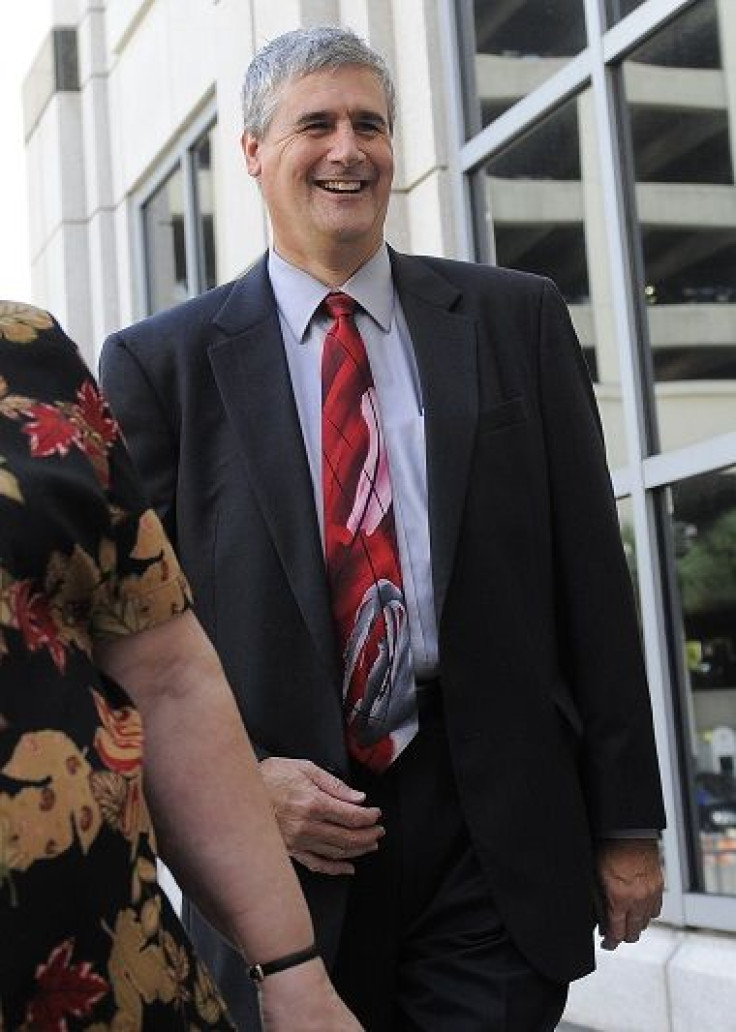
George denied it.
Two stories. One child. The record does not establish which one is true.
What actually happened to Caylee Anthony is not established by the record; the source presents both theories without confirming either.
The trial began in May 2011 and lasted six weeks.
The country watched. Cable news filled the hours. Commentators chose a side daily.
The prosecution pointed to the trunk. The defense pointed to the pool.
The jury heard both.
On July 5, 2011, the jury found Casey not guilty of first-degree murder, aggravated child abuse, and aggravated manslaughter of a child.
She was convicted of four counts of providing false information to law enforcement, a misdemeanor.
She was sentenced to time served plus a fine.
The verdict sparked widespread public outrage. Many people believed the prosecution had failed to prove its case.
Not because the evidence was clear. But because the certainty outpaced it.
The public had already decided. The jury had to weigh what was presented.
Which story did the evidence support? Which story did the testimony support? Which story did the record support?
The answer was neither, conclusively.
The gap between the two narratives remained. The jury chose as it did.
AND THE STORY STILL ISN'T OVER
The verdict came down on July 5, 2011.
The jury found Casey Anthony not guilty of first-degree murder, aggravated child abuse, and aggravated manslaughter of a child.
She was convicted of four counts of providing false information to law enforcement, a misdemeanor.
She was sentenced to time served plus a fine.
She was released from jail on July 17, 2011.
/jose-baez-1-c5cc5e9bf1ef40618009a54f4c07593e.jpg)
The verdict sparked widespread public outrage.
Many people believed the prosecution had failed to prove its case.
Many people believed something else entirely: that the wrong result had been reached.
The gap between what the jury decided and what the public felt did not close.
It has not closed since.
Following her release, Casey Anthony has largely stayed out of the public eye.
Tabloids have occasionally reported on her.
She has not been charged with any other crime.
The Anthony family has largely retreated from public view.
The case remains a subject of intense public debate.
Many people are still convinced of her guilt.
The prosecution's story had been clear.
The defense's story had been clear.
The record was not.
The source does not state any pending legal action or next concrete step.
The case's future is limited to public debate and media coverage.
It has been the subject of numerous documentaries, books, and television specials.
It remains one of the most controversial verdicts in American legal history.
The 24-hour news cycle that fueled the frenzy has moved on.
The argument has not.
Which story did the evidence support?
Which story did the testimony support?
Which story did the record support?
The answer was neither, conclusively.
The jury chose as it did.
The public chose otherwise.
Advertisement
You may also like
The traffic stop that freed Winston Moseley days before Kitty Genovese's murder
Days before the murder, Winston Moseley was questioned in a routine traffic stop and released. The investigation record documents the stop. It documents the…
The 2018 interview in which Duane Davis described the Cadillac, the gun, and the handoff — and what detectives did next
In 2018, Duane “Keffe D” Davis sat for an interview. He described being in the white Cadillac that night on the Las Vegas Strip.…
The river stakeout that heard a splash and stopped Wayne Williams — but the bodies kept coming
The Jackson Parkway bridge spans the Chattahoochee River, and on May 22, 1981, police were staked out beneath it. They were waiting for a…
The Green River Task Force's own mistakes let a killer slip through for 20 years
He passed the polygraph in 1984, and the Green River Task Force cleared him. Gary Ridgway walked out of the interview and went back…
A wedding ring left on the dresser — and the confession that followed it
The ring sat on the bedroom dresser. Shanann Watts had returned home that morning, August 13, 2018, from a business trip to Arizona. Her…
The car trunk odor that haunted Casey Anthony's trial — and the verdict that followed
The odor came from the trunk of an abandoned car. In July 2008, investigators impounded the vehicle that Casey Anthony had left behind in…