The 67-minute acquittal that turned on a cotton gin fan and a ring
A cotton gin fan, tied with barbed wire, was found weighted to the body in the Tallahatchie River on August 31, 1955, according to the investigation record.
The body was identified by a ring bearing the father's initials, according to the identification record.
The fan was traced to a local gin, but the connection was not pursued, according to the investigation record.
Two ordinary objects anchor the case: the ring and the fan.
The ring gave the body a name.
The fan gave the crime a weight.
The fan was traced to a local gin.
The connection was not pursued.
Why not?
Why was the fan’s origin left hanging?
Why did the trail stop at the gin’s door?
That would require evidence the record does not provide.
The weapon used to beat Till was not definitively identified.
That is not established.
It is a gap in the record, not a fact.
The ring is small, personal, worn against the skin.
The fan is industrial, heavy, built for a machine.
One identified the dead.
One weighted the dead.
Both were handled, and both were mishandled.
The ring sent the body home to Chicago.
The fan stayed in Mississippi, a question that never got its answer.
The investigation record shows the fan’s connection was not pursued.
The investigation record shows nothing else about it.
She was on the ground below.
THE STORE AND THE ABDUCTION
On August 24, 1955, a 14-year-old from Chicago walked into Bryant's Grocery and Meat Market in Money, Mississippi.
He was there for a routine errand, the kind a boy runs a hundred times.
What exactly happened inside the store is not established beyond the allegation.
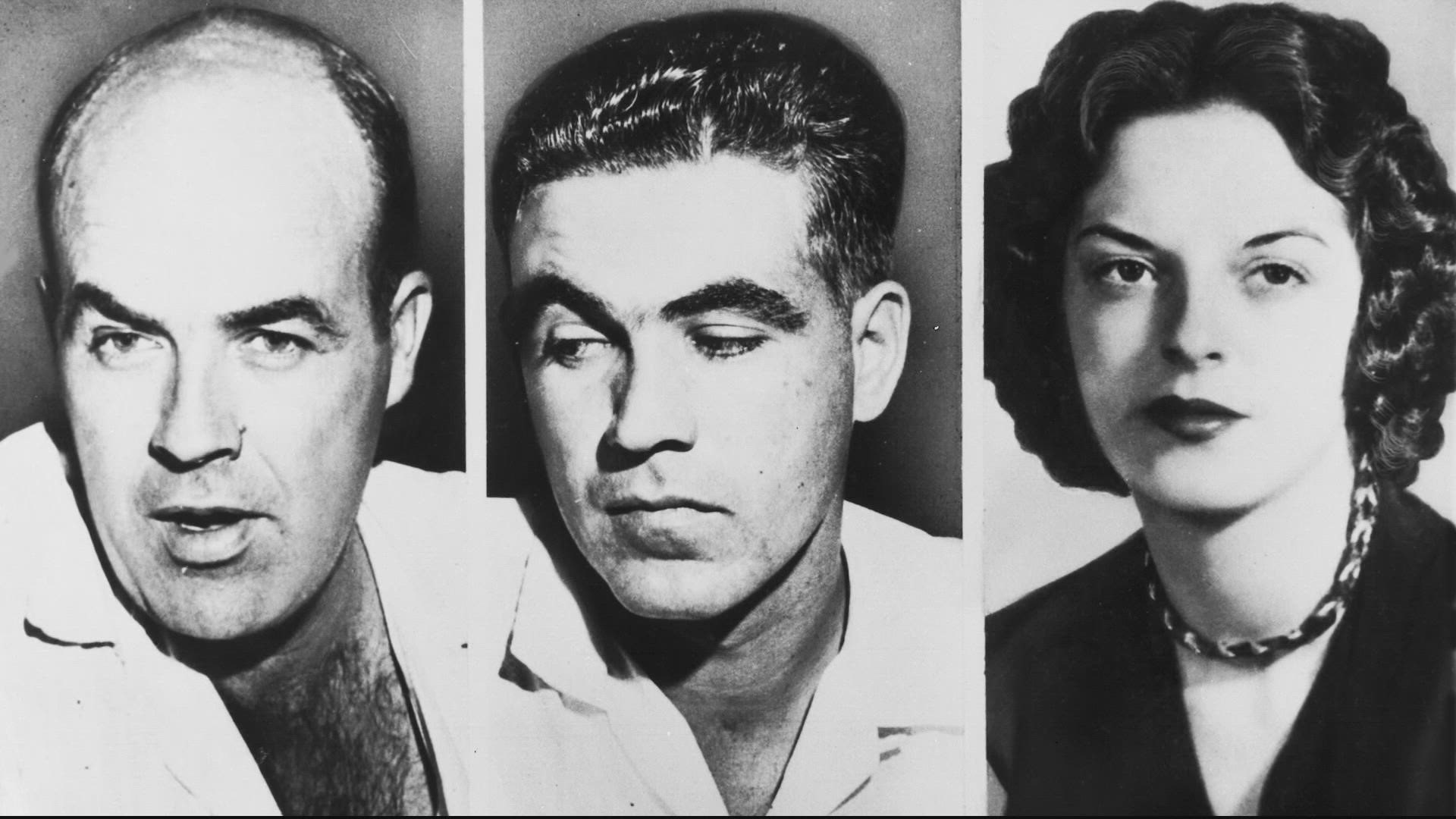
The case narrative records that he allegedly whistled at or spoke to Carolyn Bryant, the white store owner's wife.
That is all the record establishes about the encounter.
Everything after that is consequence.
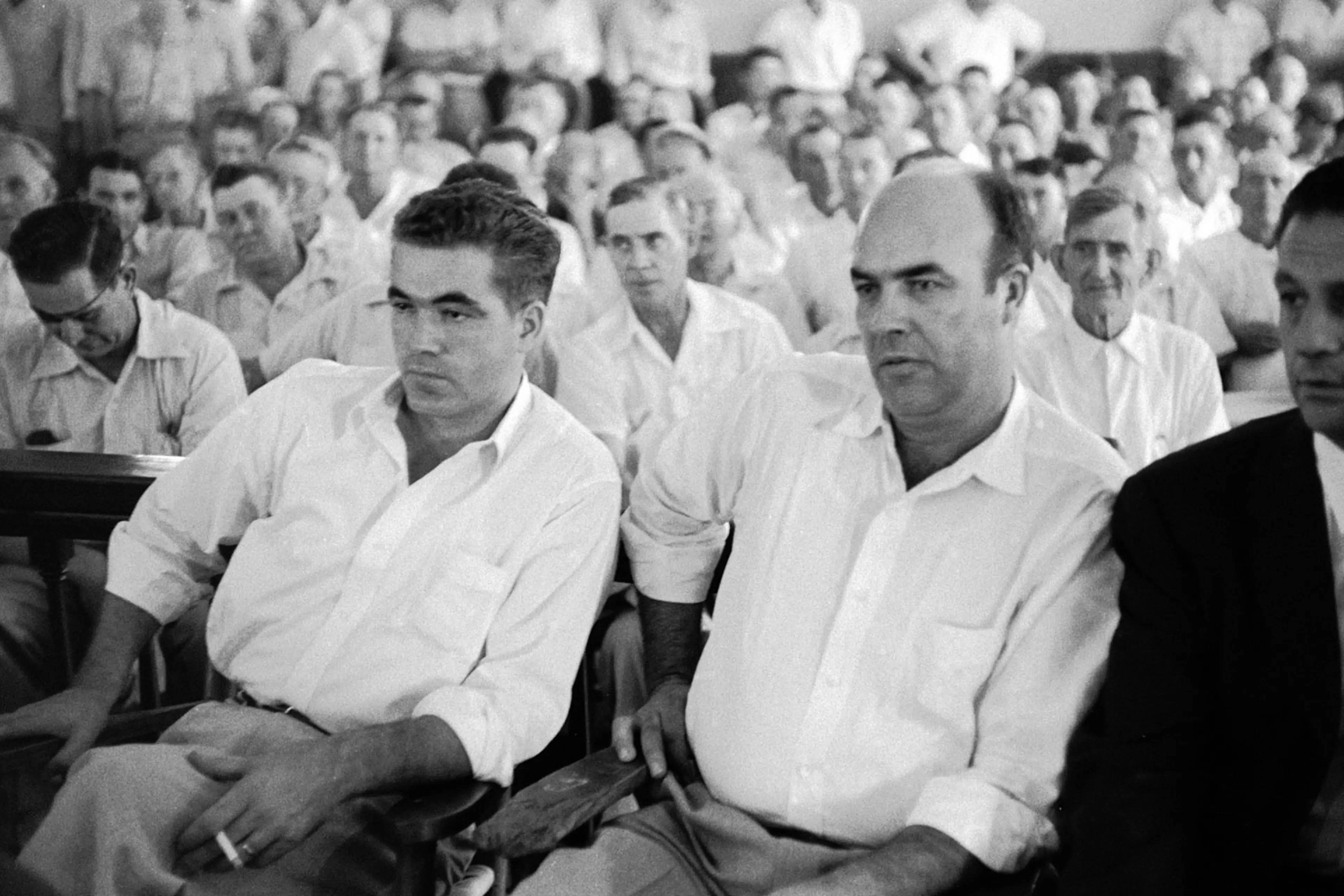
Four nights later, on August 28, Roy Bryant and his half-brother J.W. Milam went to the home of Till's great-uncle, Moses Wright.
They came for the boy in the dark.
They took him from the house, and Moses Wright watched them do it.
Moses Wright later testified at trial, identifying both men as the ones who took Till.
His testimony was the turning point, the one clear identification the prosecution had.
It was not enough.
The investigation was marred by errors and prejudice from the start.
The sheriff publicly doubted the boy's identity before the body was even buried.
He claimed the body was too decomposed, that Till was alive back in Chicago.
He held the accused men in a jail in a neighboring county, away from any local mob.
The investigation itself was largely superficial.
A routine errand became a fatal encounter.
The dread is in the ordinary details: a grocery store, a whistle, a car arriving at night.
Why wasn't the abduction prevented?
Why did four nights pass between the store and the taking?
The record does not say.
It only shows a boy taken from his uncle's home, identified by a ring bearing his father's initials.
The ring was on his finger when they came for him.
It was still there when the body was found.
THE BODY AND THE BURIAL
The body was found on August 31 in the Tallahatchie River.
A cotton gin fan was tied to his neck with barbed wire.
His face was beaten beyond recognition.
He was identified by a ring bearing his father's initials.
The ring had been on his finger when they came for him.
It was still there when the body was found.
The sheriff publicly doubted the identification.
He claimed the body was too decomposed.
He claimed Till was alive in Chicago.
That claim was never substantiated.
It remains unsubstantiated.
The body was buried in Mississippi before any federal authority was involved.
No FBI agent examined the scene.
No federal investigator saw the body before burial.
The burial happened fast.
It happened before the identification could be tested, before the fan could be traced, before the doubts could be answered.
It only happened after Mamie Till-Mobley insisted.
She demanded her son be brought home to Chicago.
She demanded an open casket.
The exhumation came only after her insistence.
Not because the sheriff agreed.
But because a mother would not let her son be buried in a county that would not name him.
The sheriff's doubts were given weight in the record.
The body was buried anyway.
The fan was traced to a local gin, but the connection was not pursued.
The investigation was superficial.
It was marred by prejudice from the start.
The body was in the ground before the questions could be asked.
That is the sequence.
It is also the outrage.
THE TESTIMONY AND THE VERDICT
The trial took place in September 1955 in Sumner, Mississippi.
Moses Wright took the stand and pointed at the two men he said had come for the boy.
He identified Roy Bryant and J.W. Milam as the men who took Till from his home.
That was the state's case in its most human form: an eyewitness, a great-uncle, naming the accused.
The defense argued the body was not Till's at all.

They argued the state had failed to prove the case.
The state had a fan, a ring, and a witness.
The defense had a doubt about a corpse that had been buried before any federal authority examined it.
The all-white male jury left the courtroom.
They deliberated for 67 minutes.
One juror reportedly said they would have taken longer if they hadn't stopped for a soda.
That is the reported line.
The exact content of the jury's deliberations is not in the record — that is not established.
What is established is the time: 67 minutes.
What is established is the verdict: not guilty, for both men.
What is established is that an eyewitness identification was not enough.
How could 67 minutes be enough?
How could a man who stood in open court and said, "There he is," be set aside?
How could the fan, the ring, the body, and the witness collapse into a single hour?
The record does not answer that.
The record only shows the verdict, and the soda, and the door closing.
AND THE STORY STILL ISN'T OVER
They sold the story to Look magazine in 1956, for a reported $4,000.
In that story, Roy Bryant and J.W. Milam admitted to the murder.
They could not be retried.
Double jeopardy had already closed the door.
Roy Bryant died in 1994.
J.W. Milam died in 1980.
Mamie Till-Mobley died in 2003, after a life spent turning her son's death into a movement.
Carolyn Bryant died in 2023.
In 2004, the FBI reopened the case.
A grand jury declined to indict.
In 2017, Carolyn Bryant's then-unpublished memoir surfaced.
In it, she admitted she had lied about the alleged physical encounter.
She had fabricated the claim that Till had grabbed her and made verbal threats.
No charges were filed after that discovery.
That is not established in the record.
It is simply what did not happen.
In 2022, the Emmett Till Antilynching Act was signed into federal law, naming the case.
The law carries his name.
The case itself carries a different weight.
What would justice look like now?
What could it look like, decades after the acquittal, the confessions, and the deaths?
What remains to be answered?
The record does not say.
The fan was traced to a local gin, but the connection was not pursued.
The body was buried in Mississippi before any federal authority was involved.
The ring identified him.
The testimony identified the men.
The verdict identified nothing.
The story keeps resurfacing, not because it was solved, but because it was never closed.
Advertisement
You may also like
The tarot card left at a D.C. sniper crime scene that said 'Call me God'
The card was on the ground at a crime scene in Montgomery County. A tarot card, face up, with a message written across it:…
The cell phone records that placed a suspect near Leakin Park — but one witness kept changing his story
January 13, 1999, was a school day. Hae Min Lee, an 18-year-old senior at Woodlawn High School in Baltimore County, Maryland, was last seen…

The parole agent who saw a sketch and stopped a car — then Polly Klaas's killer led police to her body
The parole agent saw the car first. A sketch, a tip, and a car on the road — that was the break. On November…
The cellmate tip that cracked the Clutter case after investigators ignored a footprint
The footprint was there on the night of November 15, 1959, inside the farmhouse near Holcomb, Kansas. Four members of the Clutter family were…
The cell tower records that placed Adnan Syed at Leakin Park — and the witness who changed his story
The phone call came on February 12, 1999. Baltimore County police picked up an anonymous tip that day, and the voice on the line…
The jailhouse informant's testimony that could not save Casey Anthony
She sat in the witness box and testified that Casey Anthony had made incriminating statements while in jail. Her name was Robyn Adams, a…