The bridge stakeout that changed Atlanta's child murders case — a splash, a car, and 28 deaths
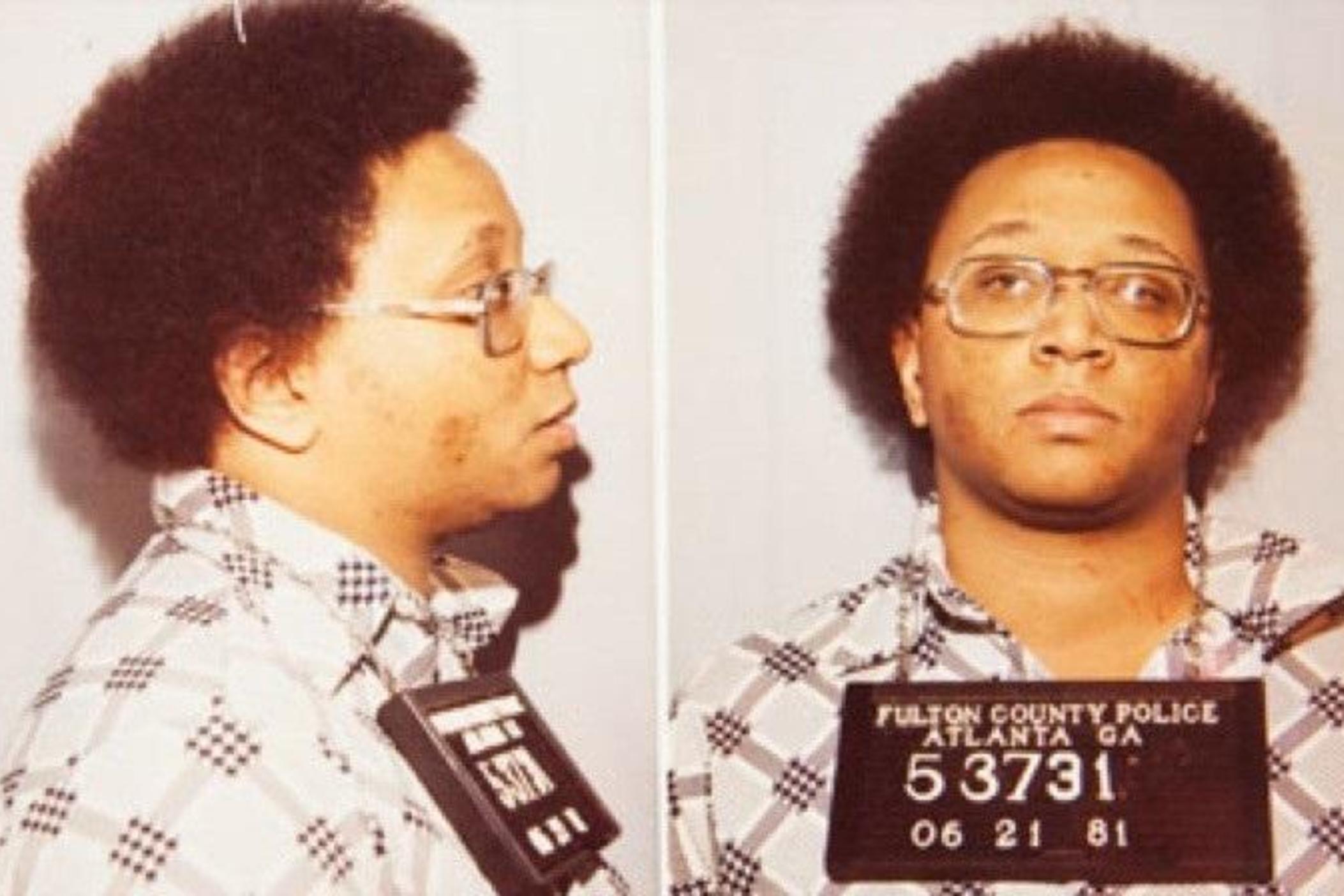
The bridge crossed the Chattahoochee River on the night of May 22, 1981.
Police had staked it out after receiving reports of a possible body dump site.
They waited.
Officers heard a loud splash.
Then they saw a car, driven by Wayne Williams.
Two days later, the body of a 27-year-old man was found downstream.
That splash, and that car, became the turning point in the investigation.
It is a moment the record fixes firmly: the sound, the vehicle, the name of the driver.
What the splash meant is another matter.
A theory circulating online holds that this one event explains all 28 deaths attributed to the Atlanta child murders.
That is a theory, not a fact established by the record.
The record does not establish that the splash was caused by Williams.
The record does not establish that the splash is linked to any specific death.
The record does not establish that one man caused all 28 deaths.
It establishes a night, a noise, and a car.
Was the splash a body hitting the water?
Was it something else entirely?
Was Williams simply driving across the bridge at the wrong moment?
That would require evidence the record does not supply.
What remains is the sound itself, unanswered.
Two days later, a body surfaced downstream.
The investigation had its turning point.
The families had a name.
THE FIRST REPORTS
The first widely recognized victim was a 14-year-old boy.
He was reported missing in July 1979.
His body was found later that month.
Between July 1979 and May 1981, at least 28 Black children, adolescents, and young adults disappeared or were found murdered in the Atlanta, Georgia, metropolitan area.
The victims ranged in age from 7 to 28.
Most were killed by asphyxiation or strangulation.
The exact number of victims is not fully established.
The cause of each death is not fully established either.
The record says "at least 28."
It says "most" were asphyxiated or strangled.
Police initially treated the cases as separate.
Each disappearance was its own file, its own family, its own grief.
By 1980, a task force was formed.
The investigation was hampered by a lack of coordination.
It was hampered by the sheer number of cases.
How many more would there be?
How many more families would wait by the phone?
How many more bodies would surface?
That would require evidence.
The city was terrorized.
The disappearances and killings drew national and international attention.
The case became known as the Atlanta Child Murders.
Several victims were adults.
The pattern was forming.
No one could stop it.
THE ARREST AND THE EVIDENCE
On May 22, 1981, police staked out a bridge over the Chattahoochee River.
They heard a loud splash and saw a car driven by Wayne Williams.
Two days later, the body of a 27-year-old man was found downstream.
In June 1981, Wayne Williams was arrested.
He was charged with two murders: those of a 27-year-old man and a 21-year-old man.
The prosecution's case relied heavily on forensic evidence.
Fiber analysis linked hairs and carpet fibers found on victims to Williams's home, his car, and a carpet in his family's house.
FBI analysts testified that the fibers were "consistent" with those from Williams's environment.
Consistent, not identical.
Defense attorneys argued that the fiber evidence was circumstantial.
They argued that Williams was a scapegoat.
The prosecution also presented testimony from witnesses who placed Williams with some of the victims.
Witnesses placed him there.
The fibers placed him there.
The splash placed him there.
No murder weapon was ever found.
The record does not establish that the fibers were unique to Williams.
The record does not establish that he caused the other deaths.
He was charged with two.
He was not charged with the rest.
THE TRIAL AND THE VERDICT
The trial opened in Fulton County Superior Court in January 1982.
It lasted nine weeks.
On February 27, 1982, the jury found Williams guilty of two counts of murder.
The judge sentenced him to two consecutive life terms in prison.
Williams has maintained his innocence throughout.
His appeals, including a federal habeas corpus petition, were denied.
The verdict carried a weight of finality.
It also carried a narrower question.
Williams was charged with two murders.
He was convicted of two murders.
He was never charged with the other 26 deaths.
The record does not establish that he caused them.
Prosecutors had suggested he was responsible for many of the killings.
The jury heard fiber evidence, testimony from witnesses, and argument about a scapegoat.
No murder weapon was ever found.
The case against him rested on what linked him to the two victims.
The verdict closed the trial.
Did it close the case?
That would require evidence.
The families of the other victims were left with a conviction that did not name their children.
The city was left with an officially open file.
The record shows what the jury decided.
It does not show what happened to the rest.
AND THE STORY STILL ISN'T OVER
Wayne Williams remains incarcerated in Georgia state prison.
He has repeatedly sought parole, and he has been denied each time.
The families of the victims have continued to push for answers.
The case remains officially open for the unsolved murders.
In 2019, Atlanta Mayor Keisha Lance Bottoms announced that the city would re-examine the evidence using DNA technology.
No new arrests have been made.
Williams has never been charged in connection with the other deaths.
The record does not establish what the DNA testing will yield.
It does not establish that new charges will come from it.
That would require evidence.
The case remains a source of controversy and pain for the families and the city.
It is an officially open file.
It is also a wound that has not closed.
The jury decided what it decided in 1982.
The rest of the file waits.
Advertisement
You may also like
The bloody glove found at O.J. Simpson’s estate that split a nation
A single glove lay on the walk outside Nicole Brown Simpson’s condominium on Bundy Drive. Police found it on the night of June 12,…
A 12-year-old girl was among the victims — and her parents kept coming to court
The youngest name on the list was twelve years old. Between October 1977 and February 1978, ten young women and girls were abducted, sexually…
Why a therapist's tape recording changed the Menendez brothers' murder case
The 911 dispatcher logged the call at 11:47 p.m. on August 20, 1989. Lyle Menendez told the operator his parents had been shot. He…
The confession that named 11 victims — but never made it to trial
In 1965, a man already in custody for other crimes gave a detailed confession to a series of murders that had terrorized Boston since…
The plea deal that let Epstein walk — and the 2018 report that changed everything
In 2018, the Miami Herald published a series by Julie K. Brown on Jeffrey Epstein’s 2008 plea deal. The series documented what federal prosecutors…

The fingerprint on a pillowcase that sealed a killer's fate — and the appeals that keep him alive
The pillowcase was ordinary. It sat in Polly Klaas's mother's home in Petaluma, California, on the night of October 1, 1993. Twelve-year-old Polly was…