The cell phone video that captured Alex Murdaugh's voice moments before his family's murder
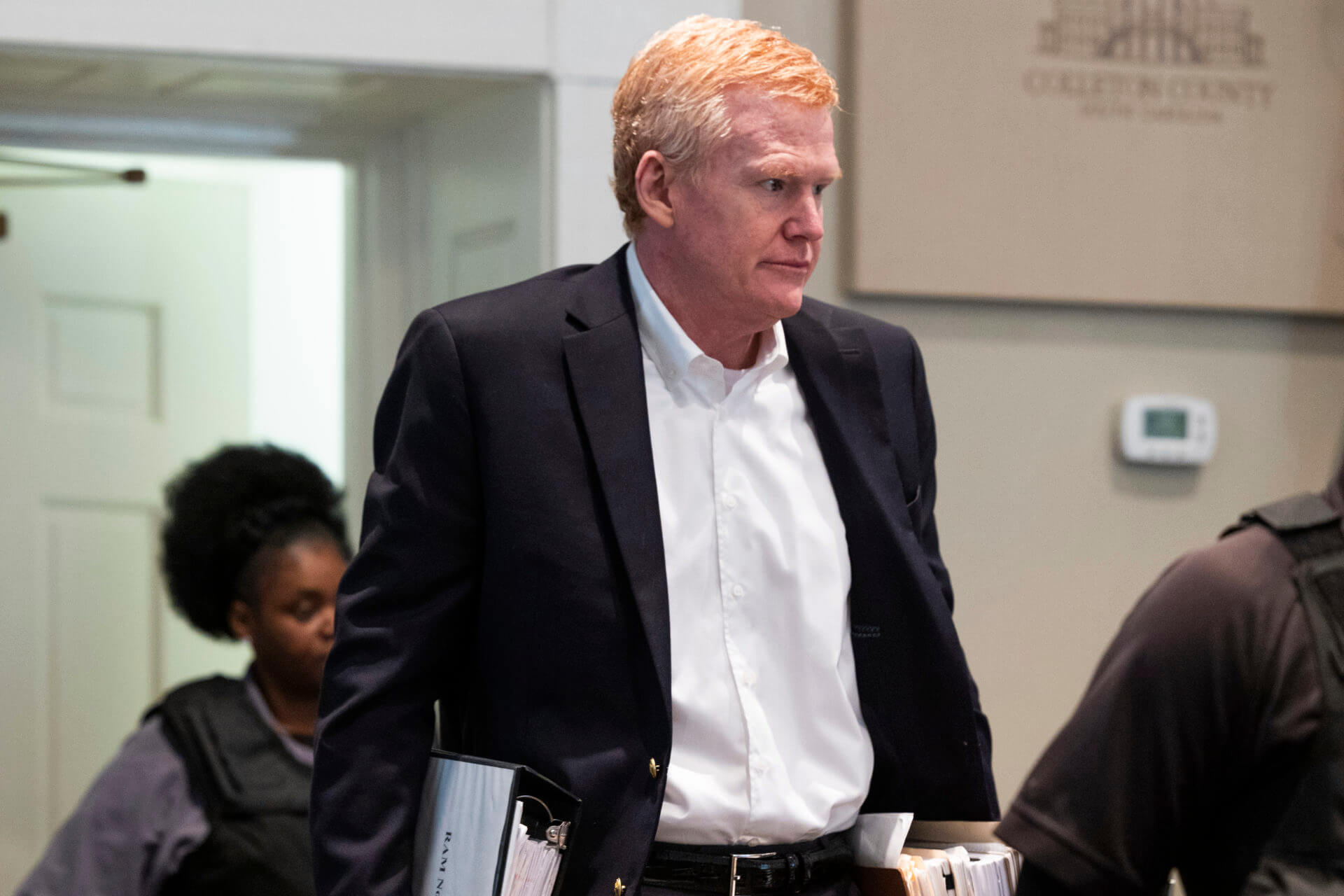
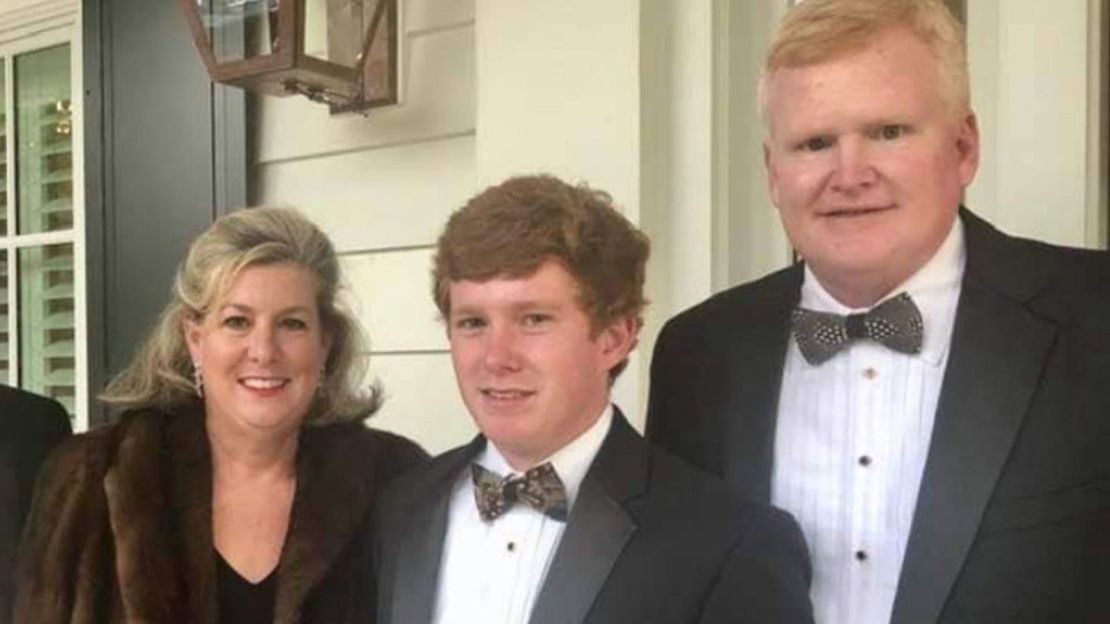
The video is a rectangle of light in a dark room, a phone raised by a 22-year-old man at the kennels on the family's Moselle estate.
It is June 7, 2021, and Paul Murdaugh is recording.
The camera does not linger on the scene for long; it captures a voice.
That voice belongs to his father, Alex Murdaugh.
The timestamp and the audio place him there, at the kennels, moments before Paul and his mother, Maggie, were found shot to death.
Alex had told investigators he was at his mother's house that evening, that he returned to find the bodies and called 911.
The video says otherwise.
It directly contradicted his alibi and became a key piece of evidence in the trial.
What the video does not show is the killings themselves.
It does not show violence, and it is not established what exactly is said in the recording.
The source only notes it captures Alex's voice and his presence at the scene.
An ordinary moment, a family video, turned into evidence in a murder case.
The weight of it is in the ordinariness.
A father's voice, a son's hand holding the phone, a mother nearby, and then the shots.
Not because the video is graphic.
But because it is mundane, and it places a man where he said he was not.
What was said in those last moments?
What did the camera catch before it stopped?
That would require the full recording, and the record does not establish it.
THE 911 CALL
The 911 call came on June 7, 2021.
Alex Murdaugh told the dispatcher he had been visiting his mother and returned to the estate to find the bodies.
The bodies were at Moselle, the family's hunting estate in Colleton County, South Carolina.
Paul, 22, had been shot twice with a shotgun.
Maggie, 52, had been shot multiple times with a rifle.
Alex Murdaugh was the last surviving member of the immediate family at the estate that evening.
His surviving son, Buster, was not present at the time of the killings.
The South Carolina Law Enforcement Division took over the investigation within days.
The agency's chief publicly confirmed its involvement.
Alex's account placed him away from the estate at the time of the murders.
His timeline placed him at his mother's house.
His alibi placed him anywhere but the kennels.
It did not hold.
The exact time of the 911 call is not specified in the record.

The precise sequence of events after Alex's return is not specified either.
What is known is what he said: he found them.
What is known is what he claimed: he had just arrived.
What is known is what investigators soon began to doubt: all of it.
The narrative began to crack almost immediately.
It cracked because the video existed.
It cracked because the video placed his voice at the kennels moments before the killings.
It cracked because he had told investigators he was not there.
He was there.
The record establishes that much.
THE ALIBI UNRAVELS
He said he was at his mother’s house.
The kennels were the problem.
Paul’s cell phone video, recorded moments before the shots, captured Alex’s voice at the kennels.
That contradicted everything Alex had told investigators.
The record establishes he was there.
The shotgun and the rifle were both owned by the Murdaugh family.

Alex’s DNA was found on a tarp near the bodies.
The evidence closed in.
Then came the admission.
Alex admitted he had lied about his whereabouts, though he maintained he did not kill his family.
The exact nature of that admission is not detailed in the source.
Neither is the full extent of his financial crimes.
What investigators did uncover was a pattern of stealing from his law firm and his clients.
He feared the fraud was about to be exposed.
The prosecution argued that Alex killed his wife and son to distract from his impending financial ruin.
Not because the killings were planned.
Because the timing was everything.
A prominent attorney, a man who had built his life on the law, stood accused of using murder to bury his own crimes.
The alibi unraveled.
The motive emerged.
The evidence stacked in a way that felt inevitable.
THE TRIAL
The indictment arrived in July 2022.
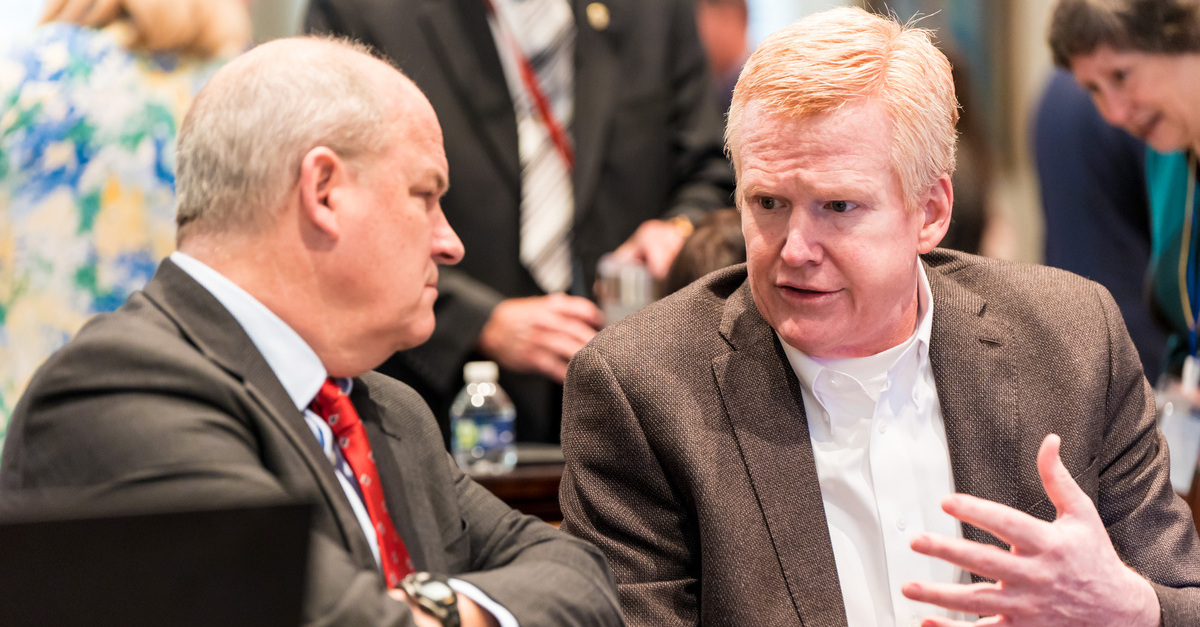
Two counts of murder. Two counts of possession of a weapon during the commission of a violent crime.
The trial began in January 2023 in Colleton County.
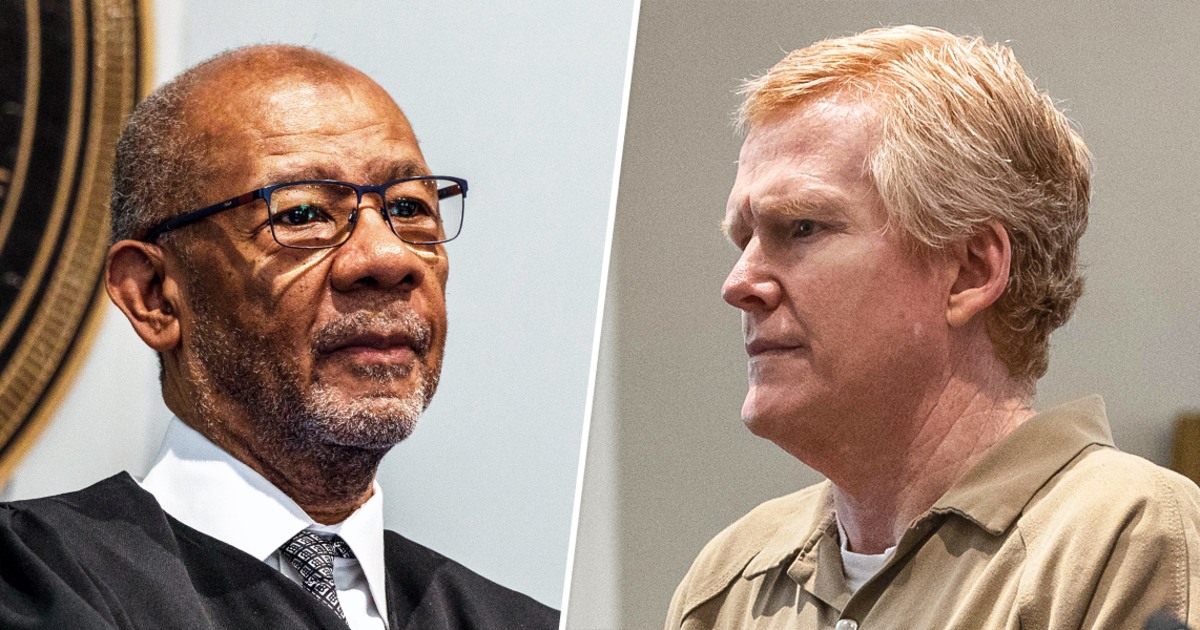
Judge Clifton Newman presided.
Prosecutors, led by Creighton Waters, built their case on what the record called circumstantial evidence.
The cell phone video. The ballistics. Alex's repeated lies.
Waters argued the pattern held together: the alibi that collapsed, the weapons from the family home, the tarp near the bodies.
The defense, led by Dick Harpootlian and Jim Griffin, offered a different picture.
Alex was a grieving husband and father. The state had no direct evidence.
What the defense argued specifically, the source does not detail.
What the jury deliberated, the source does not detail.
On March 2, 2023, the jury returned.
Guilty on all four counts.
The sentence was two consecutive life terms without parole.
It is a conviction. It is also a story that leaves a question open.
The motive was financial ruin, prosecutors said. The evidence placed him there.
But the video does not show the killings. The record does not establish what happened in those final moments.
He was sentenced. He was led away. The weight of the verdict settled over the courtroom.
The lingering question remains, and the source does not answer it.
AND THE STORY STILL ISN'T OVER
He is serving his life sentences at a South Carolina prison.
His federal sentence runs concurrently.
The appeals have been denied.
A motion for a new trial, based on allegations of jury tampering, was rejected by Judge Newman.
In a separate proceeding, he pleaded guilty to 22 federal and state financial crimes.
Fraud. Money laundering. An additional 40 years in federal prison.
Buster Murdaugh has stayed out of the public eye.
He speaks occasionally about his father's conviction.
The family's legal legacy has been dismantled.
The law firm that bore the name, Peters, Murdaugh, Parker, Eltzroth & Detrick, settled claims related to the fraud.
The case has produced documentaries and books.
No journalist or author has been formally credited with uncovering new evidence that changed the outcome.
What is left is the record itself.
The video, the ballistics, the lies.
What is not established is the status of any pending appeals.
What is not established is the possibility of further legal actions.
The source does not specify.
The final moments at the kennels remain unrecorded.
The conviction stands.
The questions linger, unanswered by the record.
Advertisement
You may also like
The 31 days Casey Anthony never reported her toddler missing
The 911 call came from a house in Orlando, Florida, on July 15, 2008. Cindy Anthony was on the line, and she told the…
The handwritten note Tsarnaev left inside the boat before capture
The boat sat in a Watertown backyard, dry-docked and winter-covered, on the morning of April 19, 2013. Inside it, police found Dzhokhar Tsarnaev, hiding…
A non-prosecution deal in 2007 that still haunts the Epstein case — how one promise shielded him for years
It begins with a signature. In 2007, federal prosecutors in Miami negotiated a non-prosecution agreement with Jeffrey Epstein, the wealthy financier accused of sexually…
The confession Ottis Toole made four times that police still wouldn't believe
He said he did it. Then he said he didn't. Ottis Toole was a serial killer. He confessed to the murder of six-year-old Adam…
The calling card left on a choir singer's body that police couldn't explain
The morning of September 15, 1922, a local man found two bodies beneath a crabapple tree in a secluded lane known as "Lovers' Lane"…
The two-word confession that cracked the Hillside Strangler case
He was arrested in Bellingham, Washington, in January 1979, for the murders of two women there. Under interrogation, Kenneth Bianchi confessed to those killings.…