The clown costume in John Wayne Gacy's crawl space that hid 26 bodies
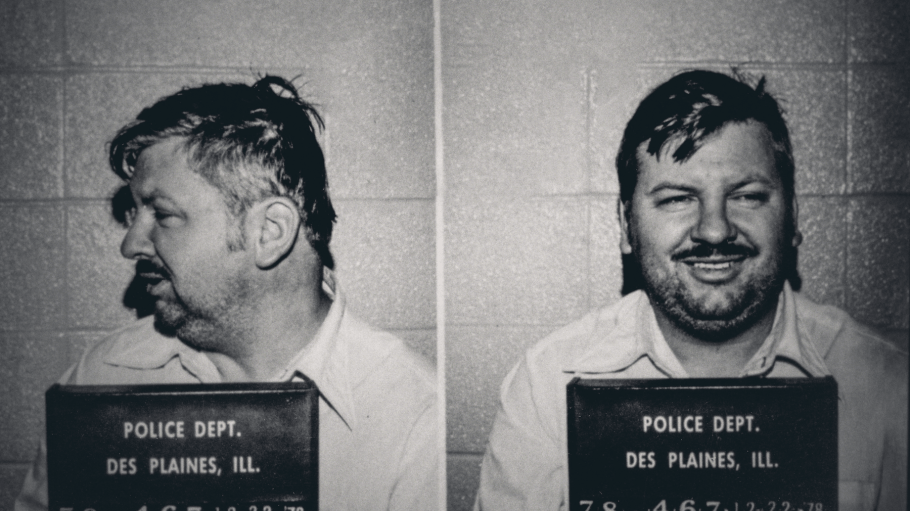
The clown costume hangs in the story like a prop left on a stage.
It is the image that travels: the white face, the red nose, the baggy suit.
But the documented fact is not the costume.
The documented fact is the crawl space.
John Wayne Gacy was a building contractor and part-time clown performer in the Chicago area.
Between 1972 and 1978, he murdered at least 33 young men and boys.
Most were strangled or asphyxiated; some were stabbed.
He buried 26 victims in the crawl space of his home at 8213 West Summerdale Avenue in Norwood Park Township.
The exact location of the costume within that crawl space is not specified in the source.
Not because it doesn't matter.
But because the record is about what was found in the dirt, not what hung on a wall.
The case broke in December 1978.
A 15-year-old Des Plaines youth, Robert Piest, disappeared.
He told his mother he was going to meet a contractor about a job.
That contractor was Gacy.
Investigators traced Piest to him, obtained a search warrant, and discovered the first human remains in the crawl space on December 22, 1978.
The clown had a name.
The crawl space had a floor.
She was on the ground below—no, that is not the image.
The image is a trapdoor.
A strong odor.
A space beneath the house that held 26 bodies.
How does a part-time clown become the last person a boy sees?
That would require evidence.
The record shows only the crawl space, the odor, and the remains.
The costume is a symbol.
The crawl space is the fact.
THE CONTRACTOR AND THE CLOWN
The contractor’s van was a familiar sight in the neighborhoods around Norwood Park Township.
He ran a business that hired young men, often teenagers, for construction work.
Several of the victims were employees of that business.
They knew him as the boss who paid them, the man who handed them tools and job sites.
He was also a part-time clown performer.
He called himself Pogo the Clown, and he entertained at parties and community events.
The makeup and the costume were part of the public performance.
The contracting business was the private one.
The duality is the unease: the same hands that shook at a child’s birthday party may have held the rope later.
The source does not specify when Gacy began performing as a clown or how often he did so.
That timeline is not established.
His wife during the murders, Carole Hoff, was interviewed by investigators.
She was not implicated.
No accomplices were charged.
The record names Gacy as the sole perpetrator.
The clown costume is the image that survived.
The crawl space is the fact that held the evidence.
He was a contractor, a clown, and a man charged with 33 murders.
The record does not say where one role ended and the others began.
THE DISAPPEARANCE OF ROBERT PIEST
Robert Piest was a 15-year-old from Des Plaines.
He disappeared on December 11, 1978.
He told his mother he was going to meet a contractor about a job.
Piest’s mother reported him missing.
Des Plaines police learned that Gacy had been the last person seen with him.
The record does not specify how police initially made that connection.
It does not say which tip, which witness, or which routine check led them to the contractor’s name.
Not because the detail is hidden.
But because the source does not provide it.
The investigation moved anyway.
Gacy was arrested on December 21, 1978, on a charge of sexual assault related to an earlier incident.
That arrest gave the police their hold on him.
A day later, on December 22, investigators found human remains in the crawl space of his home.
The remains were in the crawl space.
The crawl space was the fact that held the evidence.
Officers had noticed a strong odor and a suspicious trapdoor during the search.
Then the trapdoor opened onto what was buried.
The 15-year-old’s disappearance had pulled the investigation to that door.
What lay beneath it changed the scope of the case.
Piest’s body was not among the first remains found.
The crawl space held 26 victims in total.
The investigation was no longer about one missing boy.
It was about what the contractor had buried under his house.
THE CRAWL SPACE EXCAVATION
The officers noticed the odor first, before they even reached the trapdoor.
A strong, sweet smell that clung to the air of the crawl space.
They found the trapdoor, and they found what was underneath.
On December 22, 1978, investigators found human remains buried in the crawl space.
The excavation began.
Over the following weeks, the crawl space gave up its dead, one body at a time.
Twenty-six bodies in total, recovered from beneath the house at 8213 West Summerdale Avenue.
Some were wrapped in plastic.
Some were layered, one on top of another.
The crawl space was not a grave.
It was a storage room.
Gacy confessed during police interviews, providing details about how he killed and disposed of the victims.
He told them about the strangulation.
He told them about the asphyxiation.
He told them about the stabbing.
The source does not specify the exact methods of killing beyond those three.
The victims were identified through dental records and other means.
Several remained unidentified for years.
The scale of it settled slowly.
This was not a single crime.
This was a pattern, buried in the dirt, dug out by hand.
The investigation was no longer about one missing boy.
It was about the contractor and the crawl space and the bodies stacked like cordwood.
AND THE STORY STILL ISN'T OVER
The jury rejected the insanity defense.
They found him guilty of all 33 murders on March 12, 1980.
The next day, he was sentenced to death.
It took fourteen years for the sentence to be carried out.
Gacy was executed by lethal injection on May 10, 1994, at Stateville Correctional Center.
The execution ended his part of the story.
It did not end the story itself.
After his death, DNA testing and genealogical methods helped identify several previously unknown victims.
Most of the 33 victims have been identified as of recent reports.
A few remain unnamed.
The exact number still unidentified is not specified in the source material.
That would require evidence the record does not provide.
The house on Summerdale Avenue was demolished in 1979.
The crawl space is gone.
The dirt was cleared, the structure removed, the lot eventually leveled.
But the case did not close with the building.
It remains one of the most studied serial murder investigations in American history.
Law enforcement and forensic experts continue to work on the remaining unidentified victims.
The trial was the verdict.
The execution was the sentence.
The identification is the unfinished business.
Gacy confessed, was convicted, and was put to death.
What remains is a list of names still waiting to be attached to bodies.
A few families still wait.
The crawl space held 26 bodies.
The record holds 33 names.
The difference is a question the files have not yet answered.
Advertisement
You may also like

The 31 days Casey Anthony never reported her toddler missing
The 911 call came from a house in Orlando, Florida, on July 15, 2008. Cindy Anthony was on the line, and she told the…
The handwritten note Tsarnaev left inside the boat before capture
The boat sat in a Watertown backyard, dry-docked and winter-covered, on the morning of April 19, 2013. Inside it, police found Dzhokhar Tsarnaev, hiding…
A non-prosecution deal in 2007 that still haunts the Epstein case — how one promise shielded him for years
It begins with a signature. In 2007, federal prosecutors in Miami negotiated a non-prosecution agreement with Jeffrey Epstein, the wealthy financier accused of sexually…
The confession Ottis Toole made four times that police still wouldn't believe
He said he did it. Then he said he didn't. Ottis Toole was a serial killer. He confessed to the murder of six-year-old Adam…
The calling card left on a choir singer's body that police couldn't explain
The morning of September 15, 1922, a local man found two bodies beneath a crabapple tree in a secluded lane known as "Lovers' Lane"…
The two-word confession that cracked the Hillside Strangler case
He was arrested in Bellingham, Washington, in January 1979, for the murders of two women there. Under interrogation, Kenneth Bianchi confessed to those killings.…