The cotton gin fan that pulled Emmett Till's body to the riverbed — and the case history still written in it
The fan came up with the body.
On August 31, 1955, Emmett Till was pulled from the Tallahatchie River.
A cotton gin fan was wired to him, holding him to the riverbed.
That fan is the one object that ties the crime to the water.
It is a piece of farm machinery. It is also an anchor.
People still fixate on it, the way a single object can carry the weight of everything else.
It did not kill him. It held him down after.
The exact weapon used to beat and shoot Till was never definitively established in court.
Not the bat. Not the pistol. Not the hands.
The record does not establish where that specific fan came from, or how it was obtained.
That is not in the file.
What is in the file is the river, the weight, the boy.
The fan is what the water gave back. It is what the case still turns on.
THE ALLEGED WHISTLE
Emmett Till was 14 years old, from Chicago, visiting relatives in Money, Mississippi, in August 1955.
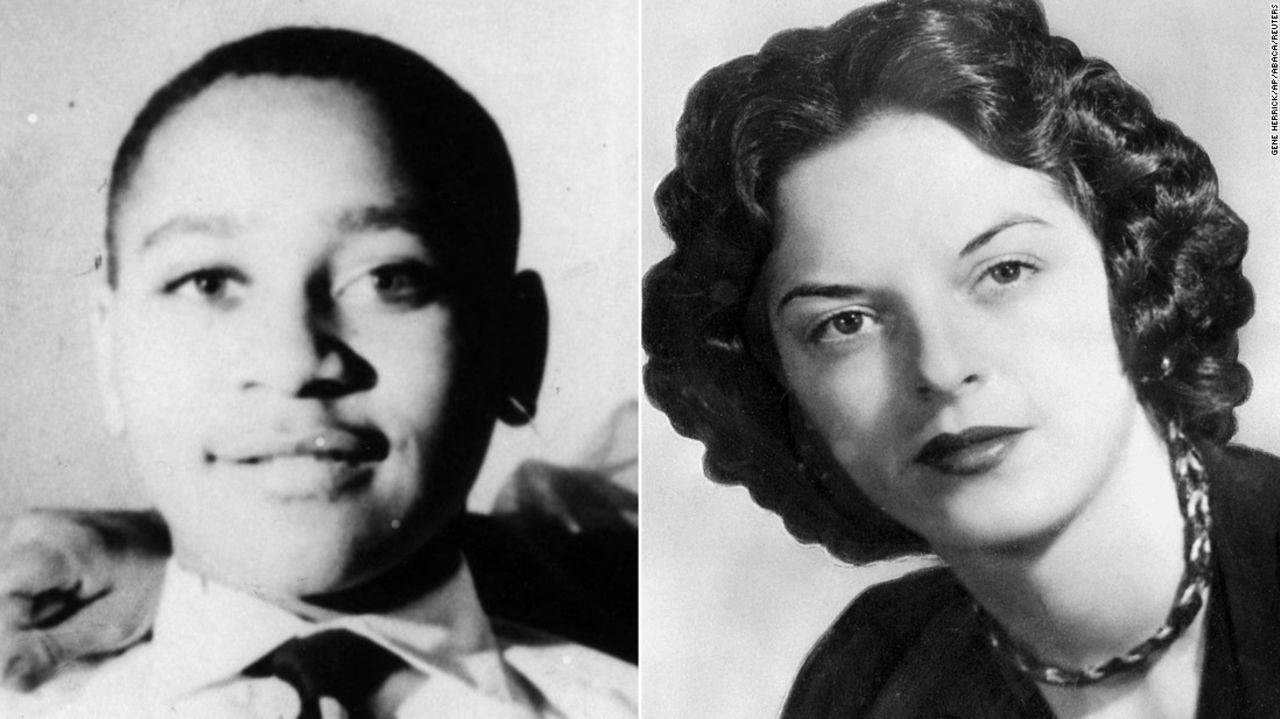
On August 24, he allegedly whistled at or spoke to Carolyn Bryant, a white woman working at a grocery store.
What exactly Till said or did at the store is not established.
It remains an allegation.
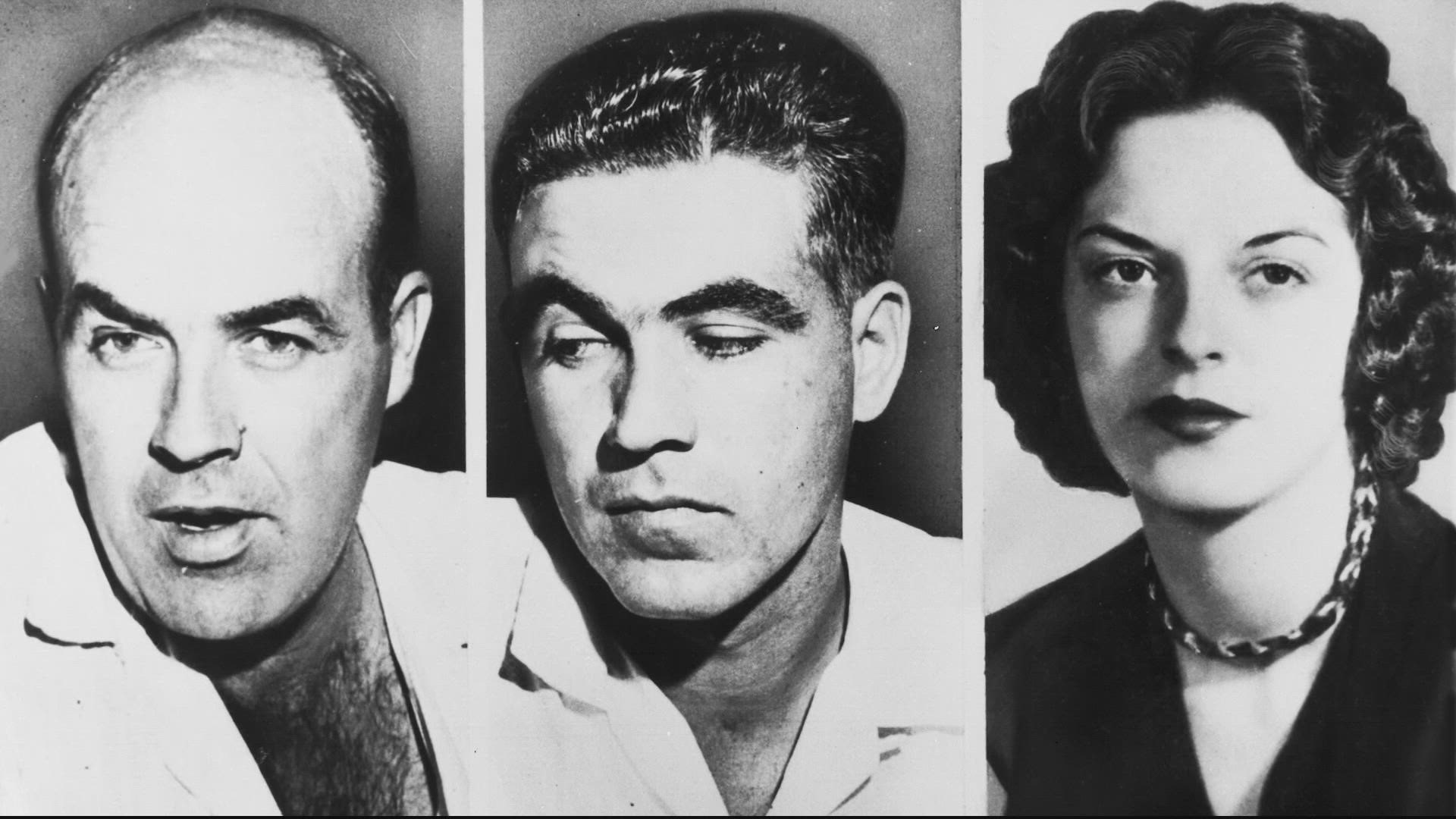
Four days later, on August 28, Roy Bryant and his half-brother J.W. Milam abducted Till from his great-uncle's home in the middle of the night.
The men came for him after dark.
The boy was taken from the house where he was a guest.
The case record does not say what words passed between Till and Carolyn Bryant.
It does not say whether a whistle was heard.
It does not say who heard it, or what it meant.
What the record shows is the escalation.
A word, a whistle, a gesture — then an abduction.
Then the river.
Till's body was found on August 31 in the Tallahatchie River, beaten and shot.
His face was unrecognizable.
A cotton gin fan was wired to his body to hold him under.
The fan is what the water gave back.
The exact weapon used to beat and shoot him was never definitively established in court.
The swiftness is the fact.
A boy spoke, allegedly, and four days later he was gone.
The men were charged with murder.
They were acquitted.
That came later, in September.
But the weight of the sequence sits here: one alleged moment, then a midnight abduction, then a body in the river.
Not because the whistle caused the murder in any way the law would measure.
But because the record offers nothing else — no other provocation, no other incident, no other explanation for why two men came for a child in the night.
That is what the files establish.
The rest is testimony, memory, and what people have said since.
THE TRIAL AND THE CONFESSION
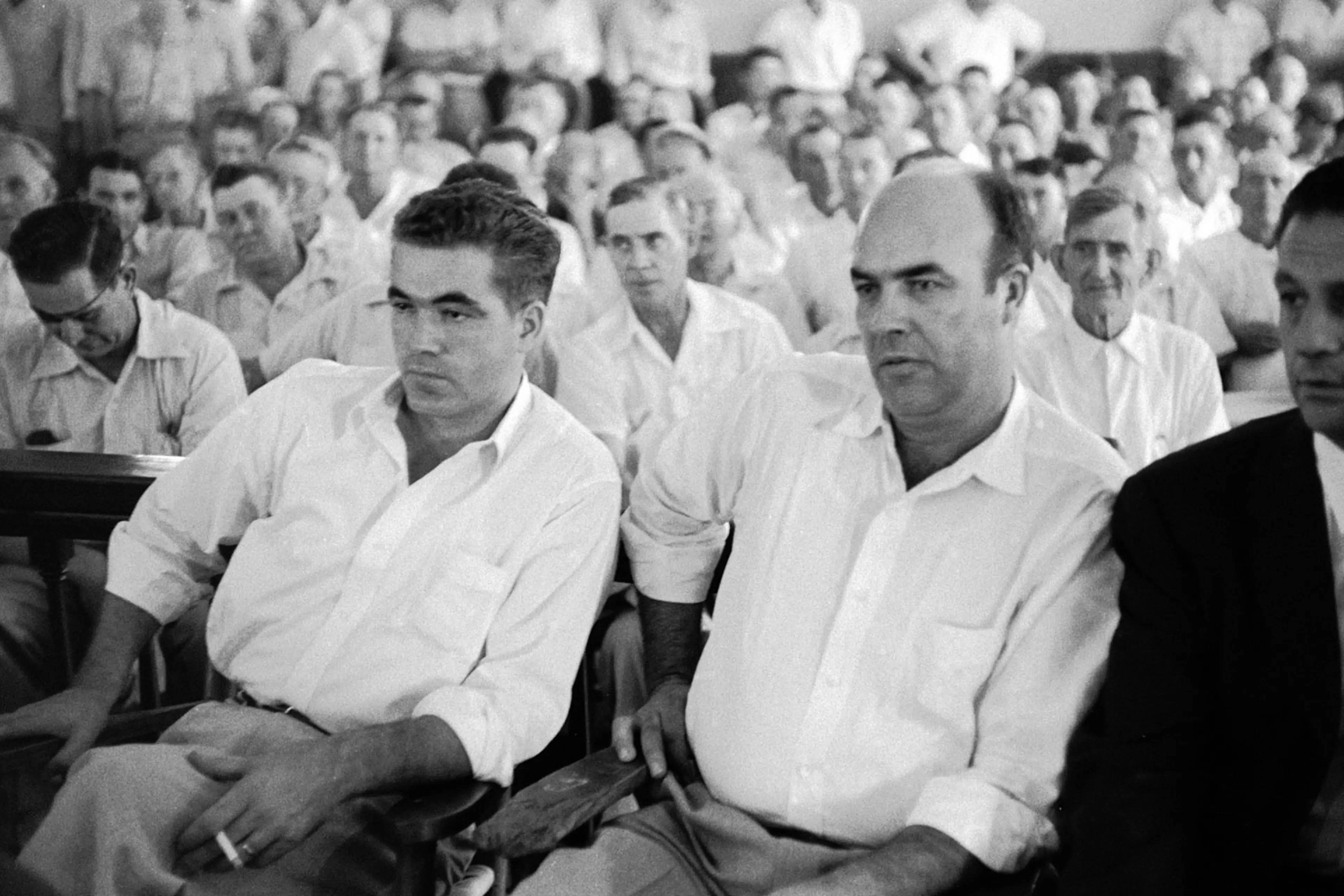
The trial opened in September 1955 in Sumner, Mississippi.
Roy Bryant and J.W. Milam were charged with murder.
The courtroom was packed, and the proceedings lasted five days.
The all-white male jury deliberated for just over an hour.
They acquitted both men.
The verdict was widely condemned nationally.
The case record shows the jury left the courtroom, considered the evidence, and returned.
Neither man was ever retried.
In 1956, Bryant and Milam admitted to the murder in a paid interview with Look magazine.
They confessed to the killing, describing how they had taken Till from his great-uncle's home.
But double jeopardy protected them from further prosecution.
The confession changed nothing in the law.
Neither man was ever convicted of any crime related to Till's death.
The exact details of the murder as described in the Look interview are not independently verified in the record.
What is verified is the acquittal.
What is verified is the confession.
What is verified is that the confession came after the protection had already attached.
The two men went back to their lives.
A jury had said the record could not convict them.
A magazine interview said the record should have.
The law chose the jury.
THE RECANTATION AND THE REOPENING
Carolyn Bryant sat for an interview with historian Timothy Tyson in 2007.
She recanted parts of her testimony, the case record states.
What she said in 1955 had helped send the jury toward acquittal.
What she said in 2007 helped send the FBI back to the file.
The FBI reopened the case in 2004, after new information emerged.
That information included Bryant's recantation.
In 2004, investigators exhumed Emmett Till's body.
An autopsy confirmed the cause of death.
The record does not specify what new evidence emerged when the case reopened again in 2018.
The Justice Department closed the investigation in 2017 without charges.
The reason: the statute of limitations had expired, and key witnesses were dead.
It reopened in 2018.
It closed again in 2021, without charges.
Each reopening raised the same question.
Each closing answered it the same way.
The law said the time had passed.
The law said the witnesses were gone.
The law said the case could not move.
Not because the record cleared anyone.
But because the record had no path left to follow.
What would a charge have required?
A living defendant, a live statute, a legal door left open.
That would require evidence the files do not supply.
So the case sits where the jury left it in 1955.
Acquitted.
The confession in Look magazine changed public opinion.
It did not change the law.
Double jeopardy protected the two men named in that confession.
Roy Bryant died in 1994.
J.W. Milam died in 1980.
Neither ever faced justice for Till's death.
Carolyn Bryant is still alive as of this writing.
The case keeps reopening.
It never closes with a conviction.
It only closes.
AND THE STORY STILL ISN'T OVER
Roy Bryant died in 1994.
J.W. Milam died in 1980.
Both men went to their graves without ever facing justice for the murder, according to the case record.
Carolyn Bryant is still alive as of this writing.
The case keeps reopening.
It never closes with a conviction.
It only closes.
The law changed anyway.
The Emmett Till Antilynching Act, named in his honor, was signed into federal law in 2022, making lynching a federal hate crime for the first time.
The case record does not establish any pending legal action or hearing against anyone involved.
The memory is preserved elsewhere.
The Emmett Till Interpretive Center in Sumner, Mississippi, now stands near the courthouse where the trial took place.
The Emmett Till and Mamie Till-Mobley National Monument, established in 2023, carries the family name across federal land.
Till's family members, including cousins and other relatives, have continued to advocate for justice and historical recognition, according to the case record.
They speak where the files fall silent.
They ask what the record leaves open.
They ask what the acquittal left unresolved.
The answer is not in the files.
The exact weapon used to beat and shoot Till was never definitively established in court.
The fan in the river was the weight, not the wound.
A monument is not a verdict.
A law is not a conviction.
The case is formally closed without charges, the Justice Department concluded in 2017, then again in 2021.
It is closed.
It is also unfinished.
Advertisement
You may also like
The waiter who returned sunglasses and never came home: Ronald Goldman's last errand
A pair of sunglasses left at a restaurant. A waiter running them back to the owner's daughter. On the night of June 12, 1994,…
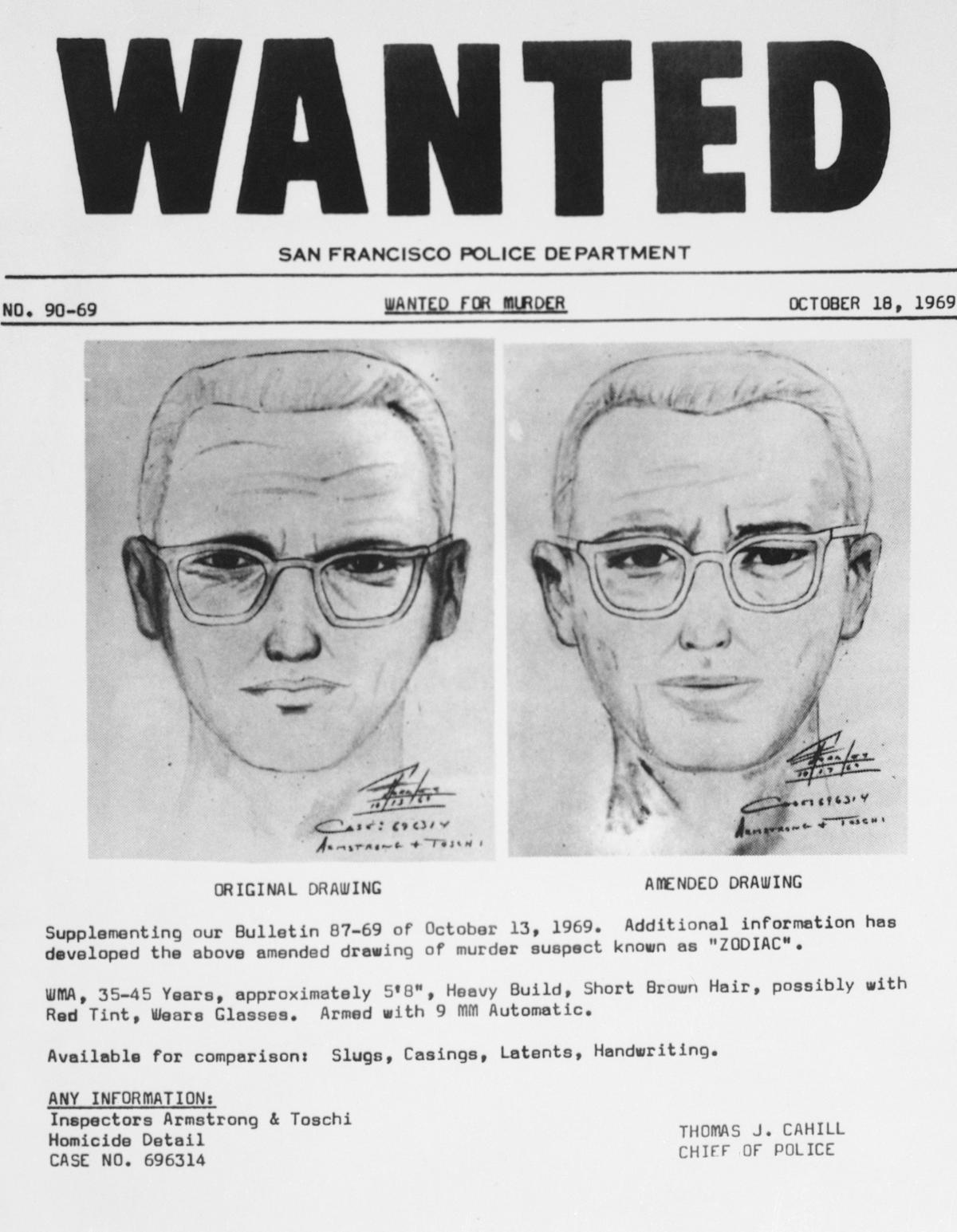
The blood-stained knife found in Arthur Leigh Allen's home that never sealed the Zodiac case
The knife came out of Arthur Leigh Allen’s home in 1991, and it was bloody. A Vallejo task force found it during a search…

The DNA match that ended a 20-year manhunt for a killer the police had already cleared
He passed the polygraph. The truck painter from Auburn, Washington sat for the test early in the Green River Killer investigation, and the machine…
The FBI tape that captured what happened inside the Waco compound before the fire
The infrared footage was shot from above, by surveillance aircraft circling the compound. The audio recordings were captured the same way, microphones picking up…
The boat bought days before Laci vanished — and the alibi that unraveled in court
The mop sat in the garage of the Modesto home, and next to it, a boat trailer with fresh paint. Police found both during…
The beauty queen's parents who spent 25 years demanding a murder trial
On February 17, 1970, at Fort Bragg, North Carolina, Army Captain Jeffrey MacDonald, a Green Beret physician, reported that four intruders — three men…