The false tip that sent two ex-cons to a Kansas farmhouse with a shotgun
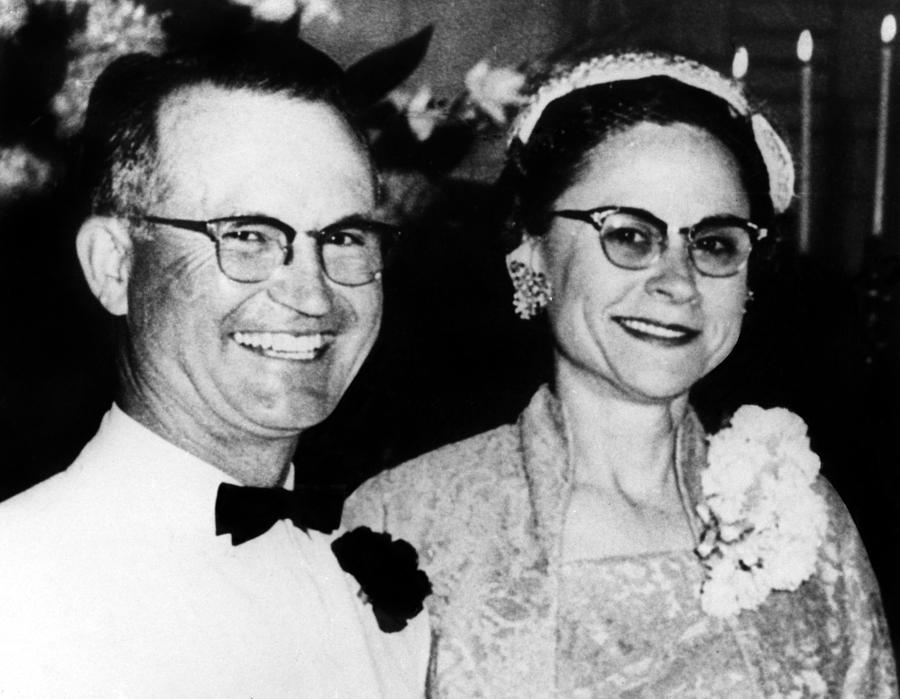
The cell in Lansing, Kansas, held two men who had traded stories to pass the time.
One was a former farmhand who had worked for a wealthy farmer named Herbert Clutter.
The other was an ex-convict named Richard "Dick" Hickock.
The farmhand told Hickock that his old employer kept a safe full of cash in his house.
That was the tip.
The farmhand, Floyd Wells, later told authorities he had mentioned the supposed safe to Hickock while they shared a cell.
Wells had worked for the Clutter family.
He had described the house, the family, and the money he believed was kept there.
Hickock latched onto the idea.
He saw a score, a quick robbery, a way out of his own failures.
Was the safe real?
Was there cash in the house?
The investigation would find none.
There was no safe and little cash in the Clutter home.
The tip was false.
The record does not establish the exact wording of that prison conversation.
It does not establish whether Hickock had any other reason to target the Clutters.
What the record shows is simpler and colder.
A rumor passed in a cell became a plan.
That plan set two ex-convicts on the road to Holcomb, Kansas, on the night of November 15, 1959.
Four members of the Clutter family were murdered in their home that night.
Herbert Clutter.
His wife, Bonnie.
Their teenage children, Nancy and Kenyon.
They had been bound and shot at close range with a shotgun.
The tip that sent them there was never verified.
It was never real.
But the motive it created was deadly.
TWO EX-CONS ON THE ROAD
They were two ex-convicts, the case summary states, and they planned the robbery on the strength of a cellmate's tip about a safe.
That tip was false, but they drove to Holcomb, Kansas, on the night of November 15, 1959, according to the timeline of events.
They arrived at the Clutter farmhouse.
The crime scene showed no sign of forced entry, the investigation notes record.
The killers were let in, or they entered easily.
Inside, the family was bound.
The medical examiner's findings describe the victims shot at close range with a 12-gauge shotgun.
It was a normal farmhouse on a quiet night.
It became a place where four people were bound and shot.
The exact time of arrival is not specified in the source.
The sequence of events inside the house is not specified either.
What is known is the road they took.
What is known is the house they reached.
What is known is the weapon they carried.
The motive was a lie, but the journey was real.
The night was quiet until it was not.
She was on the ground below.
The house stood in the dark, and the men came to it with a shotgun.
They were ex-cons who believed a story about money.
There was no money.
There was no safe.
There was only the Clutter family, bound and shot at close range.
That would require evidence.
THE MORNING AFTER
The morning broke over Holcomb like any other.
The Clutter family did not show up for church.
They did not show up for the planned outing either.
Neighbors and friends came to the house to check.
They found the bodies inside.
Herbert Clutter was dead, his wife Bonnie dead, their teenage children Nancy and Kenyon dead.
The victims had been bound and shot at close range with a shotgun, according to the case record.
The exact condition of the bodies is not detailed in the source.
The order of the murders is not established either.
Bonnie Clutter suffered from mental health issues and was largely bedridden.
Nancy was a popular high school student.
Kenyon was the youngest child.
Four people in one farmhouse, gone before noon.
The community knew the Clutters.
The Clutters were the wealthiest farmers in the area, the case summary notes.
A house with no sign of forced entry.
The killers were let in or walked in easily.
:max_bytes(150000):strip_icc():focal(999x0:1001x2)/in-cold-blood-2-1-07b374b9528645cc94c1bea2652ff55f.jpg)
That thought settled over Holcomb like dust.
The crime shocked the nation.
It would later become the subject of Truman Capote's book *In Cold Blood*, according to the case summary.
But that morning, there was no book.
There was only the house, the bodies, and the silence where four voices should have been.
Violence had come close to home.
It had come inside the home.
It had come while the family slept, or tried to sleep, or woke to a stranger's voice.
The record does not say which.
The record says they were bound and shot.
The record says the tip that brought the killers was false.
There was no safe.
There was little cash.
There were four people who did not wake up.
The neighbors who found them would carry that morning for the rest of their lives.
THE BREAKTHROUGH
The investigation initially produced few leads.
There was little physical evidence left behind.
The crime scene showed no sign of forced entry, and the killers had left almost nothing to trace.
Then a former cellmate named Floyd Wells told prison authorities about a plan.
Wells had worked for the Clutter family.
While in prison with Hickock, Wells had mentioned a supposed safe in the farmhouse.
That safe never existed.
Wells' information was relayed to the Kansas Bureau of Investigation.
The lead investigator and his team focused on Hickock and his companion, Perry Edward Smith.
The two men were arrested in Las Vegas on December 30, 1959.
The arrest came after a tip from a former acquaintance of Smith's.
The identity of that acquaintance is not named in the record.
In their possession were items traced to the Clutter home.
A radio.
Binoculars.
Both men confessed to the murders.
Each blamed the other for pulling the trigger.
Hickock said Smith did it.
Smith said Hickock did it.
The confessions broke the case open.
But the blame-shifting left a question hanging over the arrests.
Who fired the shotgun?
That would require evidence.
The record does not say who pulled the trigger.
It says only that both confessed, and each pointed at the other.
AND THE STORY STILL ISN'T OVER
The trial opened in Finney County, Kansas, in March 1960.
It lasted about two weeks.
The two men stood together, charged with four counts of first-degree murder.
The verdict was guilty on all counts.
The sentence was death.
The Kansas Supreme Court upheld the convictions on appeal.
They spent years on death row.
On April 14, 1965, both were hanged at the Kansas State Penitentiary in Lansing.
The same day, the same rope.
The Clutter family home was demolished in 1960.
The case became famous through Truman Capote's 1966 book, *In Cold Blood*.
The book's accuracy has been debated.
The full accuracy of Capote's account is not established.
He claimed extensive interviews; the record does not fully document what was said.
The surviving Clutter daughters lived private lives.
They rarely spoke publicly about the murders.
Their private lives are not fully documented either.
That, too, is not established.
A false tip about a safe.
No safe.
Four dead.
Two men hanged.
A book that made the story immortal.
The house is gone.
The daughters are quiet.
The record holds what it holds.
The motive was false.
The result was real.
Advertisement
You may also like
The 31 days Casey Anthony never reported her toddler missing
The 911 call came from a house in Orlando, Florida, on July 15, 2008. Cindy Anthony was on the line, and she told the…
The handwritten note Tsarnaev left inside the boat before capture
The boat sat in a Watertown backyard, dry-docked and winter-covered, on the morning of April 19, 2013. Inside it, police found Dzhokhar Tsarnaev, hiding…
A non-prosecution deal in 2007 that still haunts the Epstein case — how one promise shielded him for years
It begins with a signature. In 2007, federal prosecutors in Miami negotiated a non-prosecution agreement with Jeffrey Epstein, the wealthy financier accused of sexually…
The confession Ottis Toole made four times that police still wouldn't believe
He said he did it. Then he said he didn't. Ottis Toole was a serial killer. He confessed to the murder of six-year-old Adam…
The calling card left on a choir singer's body that police couldn't explain
The morning of September 15, 1922, a local man found two bodies beneath a crabapple tree in a secluded lane known as "Lovers' Lane"…
The two-word confession that cracked the Hillside Strangler case
He was arrested in Bellingham, Washington, in January 1979, for the murders of two women there. Under interrogation, Kenneth Bianchi confessed to those killings.…