The fishing trip contradiction that turned a missing-pregnant-wife case into a murder probe
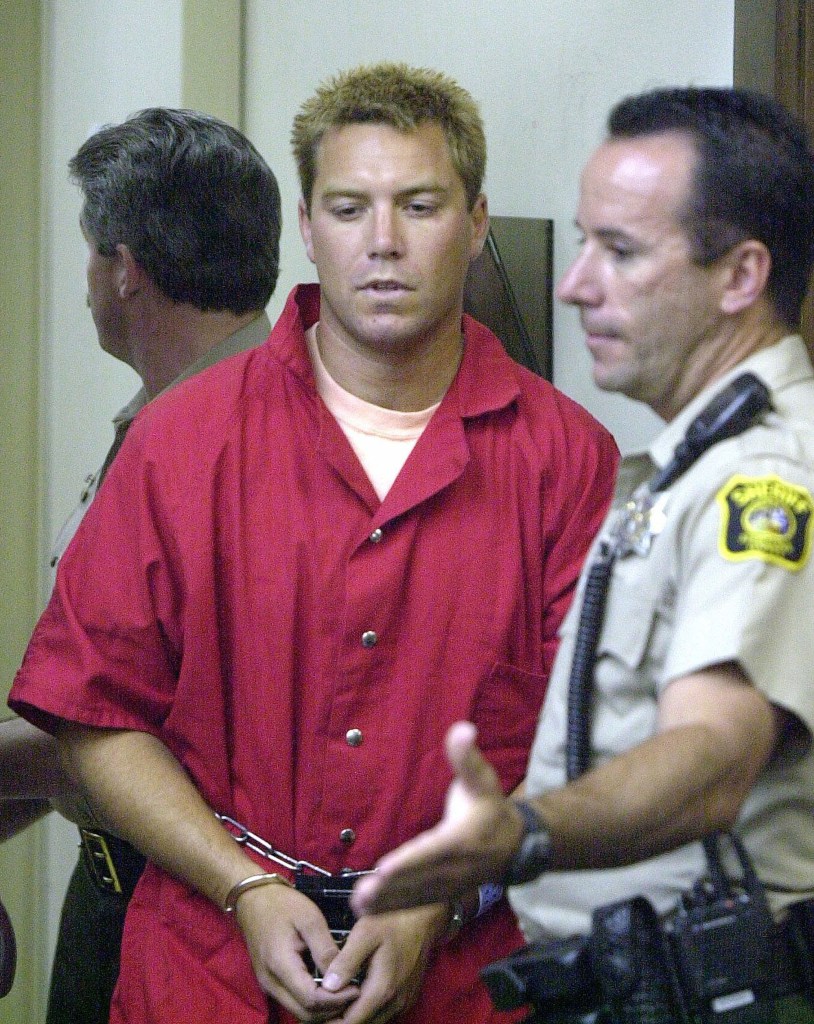
Christmas Eve, 2002.
A woman eight months pregnant was reported missing from her home in Modesto, California.
Her name was Laci Peterson.
Her husband, Scott Peterson, said he had gone fishing that morning at the Berkeley Marina.
He said he returned to find her gone.
Detectives noted inconsistencies in his account.
He claimed he launched his boat at the marina despite rough conditions.
Rough water, a small boat, a man who said he went out anyway.
A theory circulates online that the fishing trip was a cover for murder.
That is a theory.
What actually happened on that trip is not established by the record.
The weapon was never identified.
No knife, no gun, no rope, no blunt object.
The case drew intense national media attention.
Cameras at the Modesto house, reporters on the lawn, a story that would not leave the screen.
But in those first days, the question was a simple one.
Why fish?
Why that morning?
Why a marina, in December, in conditions a detective would later call questionable?
The answer would require evidence.
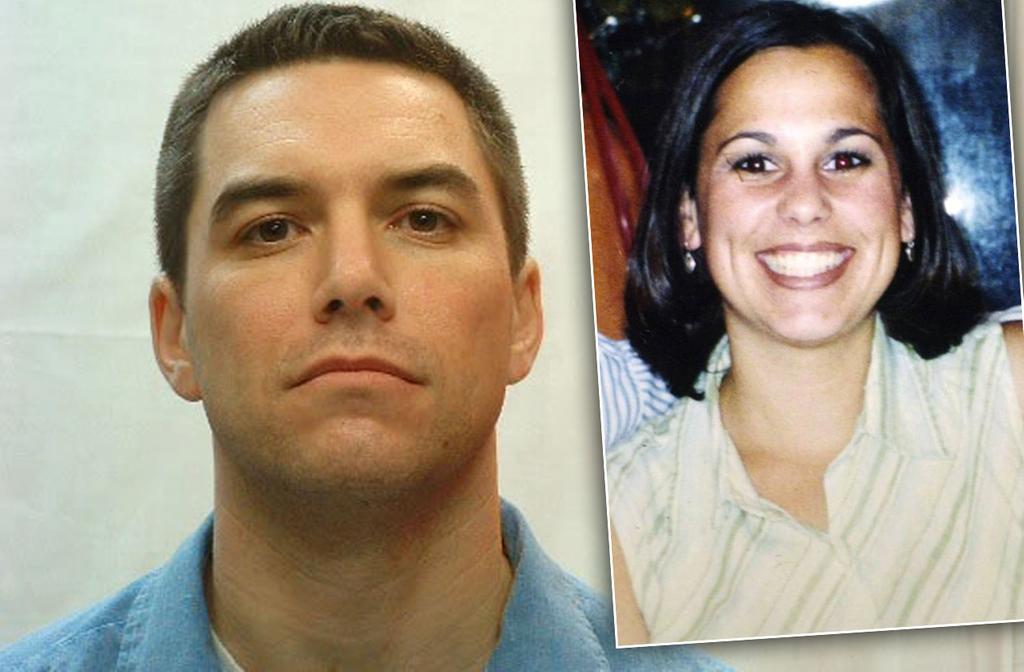
The record holds only the inconsistencies.
THE FIRST 48 HOURS
The investigation began as a search, not a probe.
Laci Peterson was reported missing on December 24, 2002, and the Modesto police initially treated her disappearance as a possible abduction.
A pregnant woman, gone from her home — the working theory was a stranger, a snatch, a crime of opportunity.
Suspicion quickly turned to Scott Peterson.
Detectives noted inconsistencies in his account of the fishing trip.
He said he launched his boat at the Berkeley Marina that morning, in rough conditions a detective would later call questionable.
The timeline didn't hold.
Investigators found that Peterson had purchased a boat shortly before the disappearance.
His behavior raised further suspicion: he sold his wife's car, he changed his appearance.
What evidence was compromised by the failure to secure the home is not specified in the record.
The home was not secured immediately.
That was a major mistake early on.
A home is a scene, a container of clues, a record of the last ordinary morning.
What could have been preserved there — fibers, footprints, a phone bill, a strand of hair — the record does not say.
What the record does show is that the scene was left open.
The lead detective, Al Brocchini, would later testify about the inconsistencies.
He would testify about the boat.
He would testify about the shifting story.

But the first 48 hours belonged to the theory of abduction.
It is a theory the record does not support.
It is a theory the record does not explicitly refute either.
The record holds only the gaps.
The car was sold.
The appearance was changed.
The home was left unsecured.
The reader is left to ask: what did that cost?
That would require evidence.
The record holds only the inconsistencies.
THE OTHER WOMAN
In January 2003, a massage therapist named Amber Frey came forward.
She told investigators she had been in a romantic relationship with Scott Peterson during Laci's pregnancy.
She handed over recorded phone calls.
On those calls, according to the record, Peterson made misleading statements about his whereabouts and about his wife's disappearance.
What exactly those calls contained beyond the misleading statements is not detailed in the record.
That is not established.
What is established is the pivot.
The investigation had treated Laci's disappearance as a possible abduction.
Now it had a suspect.
:max_bytes(150000):strip_icc():focal(749x0:751x2)/Jackie-Peterson-and-Lee-Peterson-leave-the-San-Mateo-Superior-Courthouse-121625-55846a7459e640d79a1b33bfbc8af4b1.jpg)
The prosecution's case was largely circumstantial.
It relied on the affair.
It relied on the boat.
It relied on the location where the bodies were found.
That location matched Peterson's claimed fishing spot.
Laci's remains and those of her unborn son, Conner, washed ashore in April 2003 in the San Francisco Bay, near where he said he had been fishing.
The affair made the inconsistencies mean something.
The boat made the fishing trip look like a plan.
The bodies made the location look like a confession.
None of it was direct proof.
It was a chain of circumstances, and the other woman was the first link that held.
She was not the motive the prosecution would argue.
She was the reason the record stopped reading like a missing-person file.
The reason it started reading like a murder case.
TWO STORIES, ONE SET OF FACTS
The trial began in June 2004 in Stanislaus County, with jury selection starting that month.
The prosecution argued that Scott Peterson had murdered Laci and their unborn son, Conner.
The defense argued that Laci had been abducted while walking the dog, and that the bodies could have drifted.
Both stories drew from the same set of facts.
The medical examiner testified that Conner's body showed no signs of trauma.

The cause of death for both Laci and Conner was listed as undetermined.
That is what the record establishes.
It is a gap in the record.
The weapon was never identified.
That, too, is not established.
The prosecution argued the deaths were murders despite the undetermined cause of death.
The defense argued the undetermined cause left room for another explanation.
Two plausible readings of the same facts.
One set of remains found near the marina where Peterson said he fished.
One set of facts that pointed in opposite directions.
Was it a crime without a weapon and without a cause of death?
Or was it a disappearance that ended in water, with no single moment the record can name?
The jury heard the prosecution's case for months.
The jury heard the defense's case for months.
On November 12, 2004, the jury found Peterson guilty on both counts.
Guilty of first-degree murder for Laci.
Guilty of second-degree murder for Conner.
The verdict did not fill the gap in the record.
The cause of death remained undetermined.
The weapon remained unidentified.
:max_bytes(150000):strip_icc():focal(749x0:751x2)/Scott-Peterson-amber-frey-081424-2-a79c132d1c8a4fb896b324f78c713ded.jpg)
The conviction rested on circumstance, not on a coroner's finding.
Not because the evidence was weak.
But because the evidence was circumstantial, and the record still holds its silence.
AND THE STORY STILL ISN'T OVER
On December 13, 2004, the jury recommended the death penalty.
The trial judge pronounced the sentence on March 16, 2005.
The conviction and the death sentence were automatically appealed to the California Supreme Court.
The appeal took years.
In August 2020, the court upheld the conviction.
The same decision overturned the death sentence.
The court cited juror misconduct.
What the misconduct was, the record does not detail.
That is not established in the record.
The court ordered a new penalty phase.
In December 2021, Peterson was resentenced.
Life in prison without the possibility of parole.
The conviction stands.
The sentence was revisited.
Peterson is incarcerated at Mule Creek State Prison in California.
He is serving life without parole.
The legal story did not end with the verdict.
It continued through appeals, a reversal of the penalty, and a new sentencing.
The record holds the conviction.
The record does not hold the details of why the sentence fell.
Advertisement
You may also like

The desert graves that were found three years after a family vanished
The television was still on. Uneaten dinner sat on the table. The family dog was in the backyard. Both vehicles were still at the…
The false babysitter story that unraveled Casey Anthony's defense
She gave them a name. A babysitter named Zenaida Fernandez-Gonzalez, she told investigators, had taken her daughter. The name was repeated in news coverage.…
How a 14-year-old's open-casket funeral forced a nation to look at Emmett Till
She had the casket opened. Emmett Till's body came back to Chicago from the Tallahatchie River, where it was pulled from the water on…
The package to the Los Angeles Examiner that claimed to hold Black Dahlia clues
The package sat in a pile of mail at the Los Angeles Examiner, unremarkable until someone opened it. Inside were Elizabeth Short's address book…
Inside the taunting Zodiac letter that made a reporter a target
The envelopes arrived at the San Francisco Chronicle with return addresses that did not exist. Inside were letters, each one a taunt, each one…
The 'bushy-haired' intruder Sheppard said he chased — and the question that haunted a courtroom
He told police he was asleep on a downstairs daybed when he heard noises. Dr. Sam Sheppard said he went upstairs, struggled with an…