The half-eaten meal on the counter that haunted the McStay family search
The plate sat on the kitchen counter, half-eaten.
On February 4, 2010, Joseph McStay, his wife Summer, and their two young sons, 4-year-old Gianni and 3-year-old Joseph Jr., were reported missing from their home in Fallbrook, California.
Inside the home, investigators found Joseph's wallet and keys.
They found the meal.
The family's dogs were in the backyard.
The vehicles were still in the driveway.
Nothing about the scene suggested a planned departure.
The wallet said he meant to come back.
The keys said the same.
The meal said they were sitting down to eat.
What could make a family leave a meal half-eaten and never return?
What could interrupt a dinner so completely that no one came back for the wallet?
What could take four people and leave the food untouched?
The record does not say.
The source does not specify what the meal was, who prepared it, or whether it was breakfast, lunch, or dinner.
It is a detail without a context.
It is also the detail the public latched onto.
The meal became a focal point for the media, a symbol of the abruptness of the disappearance.
It was the image that fit the mystery: a table set, a family gone.
It was the image that haunted the search.
The half-eaten meal on the counter suggested a sudden departure, according to the case record.
It suggested interruption.
It suggested that whatever happened, happened fast.
The dogs stayed.
The cars stayed.
The food stayed.
Only the family left, and they left mid-bite.
That is what the record shows: the meal, the wallet, the keys, the dogs, the cars.
What the record does not show is why.
The question hung over the investigation for three years.
It hung over the meal itself.
THE SILENT PHONES
The San Bernardino County Sheriff's Department found no signs of forced entry or struggle at the McStay home.
No broken locks.
No overturned chairs.
No evidence that anyone fought back.
The house simply stood there, with the dogs in the backyard and the vehicles in the driveway, holding its secrets.
Detectives noted that the family's cell phones had stopped transmitting shortly after they were last seen.
Not because the phones were turned off in a panic.
Not because they were deliberately destroyed.
They just went silent, one by one, and the record does not specify the exact time they stopped.
The last activity on Joseph McStay's phone was a call to Chase Merritt, a business associate who had worked with him on water-feature projects.
What was said on that call?
The source does not specify the content.
That would require evidence.
For over three years, the silence stretched.
The phones stayed dark.
The home stayed empty.
And the public grew fixated.
Major news networks picked up the story.
True-crime programs devoted hours to the mystery.
The half-eaten meal became a symbol, replayed in graphics and recreated in segments.
Viewers asked the same questions over and over.
Why would a family leave their dogs behind?
Why would they leave their vehicles?
Why would Joseph leave his wallet and keys on the counter?
The sheriff's department had no answers.
The national media had only speculation.
And the phones remained silent, transmitting nothing, explaining nothing.
THE DESERT GRAVES
A motorcyclist found human remains in two shallow graves in the Mojave Desert near Victorville, California, in November 2013.
The source does not specify the exact date of the discovery within that month, nor the precise location of the graves.
The remains were later identified as the four McStay family members.
Joseph and Summer McStay had been beaten to death with a sledgehammer.
The children had also been killed.
The sledgehammer was never recovered.
The search that had begun with a half-eaten meal on a kitchen counter ended here, in the dirt.
The mystery became a horror story.
The story the public had followed for three years shifted from "where are they?" to "who did this?"
National media coverage intensified.
True-crime programs picked up the case, and the public followed the renewed investigation closely.
The discovery led to a renewed investigation.
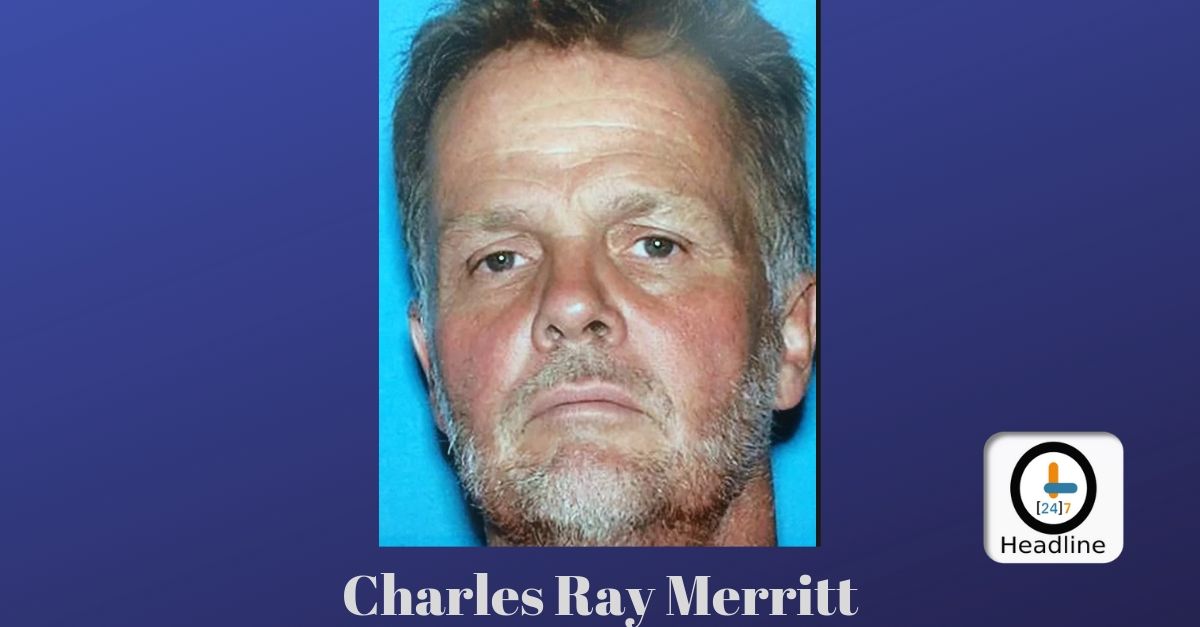
Chase Merritt, a business associate of Joseph McStay, was arrested on November 5, 2014.
He was charged with four counts of first-degree murder with special circumstances.
He had been discussed as a person of interest early on, but no arrest came until after the remains were found.
The record shows what investigators found in the desert.
It does not show why the family left their home, or what happened in the hours before they did.
That would require evidence.
The phones were silent.
The meal sat on the counter.
The graves held the answer, and the answer was a sledgehammer that no one ever recovered.
THE TRIAL AND THE TWO STORIES
The trial opened in January 2019 in a San Bernardino County courtroom, and the cameras were already waiting.
The prosecution, led by the deputy district attorney, built its case on money and motion: Merritt's financial motive, altered records in McStay's QuickBooks software, cell tower data placing him near the burial site, and a jailhouse informant who claimed Merritt had confessed.
The defense answered that the cell phone data was unreliable and the informant was not credible.
The evidence was circumstantial, the defense argued, and Merritt was innocent.
The courtroom became a stage for two competing certainties.
The prosecution's story was clean: a business partner who owed money, records edited after the family vanished, a phone that traveled to the desert.
The defense's story was messier: towers that lie, informants who bargain, a man who never confessed on tape.
Neither side could produce the sledgehammer.
The record does not specify the jailhouse informant's name, nor the exact nature of the alleged confession.
That detail was never established.
On June 10, 2019, the jury found Merritt guilty on all four counts.
On January 21, 2020, he was sentenced to death.
The verdict was reported as a closure, a chapter slammed shut.
But the public had already made up its mind years earlier, in comment sections and forums, before the first witness was sworn.
The true-crime programs had aired the half-eaten meal, the silent phones, the shallow graves.
The audience knew the ending before the jury did.
That is the tension the trial could not resolve: the case was circumstantial, and the certainty was not.
The jury chose the prosecution's story.
The defense's questions did not disappear with the verdict.
They simply moved to the appeal.
AND THE STORY STILL ISN'T OVER
Charles Merritt remains on death row at San Quentin State Prison in California.
His case is in the automatic appeal process required for death sentences in California.
The source does not specify the current stage of that appeal, or any upcoming hearing dates.
That would require evidence.
The verdict is in. The story is not.
Patrick McStay, Joseph's father, has spoken publicly about his grief and his satisfaction with the verdict.
The family's public statements carried the weight of a decade.
They waited three years for remains. They waited four more for an arrest. They waited through a trial that began in January 2019 and ended with a guilty verdict on June 10, 2019.
The sentence came on January 21, 2020.
The cameras moved on. The podcasts kept the case alive.
Multiple documentaries and true-crime podcasts have revisited the half-eaten meal, the silent phones, the sledgehammer that was never found.
The case continues to be referenced in discussions of forensic evidence and circumstantial murder cases.
Not because the questions were answered. But because the answers were built on towers and ledgers and an informant's word.
The defense's questions did not disappear with the verdict.
They simply moved to the appeal.
The public followed the case because it looked like a family vanished mid-bite. The record shows only what investigators found, not why they left.
The record shows what the jury decided. It does not show the final chapter.
The appeal is automatic. The process is slow.
Charles Merritt remains on death row, and the story remains open.
The family's grief was public. Their satisfaction was public. What happens next is not.
Advertisement
You may also like
The bloody glove found at O.J. Simpson’s estate that split a nation
A single glove lay on the walk outside Nicole Brown Simpson’s condominium on Bundy Drive. Police found it on the night of June 12,…
A 12-year-old girl was among the victims — and her parents kept coming to court
The youngest name on the list was twelve years old. Between October 1977 and February 1978, ten young women and girls were abducted, sexually…
Why a therapist's tape recording changed the Menendez brothers' murder case
The 911 dispatcher logged the call at 11:47 p.m. on August 20, 1989. Lyle Menendez told the operator his parents had been shot. He…
The confession that named 11 victims — but never made it to trial
In 1965, a man already in custody for other crimes gave a detailed confession to a series of murders that had terrorized Boston since…
The plea deal that let Epstein walk — and the 2018 report that changed everything
In 2018, the Miami Herald published a series by Julie K. Brown on Jeffrey Epstein’s 2008 plea deal. The series documented what federal prosecutors…
The fingerprint on a pillowcase that sealed a killer's fate — and the appeals that keep him alive
The pillowcase was ordinary. It sat in Polly Klaas's mother's home in Petaluma, California, on the night of October 1, 1993. Twelve-year-old Polly was…