The love letters scattered at a 1922 murder scene that turned a minister's death into a media circus
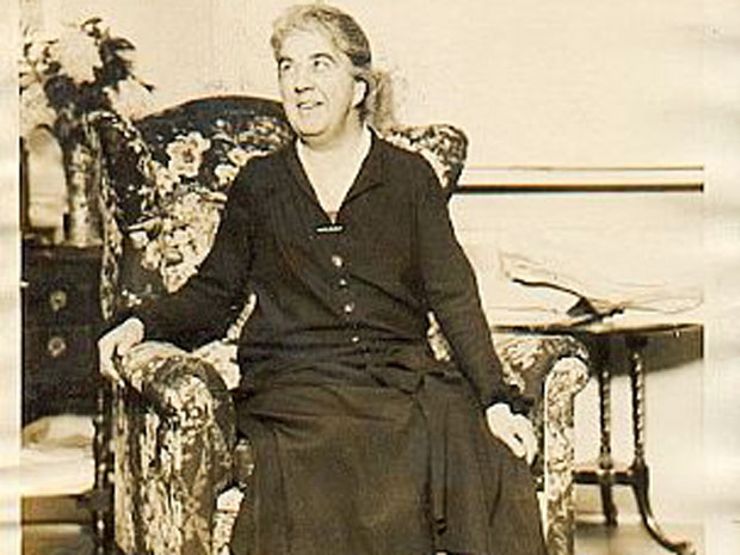
The crabapple tree stood at the edge of a lovers' lane called "the Bungalow," and beneath it the grass held two bodies on the evening of September 14, 1922.
Reverend Edward Wheeler Hall lay shot in the head.
Mrs. Eleanor Reinhardt Mills lay shot in the head and the throat.
Their bodies were arranged in a tableau, and around them the ground was littered with love letters.
The letters were real, scattered where anyone could see them.
Who wrote them, and what they said, is not specified in the record.
The source does not establish whose hand set those pages down.
It does establish what happened next.
Newspapers across the country picked up the story within days.
The press gave it a name: the Hall-Mills case.
It became one of the most sensational murder mysteries of the 1920s, a scandal with a minister and a choir singer from his own church.
The public wanted the letters read aloud.
The public wanted the secret exposed.
The public wanted a killer named.
That would require evidence.
At the scene, the evidence was already being disturbed, with onlookers allowed to walk through and touch what was there.
The letters stayed in the story, though, as the detail no one could forget.
They were the promise of a motive laid out in ink.
They were the reason the case would not let go of the country's attention for years.
A .32-caliber revolver was involved, according to the record, and it was never recovered.
The tableau remained exactly as found: two people, two shots, paper scattered like fallen leaves.
THE SCENE AND THE STALL
The local resident who found them is not named in the record.
It is a gap the file does not fill.
Police arrived, but the scene was not protected.
Onlookers walked through the grass, picked things up, moved things around.
The love letters were scattered there, and they were handled before any inventory was taken.
The initial investigation was confusion.
There was no forensic rigor, no careful mapping of where each body lay, no disciplined chain of custody for the paper.
The revolver was a .32-caliber, and it was never recovered.
That is established.
What was examined, what was photographed, what was preserved — those details are thin.
What was trampled, what was lost, what was never recorded — those details are thinner.
The case drew newspapers from across the country.
Every development was a headline.
Every rumor was a column.
The public followed the story the way it followed a serial, waiting for the next installment.
And the investigation stalled.
No arrests were made for years.
Not because there were no suspects.
But because the scene had been compromised and the leads had gone cold.
The bodies had been found on September 14, 1922.
The trial would not begin until November 1926.
Four years of silence sat between the crabapple tree and the courtroom.
Who walked through that grass before the police did?
That would require evidence.
The record does not say.
THE 1926 REOPENING
Four years after the bodies were found, the case was reopened.
New evidence emerged in 1926, and the arrests followed.
Frances Hall, her brothers Henry Stevens and Willie Stevens, and their cousin were all charged with first-degree murder.
The prosecution built its case on circumstance.
Prosecutors pointed to alleged threats Frances Hall had made against Eleanor Mills.
They called new witnesses, including a woman who claimed she had seen the accused near the crime scene.
That woman's name is not in the record.
The specific nature of the "new evidence" is not detailed in the source either.
What is documented is testimony about the Stevens brothers' behavior.

What is documented is the defense's response.
The defense portrayed the prosecution's witnesses as unreliable.
Not because the defense proved anything. But because the defense argued gossip.
The trial that followed would become a spectacle.
Newspapers covered every word.
They covered the widow in the courtroom.
They covered the brothers who had been described as odd, as strange, as men who acted unlike themselves.
They covered the cousin who had been accused alongside them.
The jury heard the threats.
The jury heard the witnesses.
The jury heard the defense call it all rumor.
Then the jury deliberated for a few hours.
That would come later.
For now, in 1926, four people stood charged with murder.
The evidence against them was circumstantial.
The record does not say what else existed.
THE TRIAL AND THE ACQUITTAL
The trial opened in Somerville, New Jersey, in November 1926.
The prosecution argued that Frances Hall, burning with jealousy, had orchestrated the murders with her brothers and her cousin.
The motive, they said, was a rival's love letters scattered on the ground.
The defense answered that the whole case was gossip dressed as testimony.
Witnesses took the stand, one by one, and the crowd in the gallery leaned in.
The daughter of the victim testified.
A witness said he had seen the accused near the scene.
A witness said a mysterious woman had been seen there too.
None of it held together under cross-examination.
The prosecution's case was circumstantial, and the defense made sure the jury saw it that way.
The trial ran for several weeks.
Then the jury went out.
They deliberated for a few hours.
They came back with acquittals for all four defendants.
The courtroom erupted, and so did the country.
Many believed the accused were guilty but had slipped through the law's fingers.
Many believed the verdict was a travesty.
The jury's reasoning is not in the record.
What evidence swayed them, if any single piece did, is not in the record.
That would require evidence.
The accused walked free, and the case went cold.
The revolver was never found.
The truth, whatever it was, stayed under that crabapple tree.
AND THE STORY STILL ISN'T OVER
The case remains officially unsolved.
The accused walked back into their private lives, and the newspapers moved on to other murders.
The crabapple tree kept its secret.
Over the decades, true-crime writers and historians have returned to the scene, turning over the same love letters, the same testimony, the same unanswered questions.
No definitive resolution has ever been reached.
The identities of the real perpetrators remain unknown.
The motive remains unknown.
The .32-caliber revolver used in the murders was never recovered.
It is a case that refuses to close.
Not because the evidence is too thin. Because the evidence points everywhere and nowhere.
The prosecution argued jealousy. The defense argued gossip. The jury acquitted in hours.
What the record does not establish is who fired the shots.
The public at the time had its own answer, printed in headlines and whispered in parlors.
That answer was never proven.
The crime scene remains a subject of speculation and debate.
Some mysteries do not end with a verdict.
They end with a question mark, still standing under that tree.
Advertisement
You may also like
The smiley-face confession that made a sister call the police
The note was found in March 1995, near a woman's body in Oregon. It was handwritten, a confession. It was signed with a smiley…
The body drained of blood and posed — and the only clue was a name
The morning of January 15, 1947, in a vacant lot at 39th Street and Norton Avenue in Leimert Park, Los Angeles. A woman's body…
The 1995 bomb that killed 168 — and the trailer axle that cracked the case
The rear axle of the Ryder truck was a twisted piece of metal, recovered from the rubble within hours. It carried a vehicle identification…
The Green River Killer confession that led detectives to 48 counts — but how many bodies are still missing?
The first bodies were found in 1982, in and around the Green River south of Seattle. Dozens of women disappeared or were found dead…
Manson's follower turned jailhouse informant: the words that cracked the Tate case
She was in jail for something else. Susan Atkins, twenty-one years old, sat in a Los Angeles County cell and told her cellmate, Virginia…
The 340 cipher that took 51 years to crack — and still named no killer
The 340 cipher sat unsolved for fifty-one years. On December 5, 2020, a team of codebreakers—David Oranchak, Sam Blake, and Jarl Van Eycke—announced they…