The math professor who traded a chalkboard for a wilderness cabin and a 17-year mail bomb campaign
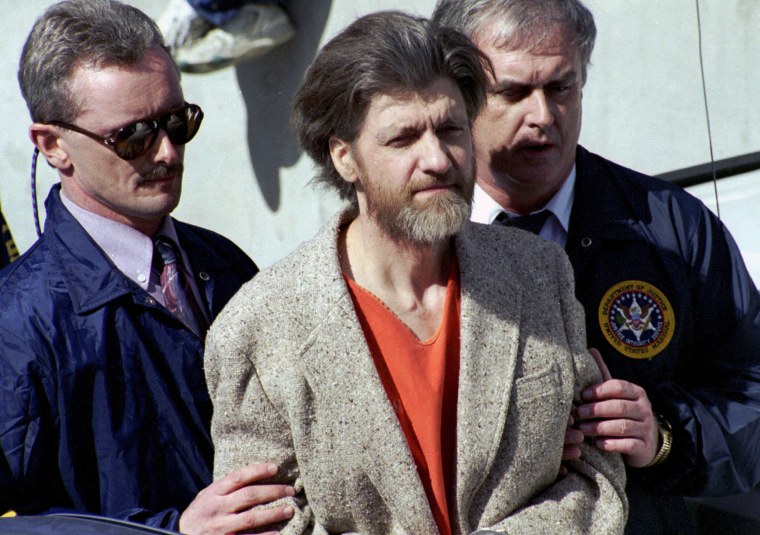
The cabin had no electricity and no running water.
A former mathematics professor lived there, alone, in the Montana wilderness.
Theodore John Kaczynski built his life around that cabin, far from the university classrooms he had left behind.
On April 3, 1996, FBI agents arrested him there.
They removed the cabin itself, preserved it as evidence.
Inside, agents found bomb-making materials, journals, and a live bomb.
The exact contents of those journals are not described in the source.
What the record shows is the scale of what came out of that small, powerless structure.
The first bomb was a package found in a parking lot at Northwestern University in Evanston, Illinois, in May 1978.
It was one of 16 mail bombs sent between May 1978 and April 1995.
The bombs were made from wood, metal, and other materials, sent through the U.S. Postal Service and other delivery methods.
They killed three people and injured 23 others.
A man without electricity built sophisticated bombs.
A man without running water sent packages across the country for 17 years.
The campaign began with a single package in a parking lot.
It ended with an arrest at a cabin without power.
The contrast is the fact: the simplicity of the life, the complexity of the devices.
The journals sit in the evidence record, their contents unexamined in the source.
The cabin sits preserved, a wooden witness to what was made inside it.
One package in May 1978.
Sixteen bombs in total.
Three dead.
Twenty-three injured.
All of it traced back to one man, one cabin, one quiet wilderness life.
THE ERRAND
The first bomb was a package found in a parking lot at Northwestern University in Evanston, Illinois, in May 1978.
It did not explode.
The package was returned to its sender, a professor at the university, who opened it.
The device injured him.
That was the beginning of a campaign that lasted 17 years.
Bombs targeted academics, computer store owners, and airline executives, according to the case summary.
The bombs were sent through the U.S. Postal Service and other delivery methods.
They were made from wood, metal, and other materials.
The FBI called the unknown bomber the "Unabomber."
The code name combined "UNiversity" and "Airline Bomber."
The investigation involved the FBI's Unabom task force.
That task force included agents from the FBI and the U.S. Postal Inspection Service.
They spent years analyzing bomb components, handwriting, and language patterns.
The specific targets of each of the 16 bombs are not listed in the source.
What is documented: the first bomb, the escalation, the long reach.
What is documented: the final bomb killed a timber industry lobbyist in Sacramento, California, in April 1995.
That was 17 years after the parking lot package.
Three dead.
Twenty-three injured.
And still no name.
The hunt ground on.
It was slow.
It was grinding.
It was a task force with no clear suspect.
That would require evidence.
For now, there was only the mail.
THE MANIFESTO
In 1995, the bomber sent a 35,000-word manifesto, “Industrial Society and Its Future,” to The New York Times and The Washington Post.
The newspapers published it at the FBI’s request, according to the case summary.
The manifesto was published in September 1995, according to investigation notes.
It was a document of argument, not a bomb.
That would require evidence.
The FBI compared the manifesto to letters Theodore Kaczynski had written to his family and found matches in phrasing and ideas, according to investigation notes.
A key piece of evidence was a handwritten letter Kaczynski had sent to the New York Times in 1995, which matched the manifesto’s style.
The exact content of the manifesto’s arguments is not summarized in the source.
That remains unstated.
The bomber’s brother, David Kaczynski, recognized the writing style as similar to letters from his brother and contacted a private investigator, who then alerted the FBI, according to the case summary.
He turned in his own sibling.
It was a relief, the breakthrough the task force lacked.
It was also a horror, the cost of that relief.
The brother saw the words and knew the writer.
The words were the same ones his brother had sent home.
The ideas were the same ones his brother had argued.
The phrasing was the same, line for line.
That recognition broke the case.
It did not break the family.
The manifesto was the key.
The brother was the lock.
The FBI was the turn.
THE ARREST AND THE PLEA
On April 3, 1996, FBI agents arrested Kaczynski at his cabin in Lincoln, Montana, according to the case summary.
He was charged in federal court in Sacramento, California, with multiple counts of murder and other offenses, per the trial notes.
The trial began in January 1998.
Kaczynski initially sought to represent himself, but the court denied that request.
His defense team planned to argue that he suffered from paranoid schizophrenia.
Kaczynski resisted that defense.
On January 22, 1998, he attempted to hang himself in his cell, according to the trial notes.
The exact nature of the suicide attempt and its medical aftermath are not described in the source.
After the attempt, he agreed to plead guilty to all charges.
The plea was in exchange for a life sentence without the possibility of parole.
It avoided the death penalty.
On May 4, 1998, the judge sentenced him to four consecutive life terms plus 30 years.
Kaczynski was sent to the federal supermax prison in Florence, Colorado.
He remains incarcerated there.
Seventeen years of bombs ended in a matter of months.
The manifesto was the key.
The brother was the lock.
The FBI was the turn.
The plea came fast.
Was it voluntary?
Was it a choice at all?
That would require evidence the record does not provide.
What the record does show is the sequence: arrest, charge, trial date, denied request, resisted defense, attempt, plea, sentence.
Four consecutive life terms plus 30 years.
The resolution was quick.
The question of what drove it remains open.
AND THE STORY STILL ISN'T OVER
He remains at the federal supermax prison in Florence, Colorado.
Four consecutive life terms plus 30 years, served in a cell built for isolation.
The case was broken in 1995, when the bomber sent a 35,000-word manifesto to two newspapers.
The newspapers published it at the FBI's request.
The bomber's brother recognized the writing style.
He alerted authorities.
The investigation relied on forensic analysis of bomb components.
That analysis linked several bombs to the same maker.
The FBI's lead agent on the case was named in coverage as the head of the Unabom task force.
He is not named here.
The cabin itself was removed and preserved as evidence.
A small structure without electricity or running water, dismantled and stored.
His brother David Kaczynski used part of the $1 million reward money to pay for the victims' therapy.
He also used it to support a foundation for victims of violence.
That is documented.
What the reward money did not buy was an answer.
The manifesto is a documented fact.
The brother's recognition of its style is documented.
The theory that the manifesto was a cry for help is not established by the record.
It remains a theory.
Any pending legal motions or future court dates are not mentioned in the source.
The record does not establish them.
The question of what drove it remains open.
The cabin is evidence.
The sentence is served.
The story still isn't over.
Advertisement
You may also like
The 31 days Casey Anthony never reported her toddler missing
The 911 call came from a house in Orlando, Florida, on July 15, 2008. Cindy Anthony was on the line, and she told the…
The handwritten note Tsarnaev left inside the boat before capture
The boat sat in a Watertown backyard, dry-docked and winter-covered, on the morning of April 19, 2013. Inside it, police found Dzhokhar Tsarnaev, hiding…
A non-prosecution deal in 2007 that still haunts the Epstein case — how one promise shielded him for years
It begins with a signature. In 2007, federal prosecutors in Miami negotiated a non-prosecution agreement with Jeffrey Epstein, the wealthy financier accused of sexually…
The confession Ottis Toole made four times that police still wouldn't believe
He said he did it. Then he said he didn't. Ottis Toole was a serial killer. He confessed to the murder of six-year-old Adam…
The calling card left on a choir singer's body that police couldn't explain
The morning of September 15, 1922, a local man found two bodies beneath a crabapple tree in a secluded lane known as "Lovers' Lane"…
The two-word confession that cracked the Hillside Strangler case
He was arrested in Bellingham, Washington, in January 1979, for the murders of two women there. Under interrogation, Kenneth Bianchi confessed to those killings.…