Neighbor's camera catches Watts' truck leaving twice before bodies found
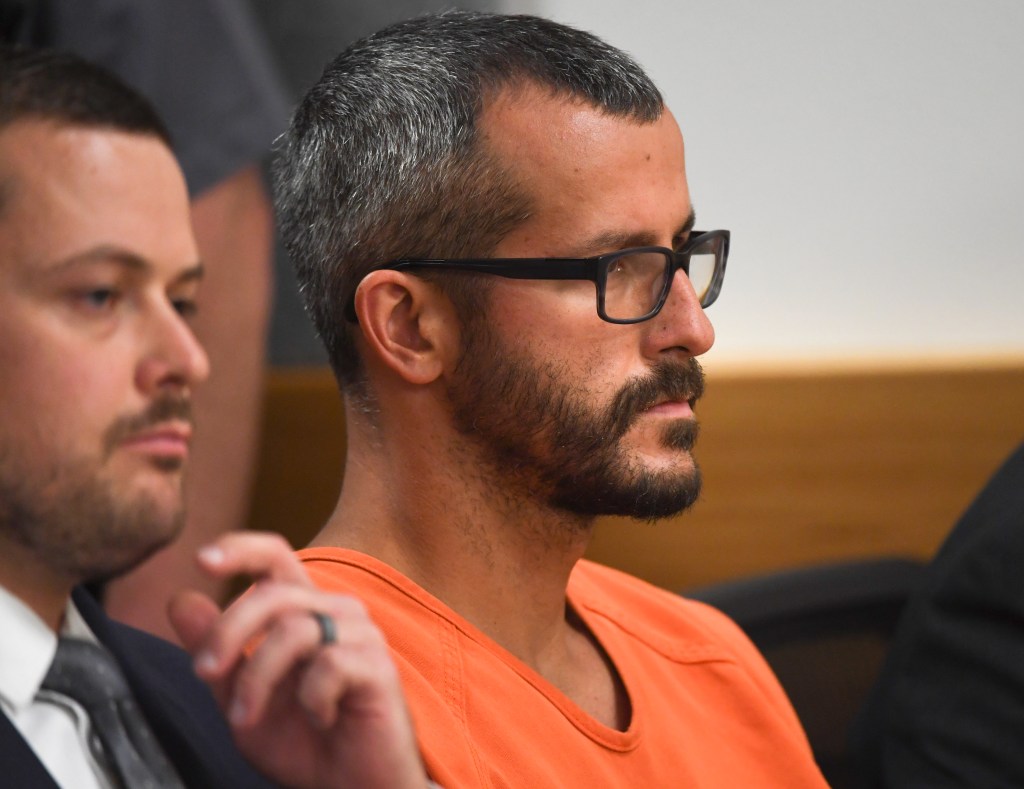
The neighbor’s camera caught the truck leaving the driveway early on August 13, 2018.
Christopher Watts had told police he left for work early and did not know where his family was.
The same camera later caught the truck returning to the home.
Then it caught the truck leaving again.
At that point, Shanann, 34, and her daughters — 4-year-old Bella and 3-year-old Celeste — had not yet been found.
The case was still a missing-persons investigation.
What was in the truck during those trips is not established by the source.
The footage shows the truck leaving and returning, not its contents.
That second departure is the detail that stays.
A truck that returns, then leaves again — that is not a man going to work.
That is a man going somewhere else.
Where did he go?
What did he take with him?
The record does not answer that.
The record shows only the timing: the truck left, came back, and left once more, before anyone reported the family missing.
THE MISSING-PERSONS CASE
The friend called it in on August 13, 2018, from Frederick, Colorado.
Shanann Watts, 34, and her daughters — Bella, 4, and Celeste, 3 — were not at home.
The police logged it as a missing-persons case.
Not a homicide investigation.
Not yet.
That same day, Christopher Watts gave a tearful television interview appealing for his family's return.
Viewers noticed something off.
So did investigators.
Inside the house, officers found Shanann's purse and her phone.
Her car seat was in Watts's truck.
Watts claimed Shanann had been acting strangely and had taken the girls to a friend's house.
What that strange behavior consisted of is not detailed in the source.
It is only Watts's claim.
The record does not establish what he meant.
It establishes only that he said it.
The neighbor's camera had already shown his truck leaving the driveway early that morning.
The same camera showed it return and leave again.
Before anyone reported the family missing.
Watts's story shifted.
He said he left for work early and did not know where they were.
He said she went to a friend's house.
The inconsistencies piled up.
The purse stayed in the house.
The phone stayed in the house.
The car seat rode in his truck.

The case was still a missing-persons case on paper.
But the edges were cracking.
THE CONFESSION AT THE OIL SITE
The inconsistencies did not stop at the affair.
Confronted with the gaps in his story, Watts admitted he had been seeing a colleague, Nichol Kessinger.
Kessinger cooperated with investigators.
She was not charged.
On August 15, police drove Watts to the oil site owned by Anadarko Petroleum.
He worked there.
It was there that he confessed.
He confessed to killing Shanann and the girls.
The missing-persons case turned into a triple homicide on that ground.
Shanann's body was found in a shallow grave.
The girls were found in oil battery tanks.
The medical examiner determined Shanann had been strangled.
The girls had been smothered.
Watts was arrested that same day, August 15, 2018.
The confession came fast.
So did the charge.
The exact sequence of events at the oil site on that day is not detailed beyond the confession and the discovery of the bodies.
That is what the record holds, and nothing more.
It was a confession that matched what the site would show.
It was also a confession that ended the search.
The edges had cracked, and then they gave.
THE PLEA AND THE SENTENCE
The charges came in September.
Three counts of first-degree murder.
Three counts of tampering with a deceased human body.
One count of illegal possession of a credit card.
The specific details of the credit card charge are not explained in the record.
Watts initially pleaded not guilty.
Then, on November 6, 2018, he changed the plea.
Guilty on all counts.
In exchange, prosecutors agreed not to seek the death penalty.
The deal was struck.
On November 19, the judge imposed the sentence.
Three consecutive life sentences without the possibility of parole.
Plus 84 years for the tampering charges and the credit card charge.
Watts was also ordered to pay restitution.
He did not appeal.
The sentence was final.

It was final in a way his story never was.
Investigators found no evidence of a struggle in the home.
His account of that morning shifted multiple times before the confession.
It shifted again after.
The confession matched what the oil site would show.
The confession also left questions open.
Why the truck left twice?
Why the girls were placed where they were?
Why the credit card?
That would require evidence.
The record holds the sentence, not the reasons.
He was led away in November.
The case was closed.
The story was not.
AND THE STORY STILL ISN'T OVER
Christopher Watts is incarcerated at the Dodge Correctional Institution in Waupun, Wisconsin, serving multiple life sentences without parole.
Shanann's parents have spoken publicly about the case.
They have been involved in raising awareness about domestic violence.
The family home in Frederick was sold.
Nichol Kessinger has largely remained out of the public eye.
The case has been the subject of numerous documentaries and true-crime coverage.
No new legal developments have occurred.
The record is closed.
The court is done with this case.
The public is not.
The neighbor's camera footage remains a documented piece of the record — the truck leaving twice.
What happened inside the home between those departures?
What happened on the second departure?
What happened after that?
The record does not say.
Online theories about those hours go beyond what the documented evidence establishes.
They are theories.
They remain theories.
The truck left once, documented.
The truck left twice, documented.
What was in the truck the second time — that is where the documented record ends and the public imagination begins.
Shanann's parents keep speaking.
The documentaries keep airing.
The true-crime coverage keeps coming.
The house in Frederick has new owners now.
The street is quiet.
The case is closed in court.
The story is not.
Advertisement
You may also like
The desert graves that were found three years after a family vanished
The television was still on. Uneaten dinner sat on the table. The family dog was in the backyard. Both vehicles were still at the…
The false babysitter story that unraveled Casey Anthony's defense
She gave them a name. A babysitter named Zenaida Fernandez-Gonzalez, she told investigators, had taken her daughter. The name was repeated in news coverage.…
How a 14-year-old's open-casket funeral forced a nation to look at Emmett Till
She had the casket opened. Emmett Till's body came back to Chicago from the Tallahatchie River, where it was pulled from the water on…
The package to the Los Angeles Examiner that claimed to hold Black Dahlia clues
The package sat in a pile of mail at the Los Angeles Examiner, unremarkable until someone opened it. Inside were Elizabeth Short's address book…
Inside the taunting Zodiac letter that made a reporter a target
The envelopes arrived at the San Francisco Chronicle with return addresses that did not exist. Inside were letters, each one a taunt, each one…
The 'bushy-haired' intruder Sheppard said he chased — and the question that haunted a courtroom
He told police he was asleep on a downstairs daybed when he heard noises. Dr. Sam Sheppard said he went upstairs, struggled with an…