The newspaper clipping found beside Elizabeth Short's body that detectives could never link to a suspect
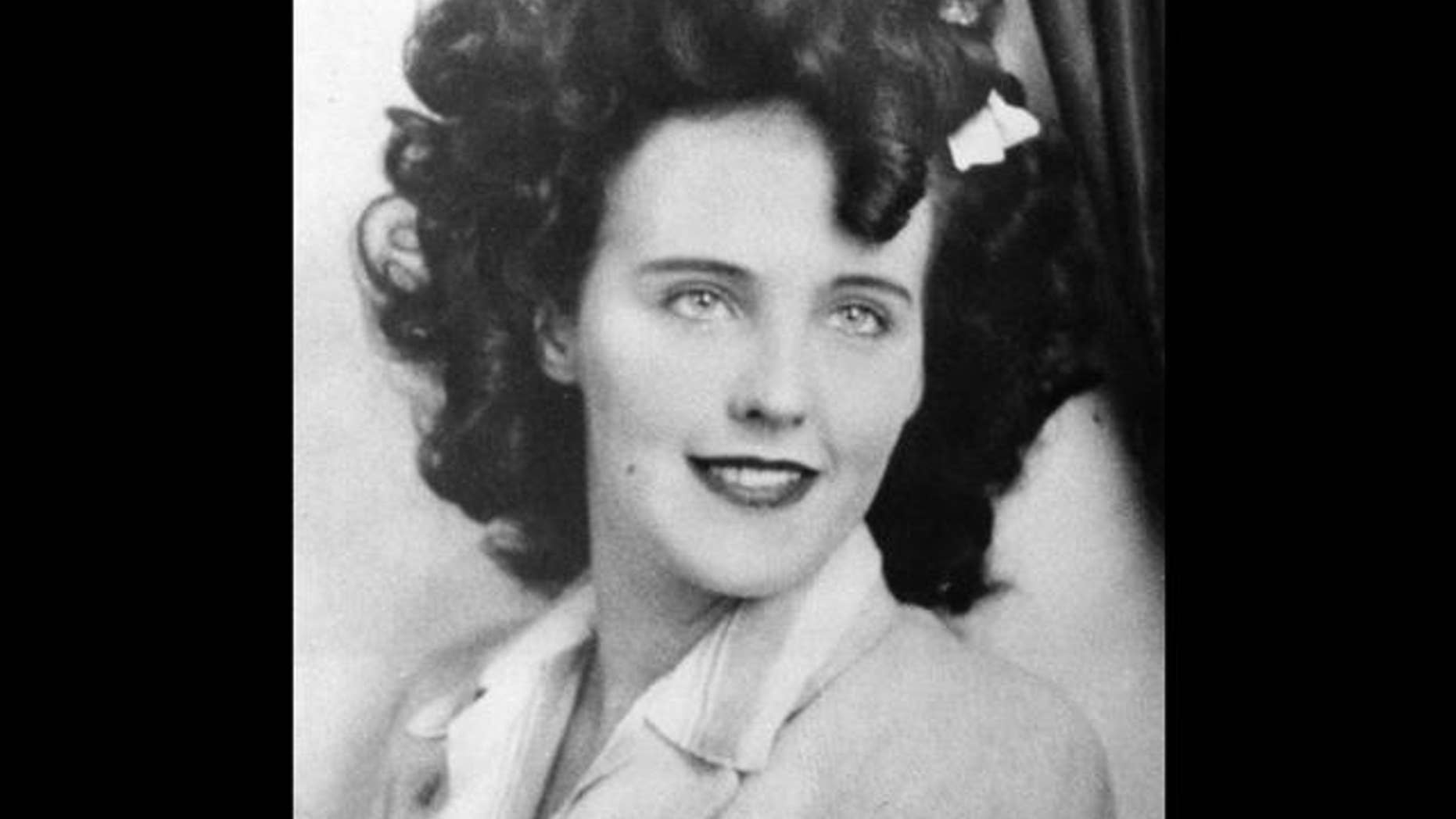
A newspaper clipping lay beside Elizabeth Short's body in the vacant lot on Norton Avenue.
Investigators noted it, bagged it, and ran it down.
Detectives never linked the clipping to any suspect.
What was printed on that page?
Was it a story, an advertisement, a date?
Was it placed there by accident, or left on purpose?
The record does not say.
The content of the clipping is not established in the case file.
Nor is any connection between the clipping and the killer.
That is where the evidence stops.
The case became known as the Black Dahlia murder.
The name came from a film noir called *The Blue Dahlia*, and the press latched onto it.
A movie title gave a dead woman a nickname.
The newspapers turned a crime scene into a story.
The clipping was part of that story, a detail that promised meaning.
It delivered none.
Not because detectives were careless.
But because the page itself offered no answers they could prove.
It is a documented piece of evidence.
It is also a dead end.
The clipping sits in the file, a scrap of paper that outlived its purpose.
It was found near a body cut in half at the waist.
It was found near a body drained of blood and posed.
It was found near a body that would never be claimed by a conviction.
The clipping was there.
That is all the record allows.
THE BODY ON NORTON AVENUE
The morning of January 15, 1947, was cold in Los Angeles.
A woman walking her child through a vacant lot on Norton Avenue stopped at something pale in the grass.
It was the nude, severed body of a woman, cut in half at the waist.
The body had been drained of blood and posed, arms raised above the head.
Detectives arrived to find no blood at the scene, no weapon, no immediate answers.
The exact time of death is not established.
The identity of the killer is not established.
What the record does establish is the victim.
Through fingerprints, she was identified as Elizabeth Short, 22 years old.
She was an aspiring actress from Massachusetts.
She had moved to Los Angeles seeking work in the film industry, a city full of young women chasing the same dream.
That dream ended in a lot in Leimert Park.
The brutality of the scene was not private.
It was discovered in the open, in a residential neighborhood, on a public street.
Word spread quickly through the press, and the press spread it faster.
Newspapers competed for details.
They printed the photographs.
They gave the case a name drawn from a film noir, and the public repeated it.
A young woman had been found posed in a vacant lot, and the city could not look away.
She was on the ground below.
THE PRESS CIRCUS
The newspapers competed for the details, each one chasing the next angle.
A reporter received phone calls from someone claiming to be the killer.
The calls were never traced to a credible suspect.
The identity of the caller is not established.
Any connection between the caller and the murder is not established.
That would require evidence.
Short's mother, living in Massachusetts, was notified of her daughter's death.
She later spoke publicly about the case.
She told reporters what she knew, which was little.
She asked for the story to be told.
The press told it.
They gave the case a name drawn from a film noir, and the public repeated it.
The name stuck.
It was printed in headlines and shouted from newsstands.
It was a story that sold papers.
It was a story that shaped itself.
Who was the caller?
What did he say?
Did he know something?
That would require evidence.
The record does not establish any of it.
The frenzy was real.
The facts were thin.
The city had a body, a name, and a headline.
The mother had a daughter.
The reporters had a scoop.
The caller had a phone.
And the case had a shape that the press kept bending.
THE CONFESSIONS AND THE DEAD ENDS
More than 60 people confessed to the murder.
Police spent considerable time checking each one.
Each confession came apart under scrutiny.
Each confession led nowhere.
The body had been washed clean of blood.
No fingerprints were found on the corpse.
The murder weapon was never found.
The Los Angeles County District Attorney's office reviewed the case.
The review found insufficient evidence to charge anyone.
Several individuals were publicly suspected.
One was a doctor who had been a friend of Short's.
He was cleared after investigation.
The identity of the killer is not established.
The reliability of any confession is not established.
Detectives interviewed hundreds of people.
They talked to acquaintances, former boyfriends, anyone who had seen her.
None could be placed at the scene.
The case slipped away, piece by piece.
The press kept the shape of the story bent.
The public kept reading.
The phones kept ringing.
The confessions kept coming.
The file stayed open.
No one was ever charged.
No one was ever brought to trial.
The evidence was there, and it was not enough.
The evidence was examined, and it pointed nowhere.
That would require evidence.
AND THE STORY STILL ISN'T OVER
The case remains officially unsolved.
The LAPD has reopened it several times, most recently in the early 2000s, and no charges have ever been filed.
The file remains open, and the LAPD continues to receive tips from the public.
Each tip is checked. Each tip leads nowhere.
The story has been told in books, films, and documentaries for decades, and no definitive answer has emerged.
It is a famous case. It is also a cold one.
The newspaper clipping sits in the record, a documented piece of evidence, and its meaning was never established.
No suspect was ever linked to it, and no new evidence has resolved it.
Could the case still break open? Could a tip finally point somewhere?
That would require evidence.
The public has never stopped asking. The media has never stopped circling.
Not because the answer is close. Because the story is still open.
Elizabeth Short's mother died in the 1980s, still hoping the case would be solved.
She was on the ground below, and the city above never let her go.
The void remains. The questions remain.
The LAPD has not closed the file, and the tips keep coming.
It is a lingering ache, the one the case leaves behind.
The answer may never come. The record does not establish that it will.
Advertisement
You may also like
The tarot card left at a D.C. sniper crime scene that said 'Call me God'
The card was on the ground at a crime scene in Montgomery County. A tarot card, face up, with a message written across it:…
The cell phone records that placed a suspect near Leakin Park — but one witness kept changing his story
January 13, 1999, was a school day. Hae Min Lee, an 18-year-old senior at Woodlawn High School in Baltimore County, Maryland, was last seen…
The parole agent who saw a sketch and stopped a car — then Polly Klaas's killer led police to her body
The parole agent saw the car first. A sketch, a tip, and a car on the road — that was the break. On November…
The cellmate tip that cracked the Clutter case after investigators ignored a footprint
The footprint was there on the night of November 15, 1959, inside the farmhouse near Holcomb, Kansas. Four members of the Clutter family were…
The cell tower records that placed Adnan Syed at Leakin Park — and the witness who changed his story
The phone call came on February 12, 1999. Baltimore County police picked up an anonymous tip that day, and the voice on the line…
The jailhouse informant's testimony that could not save Casey Anthony
She sat in the witness box and testified that Casey Anthony had made incriminating statements while in jail. Her name was Robyn Adams, a…