The QuickBooks log a business partner left open after a family of four vanished

The dinner was still on the table.
Four plates, half-finished. Summer’s purse sat where she left it, her cell phone beside it. The dogs were in the backyard. Both vehicles were in the driveway. No forced entry, according to the case summary.
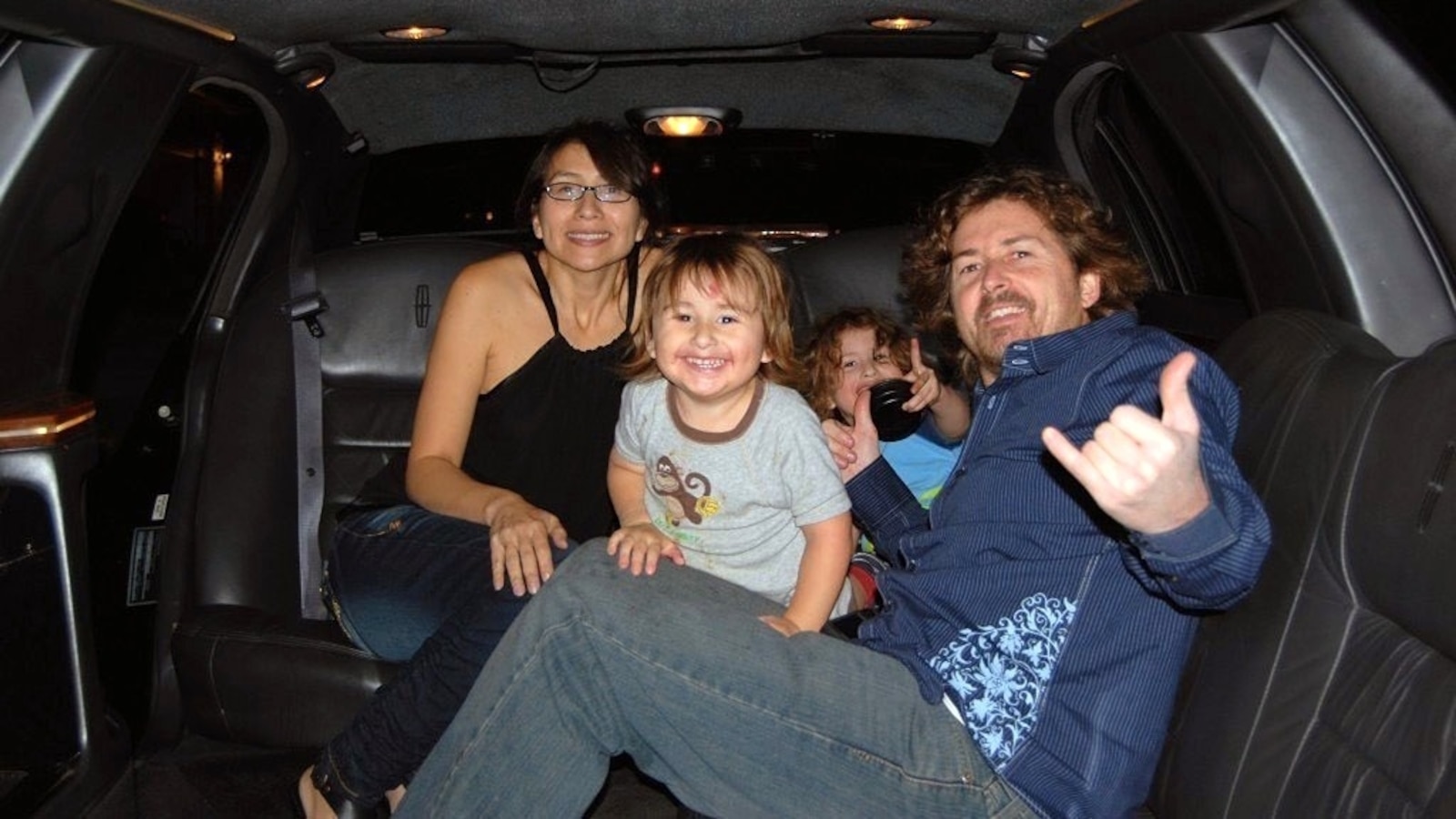
On February 4, 2010, Joseph McStay, his wife Summer, and their two young sons vanished from their home in Fallbrook, California.
The house looked like a family had simply stepped away for a moment. They never came back.
Years later, investigators would open a different kind of record: Joseph’s QuickBooks accounting software. A business partner had used it after the family vanished. He had been attempting to alter business records, the case summary states.
The exact content of those edits is not specified in the record.
The same partner had told detectives something else early on. He claimed he exchanged text messages with Joseph on the day of the disappearance. That claim would later sit at the center of the prosecution’s case.
Why would a partner touch the books after a family disappears? Why would he mention those texts at all? Why would he offer that detail before anyone asked?
The record does not say. The record only says he did.
THE PARTNER
Charles "Chase" Merritt built water features for a living.
He was a business associate of Joseph McStay, working with him on custom projects for homes and gardens.
When the McStay family vanished, Merritt was among those who helped search for them.
He stood with the searchers. He offered his time.
Detectives interviewed Merritt early on.
He claimed he had exchanged text messages with Joseph on the day the family disappeared.
That claim would later sit at the center of the prosecution's case.
Prosecutors would eventually allege that Merritt killed the family over financial disputes related to their business dealings.
The exact nature of those disputes is not detailed in the record.
It is a motive. It is also a claim.
The record does not say what the arguments were about, or how much money was at stake, or when the tension began.
That would require evidence the case file does not contain.
What the record does show is a partner who helped search.
A partner who mentioned texts before anyone pressed him.
A partner who, years later, would be charged with four counts of first-degree murder.
He was a friend. He was also accused of ending the family.
The trust betrayed is the detail that sticks.
THE DISCOVERY
For nearly four years, the disappearance remained an open missing-persons case.
No arrests. No bodies. No answers.
On November 11, 2013, a motorcyclist riding off-road in the Mojave Desert near Victorville, California, discovered human remains in two shallow graves.
The bodies were identified as the four McStay family members.

All had been beaten to death with a sledgehammer.
The murder weapon was never recovered.
Forensic testimony established that the victims' skull fractures were consistent with blows from a sledgehammer.
That is what the record shows.
It is a finding, not a confession.
The exact location of the graves relative to any known route is not specified in the case summary.
The desert held them for years.
A family of four, left in two shallow graves, found by chance.
The motorcyclist did not know what he had found.
The investigation did.
Shock, then horror, then a re-examination.
The open missing-persons case became a homicide case.
The trust betrayed is the detail that sticks.
A partner who, years later, would be charged with four counts of first-degree murder.
THE EVIDENCE
After the remains were discovered in 2013, investigators re-examined the case.
Cell phone tower data showed that Merritt's phone had been in the area of the gravesites around the time of the disappearances.
Prosecutors presented evidence that Merritt had used Joseph's QuickBooks accounting software after the family vanished, attempting to alter business records.
A forensic examination of Merritt's computer showed searches for the word "arrest" and for the McStay family's disappearance.
The exact timing of the QuickBooks use is not specified.
The exact timing of the cell tower data is not specified either.
The pieces come together slowly.
Not because they were found in one place.
But because they were found in several.
The phone data placed him near the graves.
The computer searches placed him inside the question.
The accounting log placed him inside Joseph's business, after Joseph was gone.
What was he looking for?
What was he changing?
What did he think the records would show?
That would require evidence.
Merritt was arrested on November 5, 2014, and charged with four counts of first-degree murder.
The man who had helped search for the family now faced charges for their deaths.
The trust betrayed is the detail that sticks.
A partner who, years later, would be charged with four counts of first-degree murder.
AND THE STORY STILL ISN'T OVER
The trial began in January 2019.
The defense argued the evidence was circumstantial, and that another person could have been responsible.
The defense also noted that DNA testing of items found near the graves did not match Merritt.
For months, the courtroom weighed a phone that pinged near the gravesites, a computer that searched for the word "arrest," and a QuickBooks log left open.
None of it, the defense said, placed the sledgehammer in Merritt's hand.
The murder weapon was never recovered.
On June 10, 2019, the jury found Merritt guilty of all four counts of first-degree murder.
On August 21, 2019, the judge sentenced Merritt to life in prison without the possibility of parole.
The judge also ordered restitution to the McStay family estate.
Merritt has maintained his innocence.
He has filed appeals.
He is serving his life sentence at a California state prison.
The status of those appeals is not specified.
The case is closed in court.
It is not closed in the record.
The cell tower data remains documented.
The QuickBooks log remains documented.
The online theories about motive remain unproven.
That is the line this case draws: what is viral versus what is on the page.
Merritt helped search for the family he now stands convicted of killing.
He exchanged text messages with Joseph McStay on the day the family vanished, he claimed.
The texts became central to the prosecution's case.
The trust betrayed is the detail that sticks.
A partner who, years later, would be charged with four counts of first-degree murder.
A partner who now spends his days in a state prison, filing papers that keep the story alive.
The family's home in Fallbrook was eventually sold.
Joseph McStay's father, who campaigned for answers for years, died before the trial concluded.
The case has been the subject of a 2017 documentary series.
The graves are in the Mojave Desert.
The sledgehammer is not recovered.
The appeals are not resolved.
The story still isn't over.
Advertisement
You may also like
The tarot card left at a D.C. sniper crime scene that said 'Call me God'
The card was on the ground at a crime scene in Montgomery County. A tarot card, face up, with a message written across it:…
The cell phone records that placed a suspect near Leakin Park — but one witness kept changing his story
January 13, 1999, was a school day. Hae Min Lee, an 18-year-old senior at Woodlawn High School in Baltimore County, Maryland, was last seen…
The parole agent who saw a sketch and stopped a car — then Polly Klaas's killer led police to her body
The parole agent saw the car first. A sketch, a tip, and a car on the road — that was the break. On November…
The cellmate tip that cracked the Clutter case after investigators ignored a footprint
The footprint was there on the night of November 15, 1959, inside the farmhouse near Holcomb, Kansas. Four members of the Clutter family were…
The cell tower records that placed Adnan Syed at Leakin Park — and the witness who changed his story
The phone call came on February 12, 1999. Baltimore County police picked up an anonymous tip that day, and the voice on the line…
The jailhouse informant's testimony that could not save Casey Anthony
She sat in the witness box and testified that Casey Anthony had made incriminating statements while in jail. Her name was Robyn Adams, a…