The search warrant that missed a trapdoor — and the 26 bodies beneath Gacy's house
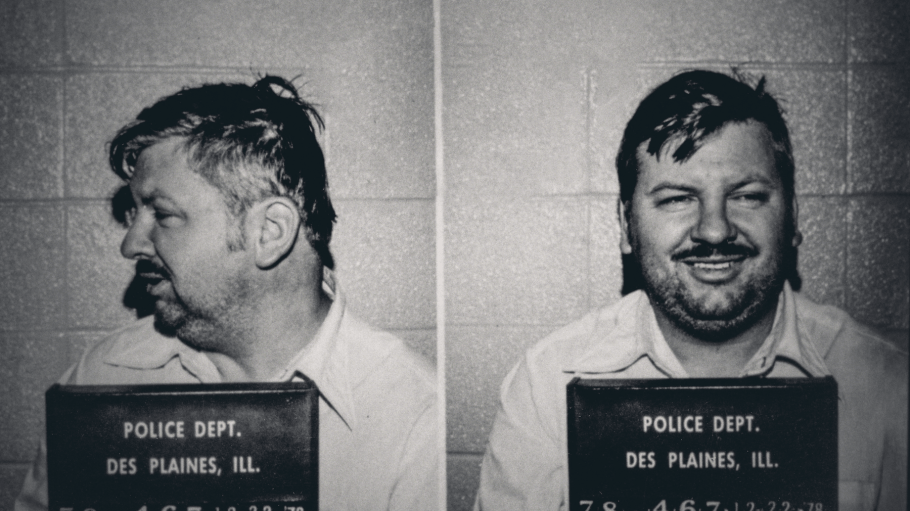
He was fifteen, and he told his mother he was going to meet a contractor about a job.
That was December 11, 1978. Robert Piest did not come home.
Des Plaines police traced the contractor to a man named John Wayne Gacy.
A detective obtained a search warrant for Gacy's house.
The first search found little.
It was a narrow warrant, the source records say, and its scope delayed what came next.
The exact contents of that first warrant are not detailed in the record.
Only that it was narrow, and that it missed what was beneath.
A second search was conducted.
That search found a trapdoor.
The trapdoor led to the crawl space.
The odor of decomposition was overwhelming.
Investigators found human remains down there.
Teeth. Bones. Items belonging to missing young men.
The crawl space held 26 victims.
They were under the house the whole time the first warrant was being executed.
Not because the officers were careless. Because the warrant let them look in some places and not others.
What was on that first warrant? The source does not say.
What did they walk past, what did they smell, what did they almost touch? The record does not say that either.
A trapdoor. A crawl space. Twenty-six bodies.
The first search ended, and the house stood as it was.
Then the second search began, and the floor opened.
THE NARROW WARRANT
The warrant was narrow. That is the fact the record holds.
It did not mention the crawl space. It did not mention a trapdoor.
The first search of Gacy's home turned up little. The house stood as it was.
Then the second search began, and the floor opened.
A trapdoor led down. Beneath it, investigators found the odor of decomposition, then human remains, teeth, and bones.
Twenty-six bodies were buried under that floor.
The specific wording of the warrant is not in the record. The exact reason for its narrow scope is not in the record either.
What is recorded is that the narrow scope delayed the discovery.
The investigation was not smooth before that. Des Plaines police, the Cook County Sheriff's Office, and the Illinois State Police all had a hand in the case, and the confusion slowed things down.
The Des Plaines department ultimately took the lead.
It was not the first time Gacy had been looked at. In 1975, police investigated him regarding a missing employee. No charges were filed.
That investigation ended. The house stood as it was.
A warrant so limited that it missed a floor. A prior inquiry that produced nothing. A case that moved between three agencies before one took charge.
How could a warrant be so narrow? How could a crawl space go unlooked? How could a prior investigation close without a charge?
That is what the record asks. The answer is not in the record.
THE CONFESSION AND THE RIVER
The arrest came on December 21, 1978.
A witness had reported seeing Gacy with Robert Piest.
In custody, Gacy confessed.
He provided detailed accounts of the killings.
He led police to the Des Plaines River, where he said he had dumped other bodies.
The numbers he gave were grim.
He buried 26 victims in the crawl space beneath his house.
He dumped four others in the Des Plaines River.
He disposed of three more elsewhere.
That totals 33.
The exact number of victims Gacy confessed to in each location is not specified in the record.
The record gives totals for the crawl space, the river, and elsewhere.
It does not break down the confession by site.
Gacy used a rope or a tourniquet-like device to strangle most victims.
In some cases, he used his own hands.
His vehicle, a black Oldsmobile, was used to transport victims.
The confession came, and with it, the scale.
Twenty-six beneath the floor that the first warrant missed.
Four in the river.
Three elsewhere.
The relief that he confessed did not soften the count.
It made it concrete.
Details would shift later.
Gacy gave contradictory accounts of some elements.
But the confession was the turning point.
The crawl space had been found on a second search.
The river had been named by the man himself.
The enormity landed then, in custody, in the telling.
How many more were there?
Where else had he gone?
That would require evidence.
The record holds the totals.
It does not hold every answer.
THE TRIAL AND THE TWO STORIES
The prosecution laid out a different picture.
Gacy was sane, they argued.
He had planned the killings.
He had chosen the victims.
He had bought the materials and dug the grave.
He had built the trapdoor and concealed the crawl space.
He had dumped bodies in the river.
He had counted the dead.
He had confessed with detail.
The defense answered with psychiatric testimony.
They said Gacy suffered from a personality disorder that made him unable to control his actions.
That was the claim.
The specific diagnoses were never detailed in the record.
Not because they were secret.
Because the source does not hold them.
The courtroom heard two stories.
One story: a man who could not stop himself.
The other story: a man who measured every step.
Which one was true?
That would require evidence.
The jury weighed both.
On March 12, 1980, they found Gacy guilty on all 33 counts.
The same jury recommended the death penalty.
The judge sentenced Gacy to death.
The verdict was a choice between the two stories.
It did not settle every question.
AND THE STORY STILL ISN'T OVER
The execution was carried out by lethal injection on May 10, 1994, at Stateville Correctional Center in Illinois.
Gacy maintained his innocence in some statements.
He gave contradictory accounts in others.
The record does not settle which version, if any, was true.
Illinois changed its laws after the case.
Missing-person investigations were reformed.
The reporting of missing adults was reformed.
The house on Summerdale Avenue was demolished in 1979.
The property was later redeveloped.
Nothing stands there now to mark what was found beneath it.
In 2011, authorities exhumed remains from a Chicago burial site.
They were looking for additional potential victims.
No new identifications were confirmed.
The identities of all victims are not confirmed.
Several were identified only after exhumation and dental records.
That is what the record establishes.
It does not establish a complete list.
Victims' families have spoken publicly over the years.
They have described what was lost, what was found, what was never returned.
The case remains a subject of extensive true-crime coverage.
It is retold, examined, re-examined.
It does not close.
The trapdoor was found on a second search, not the first.
The warrant that missed it was narrow.
The crawl space waited.
Some questions were answered at trial.
The verdict was a choice between two stories.
It did not settle every question.
It could not.
The names of the dead are known.
Most are.
The ones who are not remain unnamed.
That would require evidence.
The evidence was buried, recovered, identified, and still incomplete.
She was not part of this story.
He was.
The house is gone.
The record remains.
It is a record of what was done.
It is also a record of what was not done in time.
Advertisement
You may also like
The desert graves that were found three years after a family vanished
The television was still on. Uneaten dinner sat on the table. The family dog was in the backyard. Both vehicles were still at the…
The false babysitter story that unraveled Casey Anthony's defense
She gave them a name. A babysitter named Zenaida Fernandez-Gonzalez, she told investigators, had taken her daughter. The name was repeated in news coverage.…
How a 14-year-old's open-casket funeral forced a nation to look at Emmett Till
She had the casket opened. Emmett Till's body came back to Chicago from the Tallahatchie River, where it was pulled from the water on…
The package to the Los Angeles Examiner that claimed to hold Black Dahlia clues
The package sat in a pile of mail at the Los Angeles Examiner, unremarkable until someone opened it. Inside were Elizabeth Short's address book…
Inside the taunting Zodiac letter that made a reporter a target
The envelopes arrived at the San Francisco Chronicle with return addresses that did not exist. Inside were letters, each one a taunt, each one…
The 'bushy-haired' intruder Sheppard said he chased — and the question that haunted a courtroom
He told police he was asleep on a downstairs daybed when he heard noises. Dr. Sam Sheppard said he went upstairs, struggled with an…