The shotguns were bought days before, but one confession to a psychologist changed the case
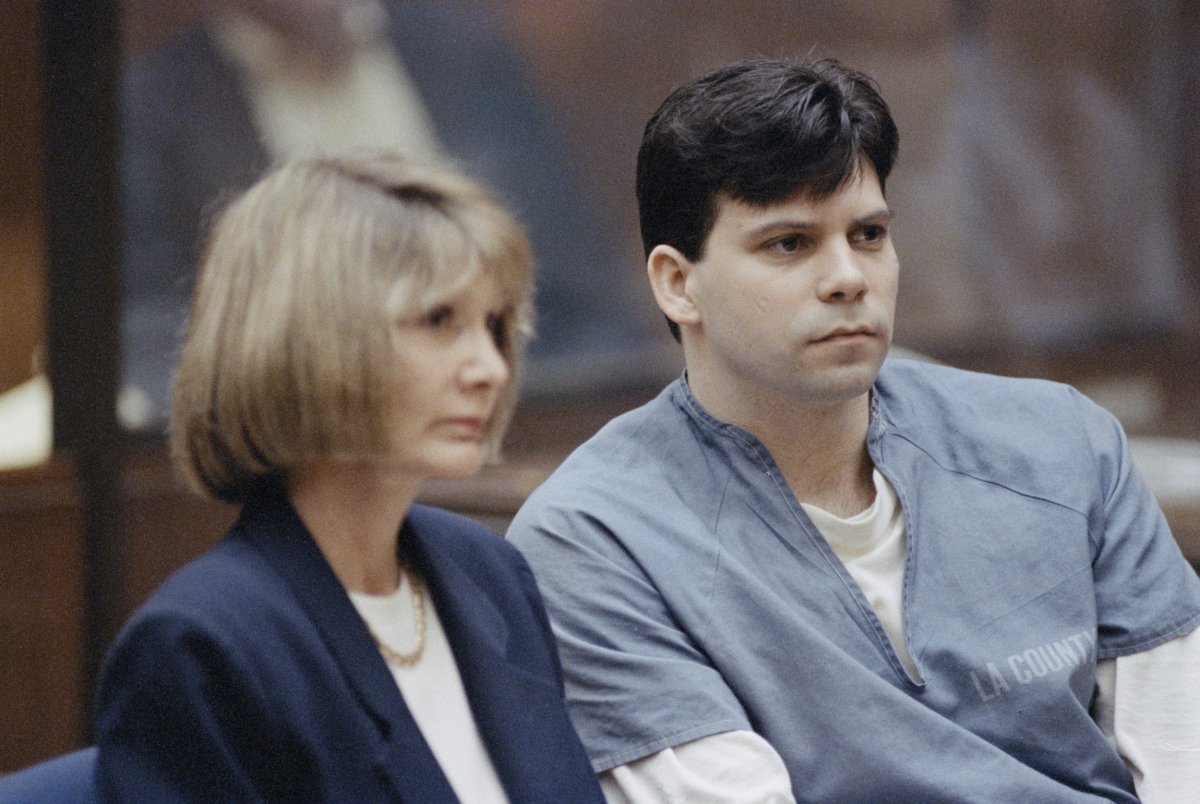
Two Mossberg 12-gauge shotguns, purchased days before, waited in the Beverly Hills mansion.
The exact date of the purchase is not specified in the record.
Only that it was days before the killings.
On the night of August 20, 1989, Lyle and Erik Menendez shot and killed their parents, Jose and Kitty Menendez, in the family room.
Shotguns fired multiple times.
Then the brothers drove to a movie theater.
Afterward, they returned home and called 911.
They claimed they had discovered the bodies after returning from the cinema.
The guns were bought ahead of time.
The alibi was a movie.
The phones were picked up.
The call was placed.
The story was that mobsters did it.
How did anyone believe the mob story?
Not because the scene supported it.
Not because the brothers had any connection to organized crime.
But because the wealth of the family made violence seem like something that happened to other people.
The case file shows the purchase.
The case file shows the timing.
The case file shows the drive to the theater.
It is a record of preparation.
It is also a record of performance.
The performance required a trip to the movies.
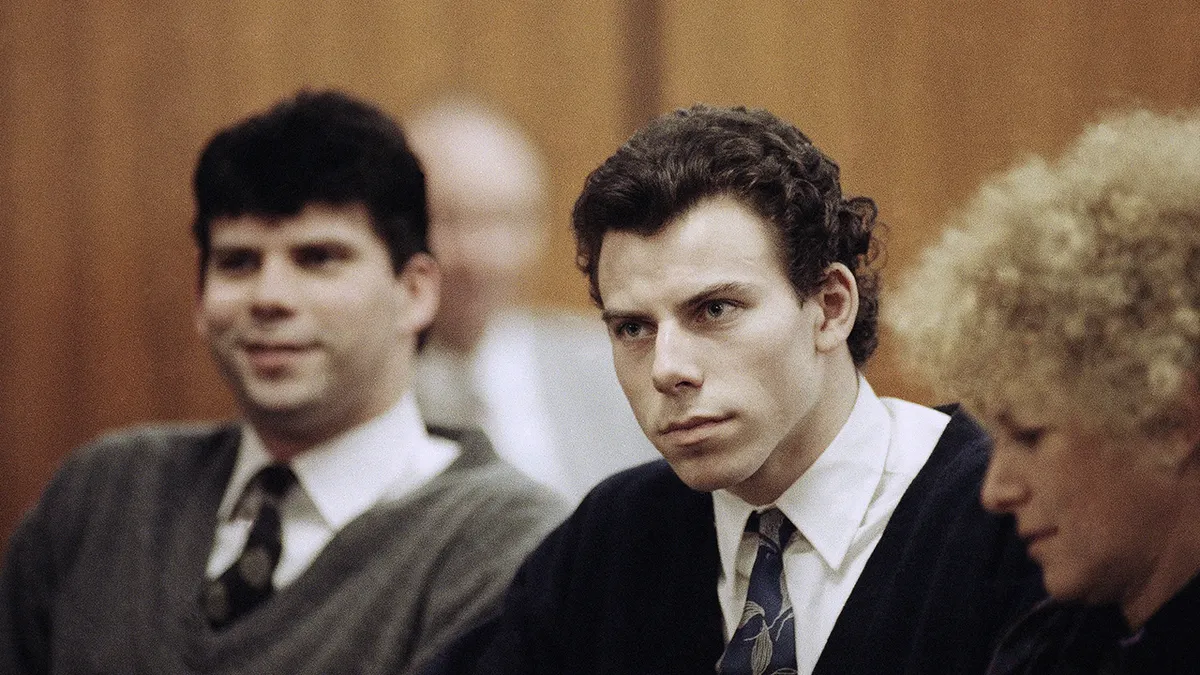
The performance required a phone call.
The performance required two sons who had just lost their parents.
That would require evidence.
That would require a different story.
The shotguns were bought days before.
THE MOB STORY
The brothers told police it was a mob hit.
The case file records that claim.
Mobsters, they said, had come for their father.
Police initially accepted the story.
They accepted it, and the investigation stalled.
Detectives did not immediately search the brothers' rooms.
That was a key mistake, the case file shows.
Shotgun shells were later found in those rooms.
A note was found there too.
The exact content of that note is not in the record.
What the record does show is time lost.
Time during which evidence sat in plain reach.
Time during which the brothers' story went unchallenged.
The mob claim was believed.
It was believed because it fit a pattern.
A wealthy entertainment executive, enemies, a violent end.
That would require evidence.

That would require a different story.
The story the brothers gave was the story police took.
Not because it was verified.
But because it was convenient.
The investigation would not turn until a confession reached a psychologist.
That came months later.
By then, the rooms had been searched.
By then, the shells and the note had been logged.
But the initial failure shaped what followed.
The case file does not explain why the rooms were skipped.
It only records that they were.
The brothers' story held.
It held until it did not.
THE CONFESSION
It held until Erik Menendez told his psychologist.
The confession came months after the killings, during a session with Dr. Jerome Oziel, the brothers' therapist.
The exact content of that confession is not detailed in the record.
What the record shows is the spill: Dr. Oziel told his girlfriend, Judalon Smyth, what he had heard.
Smyth later went to police.
The brothers were arrested in March 1990.
It was not the shotguns that broke the case. It was not the mob story that broke the case.
It was a secret passing from a patient to a therapist, then from a therapist to his girlfriend.
The prosecution built its case on those confessions to Oziel.

The defense argued the confessions were privileged and coerced.
Privileged, because a patient's words to a psychologist are protected. Coerced, because of how they were obtained.
Was the confession admissible? Was it voluntary?
That would require evidence. The record does not settle it either way.
What the record does show is that the confessions gave the investigation its first real direction.
Police had accepted the mob story. They had searched the brothers' rooms late. They had let the case drift.
Then a girlfriend walked into a station and said the sons had told their therapist everything.
The shock is not the crime. The shock is the route the truth took.
Therapist to girlfriend. Girlfriend to police.
The secret spilled through the most human of leaks: a confidence shared in a bedroom.
It is a documented leak. It is also an ethical tangle.
The prosecution called it the heart of the case. The defense called it a violation.
Both were arguing about the same conversation.
One conversation, recorded in testimony, that changed everything.
THE TWO STORIES
The defense presented evidence of alleged long-term sexual abuse by their father, Jose Menendez.
That became the central theme of the trial.
The brothers claimed the killings were a desperate response to years of abuse, not a plan for inheritance.
The prosecution called it a fabrication, a story built after the fact to explain away two shotguns purchased days before.
Two narratives, each demanding a different verdict.
Premeditated murder, or manslaughter in the heat of passion.
The first trial ended in hung juries in 1994.
The jury was deadlocked on whether the killings were premeditated or manslaughter.
:max_bytes(150000):strip_icc():focal(749x0:751x2)/pamela-bozanich-menendez-trial-100724-3-4020c329cace46f0917d36d6ad7e7962.jpg)
Twelve people could not agree on which story was true.
The truth of the abuse allegations is not established in the record.
They were alleged by the defense.
In the second trial, Judge Stanley Weisberg limited the defense's ability to present evidence of abuse.
Without that evidence, the second jury heard a different case.
In 1996, the brothers were convicted of first-degree murder.
They were sentenced to life in prison without the possibility of parole.
Was it a confession that broke the case, or a story that was never fully told?
The record shows the confession to the psychologist.
It does not show what happened inside that family room, or what happened before it.
The shotguns were bought days before.
The mob story was abandoned.
The confession was recorded in testimony.
The abuse was alleged, argued, and restricted.
It is a case of two stories, and only one of them was allowed to be told in full.
AND THE STORY STILL ISN'T OVER
Lyle Menendez is serving life without parole at one California prison.
Erik Menendez is serving the same sentence at another.
Thirty-four years after the shotguns, the file is not closed.
In 2023, new evidence emerged.
A letter written by Erik Menendez to a cousin allegedly referenced the abuse.
A former member of the boy band Menudo claimed that Jose Menendez had sexually abused him.
Both are alleged.

Neither has been proven in a courtroom.
The Los Angeles County District Attorney's office announced in 2023 that it was reviewing the case for possible resentencing.
As of the latest reports, the review is ongoing.
That is where the record stops.
The outcome of the review is not yet known.
The letter is a claim.
The Menudo allegation is a claim.
What they would change, if anything, is a question the record does not answer.
It is tempting to read the new evidence as a key.
It is tempting to read it as a door.
But a review is not a ruling.
A claim is not a finding.
The brothers have filed multiple appeals.
All were unsuccessful.
The convictions stand.
The sentences stand.
And still, the case holds a space that is not quite closed.
The District Attorney's office is looking again.
What it will decide, no document in the public record says.
The letter sits somewhere, unproven.
The allegation sits somewhere, unproven.
The brothers sit in separate prisons, serving life without parole.
That is the documented fact.
Everything else is a review still in motion.
Advertisement
You may also like
The 1975 missing-person report that led police to Gacy — and why they never searched his home
The report was filed in 1975, for a 16-year-old named John Butkovich. It led police to John Wayne Gacy's door. Gacy told them Butkovich…
The cellphone video that caught Alex Murdaugh's voice at the kennels — after he said he wasn't there
The 911 call came at 10:06 p.m. on June 7, 2021. Alex Murdaugh told the dispatcher he had just found his wife and son…
The $5,800 ransom found by a boy on a riverbank — and the FBI clue it left behind
The bills were rotting, half-buried in the sand of the Columbia River, near Vancouver, Washington. A young boy named Brian Ingram found them in…
The jailhouse confession that finally broke the Manson case wide open
In October 1969, a woman in jail on an unrelated charge began talking to her cellmate. Her name was Susan Atkins, and the cellmate…
The confession that shifted: DeFeo Jr. led police to a river — but who else walked through 112 Ocean Avenue first?
The first call came on November 13, 1974, from a house at 112 Ocean Avenue in Amityville, a village on Long Island. A 23-year-old…
The Volkswagen Beetle that led police to Ted Bundy's trail
It was a Volkswagen Beetle. Widely reported as central to Bundy’s method of approach, the car appears again and again in retellings of the…