The Volkswagen Beetle that led police to Ted Bundy's trail
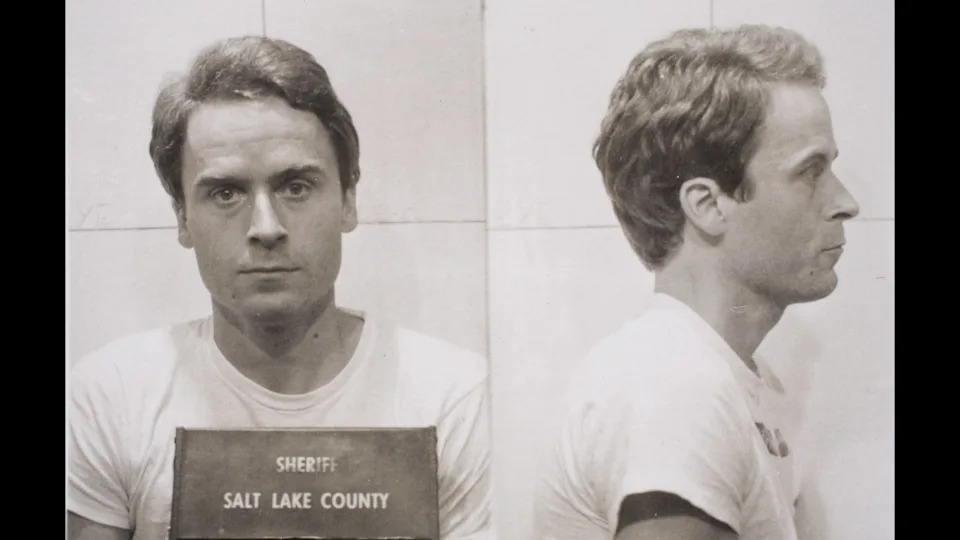
It was a Volkswagen Beetle.
Widely reported as central to Bundy’s method of approach, the car appears again and again in retellings of the case file.
Online discussions often cite the Beetle as a key clue, a signature of the predator.
But the record does not specify how many times it was used, or in which exact incidents.
The exact number of victims approached via the Beetle is not established in the record.
What is established is one August afternoon in 1975, in Utah.
The car was present at the traffic stop.
Detective Jerry Thompson found burglary tools inside.
That stop did not end Bundy’s driving.
It was not the only vehicle he used.
He was later arrested in a stolen vehicle in Pensacola, Florida.
The Beetle was a car, common on the roads of the 1970s.
It was also a place where tools could be hidden.
What did the police see that day?
What made an officer pull over that particular Beetle?
What did Thompson notice when he looked inside?
The record does not say.
Not because the answer is hidden.
But because the record does not establish it.
The car remains a fact without a full story.
It is a detail that invites a question.
It is a question that would require evidence.
THE TRAFFIC STOP
The traffic stop came in August 1975.
The exact date of that stop is not in the record.
Bundy was driving his Volkswagen Beetle in Utah when a detective pulled him over.
The detective was Jerry Thompson of the Salt Lake County Sheriff’s Office.
Thompson searched the car and found burglary tools inside.
That discovery led to Bundy's arrest for possession of burglary tools.
It was a small charge, a possession charge, not a murder charge.
Still, it was a break.
After years of disappearances across Washington and Utah, the police finally had Bundy's name on paper.
Then a surviving victim of an abduction attempt in Utah came forward.
She identified Bundy as her attacker.
She testified against him.
In 1976, Bundy was convicted of kidnapping in Utah.
The conviction was real, but the larger case was still unproven.
The record does not establish that the Beetle was used in every disappearance.
It does not establish that the Beetle was used in any particular one.
What the record shows is a car, a stop, and a set of tools.
What the record shows is a detective who looked inside.
The relief of a break in the case.
The frustration that it took so long.
THE ESCAPES
The courthouse escape worked once.
Bundy slipped out of a Colorado courthouse in 1977, according to investigation and evidence.
He was caught.
Then, in December of that same year, he escaped from jail again.
That second escape held.
After it, he fled to Florida, the record shows.
The exact route of that flight is not in the record.
It is not established how he travelled, or how long it took, or where he stopped.
What is established is what happened once he arrived.
In January 1978, two women were murdered at the Chi Omega sorority house at Florida State University.
The victims were students.
One of them was found with bite marks on her body.
In February 1978, a 12-year-old girl was abducted in Lake City, Florida.
She was found murdered.
The girl was the youngest victim attributed to him.
The violence did not pause for the manhunt.
It did not pause for the confusion between states.
It continued in Tallahassee.
It continued in Lake City.
The escapes gave him room.
The record gives us the dates: June 1977, then December 1977.
It gives us the destination: Florida.
It does not give us the in-between.
That would require evidence.
The dread is in the gap.
THE PENSACOLA ARREST
The arrest came in Pensacola, Florida, in February 1978.
Not because of a grand manhunt. Because of a traffic stop.
The vehicle he was driving was stolen, according to the record.
Eyewitness accounts from the Chi Omega case had already given investigators a description.
The traffic stop in Pensacola matched him to that description.
He was taken into custody there.
The relief of capture is a plain fact.
The weight of what followed is another.
After the murders at the Chi Omega sorority house, forensic odontologist Dr. Richard Souviron analyzed bite-mark evidence on one of the victims.
His testimony was crucial, the record states.
It tied the accused to the scene through marks the victim could not describe.
The science did the speaking.
Bundy later confessed to numerous homicides.
The exact number he confessed to is not established in the record.
It is not a number the source settles.
It remains disputed.
He was arrested in February 1978.
He confessed.
The total stays open.
That would require evidence.
The record gives us the confession.
It does not give us the count.
AND THE STORY STILL ISN'T OVER
The trial began in Florida in 1979.
Bundy acted as his own co-counsel in the courtroom.
The jury found him guilty of two counts of first-degree murder.
Judge Edward Cowart sentenced him to death.
A separate trial followed for the kidnapping and murder of the 12-year-old.
The jury convicted him there too, and he received another death sentence.
In Utah, he was convicted for the kidnapping of the surviving victim.
The record gives us these verdicts.
It does not give us the count.
Bundy confessed to dozens of homicides before his execution, the record says.
The exact number he confessed to is not established.
The cases were studied, dissected, retold in books and films.
The Chi Omega sorority house still stands at Florida State University.
The building remains, a fixed point in a story full of movement.
On January 24, 1989, Bundy was executed in the electric chair at Florida State Prison.
That is the finality the record offers.
It is a date, a method, a place.
It is not an ending that closes the questions.
The case remains one of the most studied in American criminal history.
Not because the verdicts were unclear.
But because the record, for all its confessions, never settles the whole.
That would require evidence.
The evidence gives us the crimes, the trials, the sentences.
It gives us the date of execution.
It does not give us the full story.
The sorority house stands.
The case is studied.
The record is what it is.
Advertisement
You may also like
The bullet that matched Richard Allen's pistol — and the confession he made to prison staff
The bullet sat in an evidence room for years before anyone matched it. An unspent round, found at the scene where two girls died.…
The tip-off that doomed the ATF raid before a single shot was fired at Waco
A local news reporter had been tipped off about the raid. He asked a postal worker about it. That question is the documented moment…
The undertaker who moved the bodies before police reached the Hall-Mills crime scene
They lay beneath a crabapple tree in a secluded lane called Lovers' Lane. He was shot in the head. She was shot in the…
The 31-Day Gap That Made Detectives Ask Why a Mother Never Reported Her Child Missing
The 911 call came on July 15, 2008. Cindy Anthony was the one who made it. She told the operator that her two-year-old granddaughter,…
The 1975 missing-person report that led police to Gacy — and why they never searched his home
The report was filed in 1975, for a 16-year-old named John Butkovich. It led police to John Wayne Gacy's door. Gacy told them Butkovich…
The cellphone video that caught Alex Murdaugh's voice at the kennels — after he said he wasn't there
The 911 call came at 10:06 p.m. on June 7, 2021. Alex Murdaugh told the dispatcher he had just found his wife and son…