The Spahn Ranch handyman who knew the Manson Family before the Cielo Drive killings
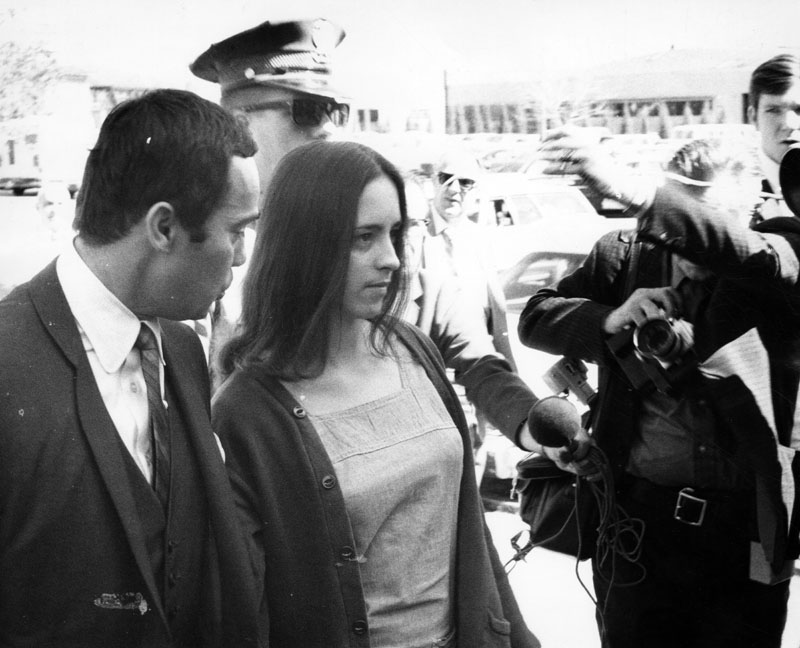
He was called Shorty, and he worked at Spahn Ranch.
The ranch was a dusty movie set in the hills outside Los Angeles, and by 1969 it was home to Charles Manson and his followers.
Donald "Shorty" Shea was the handyman there.
He fixed things, kept the place running, and watched the young people drift in and out.
The Manson Family lived at the ranch, sleeping in old Western movie props and abandoned buildings.
Shea was a witness to that world.
The record says he was a key witness in the case.
He saw things, the prosecution believed, that mattered.
The exact details of what Shea witnessed are not in the record.
That is not established.
What is established is that he was there, and that he was later murdered by Family members.
He was killed before he could testify.
The murders at Cielo Drive happened on August 9, 1969.
Five people died that night.
Shea was still alive then, still at the ranch.
What did he see in the weeks before?
What did he know about the people sleeping in the bunkhouse?
The questions stay open.
The record does not answer them.
It only gives his name, his job, and his end.
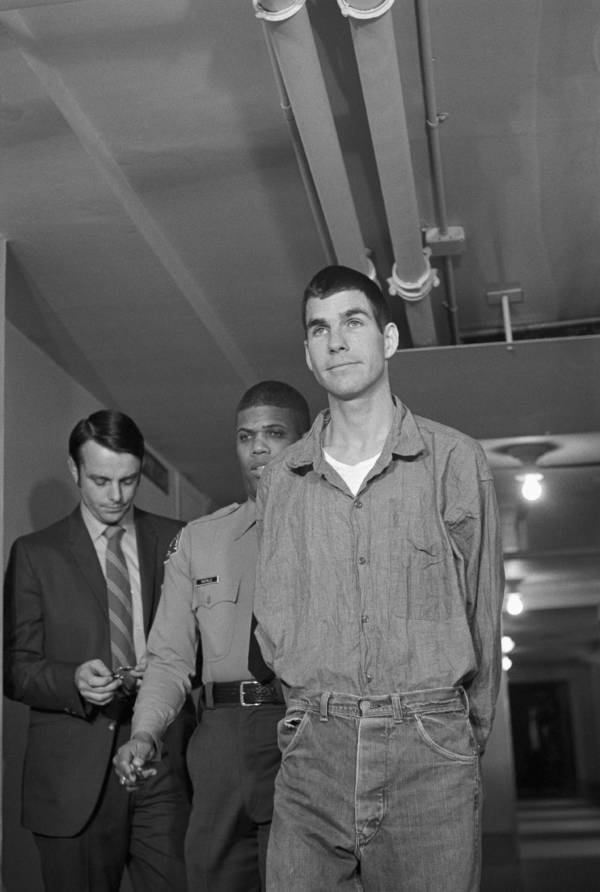
A handyman who knew too much.
Or maybe a handyman who knew nothing at all.
That would require evidence.
There is only the fact of his death, and the fact that the prosecution once called him a key witness.
THE RANCH
He was the man who fixed the fences.
Donald “Shorty” Shea worked as a handyman at Spahn Ranch, a dusty movie set in the hills northwest of Los Angeles.
Charles Manson led a communal group called the Manson Family, living at Spahn Ranch and other locations.
By the late 1960s, the ranch was their home.
It was a place of broken-down western facades, dirt roads, and old trailers.
The Family’s presence there was part of the background to the murders.
Shea was there, too, part of the everyday landscape of the place.
What he saw, what he heard, what he thought — none of that is in the record.
Specific interactions between Shea and Family members are not established.
The record does not say whether he traded words with Manson at the corral.
It does not say whether he watched the young women come and go from the main house.
It does not say if he knew what was being planned.
That would require evidence.
What is documented is simpler: he worked at the ranch, and the Family lived there.
The ranch was a working place, and he worked it.
:max_bytes(150000):strip_icc()/Susan-Atkins-030525-eaa8484463b84c80803b4a1e3bcc9cfe.jpg)
The Family was a presence, and he was a presence.
Two lives in the same dusty stretch of land, before the night at Cielo Drive changed everything.
He was a witness before there was a crime to witness.
THE NIGHT
On August 9, 1969, five people were murdered at 10050 Cielo Drive in Benedict Canyon, Los Angeles.
The victims included actress Sharon Tate, who was eight and a half months pregnant.
The word “PIG” was written in blood on the front door.
The following night, August 10, 1969, Leno and Rosemary LaBianca were murdered in their Los Feliz home.
“Death to Pigs” and “Helter Skelter” were written in blood on the walls and refrigerator.
The housekeeper found the Tate scene the next morning.
Leno LaBianca’s son found his stepmother’s body.
The killers were members of a group led by Charles Manson.
Manson directed the attacks, according to the record.
He was not present at either scene.
The ranch was quiet that week.
The handyman’s whereabouts on the night of the murders are not in the record.
That is not established.
What is established: five people dead in a house up the canyon.
What is established: two more dead the next night in Los Feliz.
What is established: the word in blood, the names in blood, the bodies found by a housekeeper and a son.
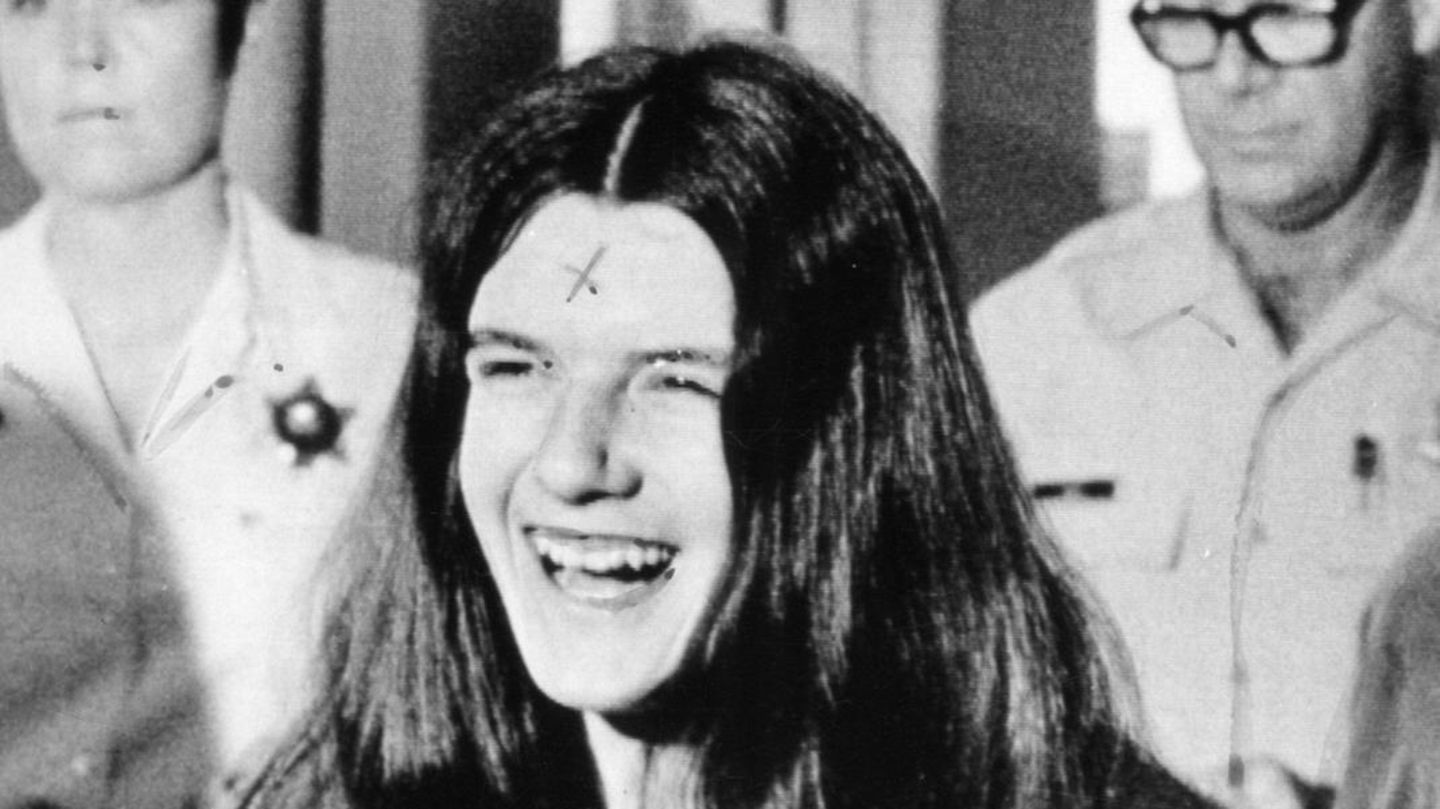
The mundane setting of Spahn Ranch does not change any of it.
It is the place where the Family slept and ate and waited.
It is also the place from which the killers drove out.
The night at Cielo Drive was not a theory.
It was a crime scene.
The word “PIG” was a fact, written in blood.
The pregnancy was a fact, eight and a half months.
The two nights were facts, back to back.
The handyman’s story would come later.
For now, the record holds only the dead and the door.
THE TESTIMONY
Shea was a key witness in the case.
What he said on the stand is not detailed in the record.
The content of his testimony is not established.
The prosecution leaned on other voices.
It leaned on Linda Kasabian, the getaway driver who was granted immunity for her testimony.
She detailed the planning and the execution of both nights of murder.
Her account carried the weight of the state’s case.
The trial began in June 1970.
It lasted over nine months.
:max_bytes(150000):strip_icc()/Leslie-Van-Houten-030525-fd2591b965064cc0b888c70d473a57c6.jpg)
Manson, Atkins, Krenwinkel, and Van Houten were tried together.
Watson was tried separately after being extradited from Texas.
Kasabian was the star witness.
She was the one who had been in the car.
She was the one who had seen the door.
The defense argued Manson was a manipulative figure, not the direct killer.
The prosecution argued he orchestrated the killings to trigger a race war.
That was the theory called “Helter Skelter.”
The evidence was circumstantial: testimony, physical evidence, confessions.
A pair of eyeglasses found at the Tate scene traced to a man connected to the Family.
The handyman’s own words remain unrecorded.
What Shea saw at the ranch, what he told investigators, what he said in court — none of it is in the source.
The record holds his name and his role.
It holds his death.
On January 25, 1971, the verdict came down.
Manson and his co-defendants were convicted of first-degree murder and conspiracy.
All four were sentenced to death.
Shea was not there to hear it.
He had been murdered by Family members before the trial ended.
His testimony was a fact of the case.
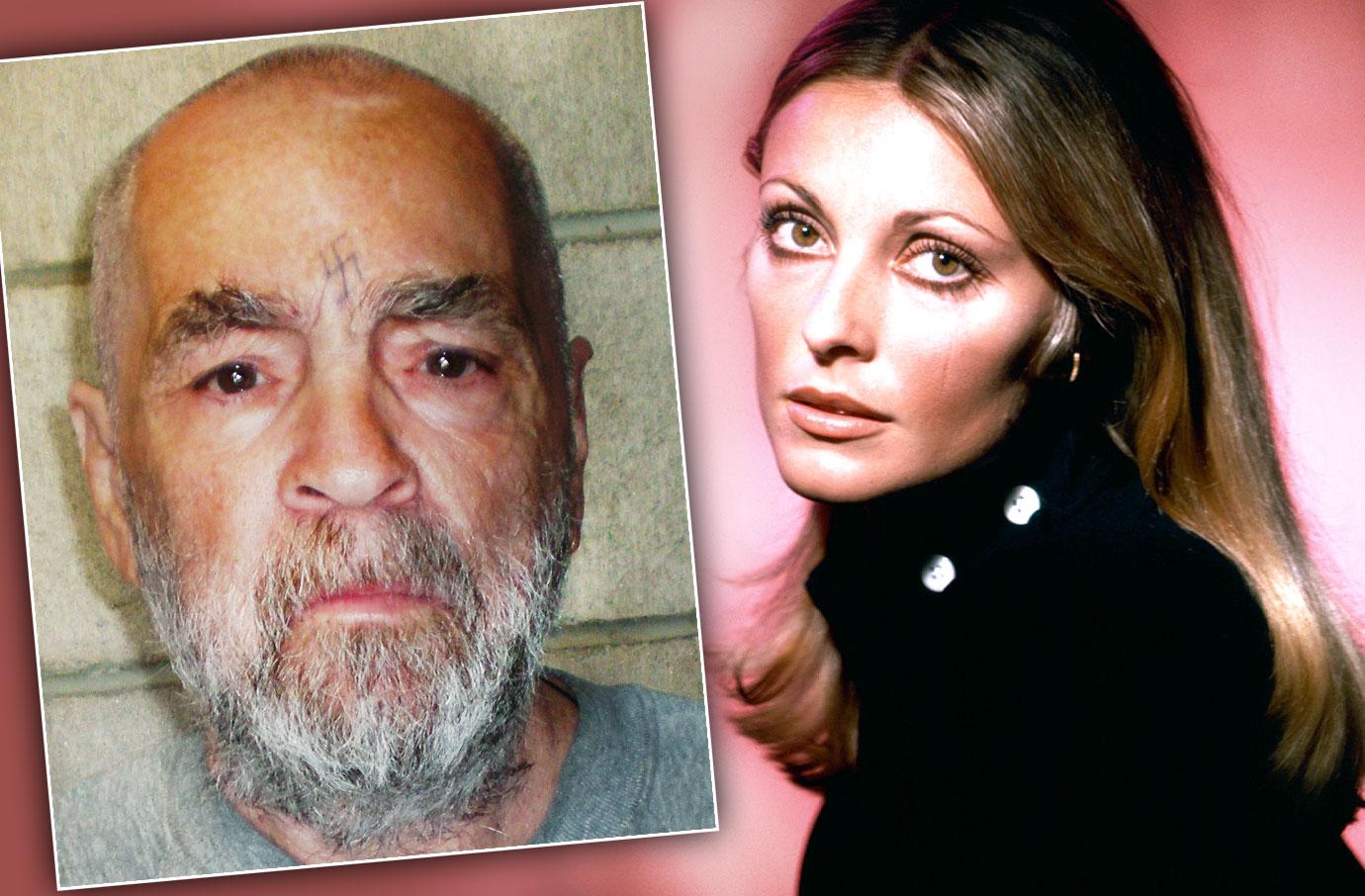
Its content is not.
AND THE STORY STILL ISN'T OVER
Charles Manson died of natural causes in prison on November 19, 2017, at age 83.
The leader who directed the attacks was gone.
The legal outcome has remained unchanged for the convicted perpetrators.
Tex Watson, Patricia Krenwinkel, and Leslie Van Houten remain convicted of murder.
Susan Atkins died in prison on September 24, 2009, of brain cancer.
Watson has been denied parole numerous times and remains incarcerated.
Krenwinkel has also been denied parole repeatedly and remains incarcerated.
Van Houten was granted parole in 2023 after multiple denials.
Her release was blocked by California Governor Gavin Newsom, who reversed the decision.
The state’s record shows the reversal.
What it does not show is what comes next.
Any future legal developments are not in the record.
The convictions stand where the trial left them.
The testimony of the handyman who knew the Family before the killings remains a documented fact of the case.
Its content is not.
The books, films, and documentaries keep the story in circulation.
The viral versions keep it alive in a different way.
They offer theories about what Shea knew, what he saw, what he might have said.
The record does not establish those things.
It establishes a different line: that he worked at Spahn Ranch, that he was a key witness, that he was murdered by Family members before the trial ended.
That is what is documented.
The rest is story.
Advertisement
You may also like
The 31 days Casey Anthony never reported her toddler missing
The 911 call came from a house in Orlando, Florida, on July 15, 2008. Cindy Anthony was on the line, and she told the…
The handwritten note Tsarnaev left inside the boat before capture
The boat sat in a Watertown backyard, dry-docked and winter-covered, on the morning of April 19, 2013. Inside it, police found Dzhokhar Tsarnaev, hiding…
A non-prosecution deal in 2007 that still haunts the Epstein case — how one promise shielded him for years
It begins with a signature. In 2007, federal prosecutors in Miami negotiated a non-prosecution agreement with Jeffrey Epstein, the wealthy financier accused of sexually…
The confession Ottis Toole made four times that police still wouldn't believe
He said he did it. Then he said he didn't. Ottis Toole was a serial killer. He confessed to the murder of six-year-old Adam…
The calling card left on a choir singer's body that police couldn't explain
The morning of September 15, 1922, a local man found two bodies beneath a crabapple tree in a secluded lane known as "Lovers' Lane"…
The two-word confession that cracked the Hillside Strangler case
He was arrested in Bellingham, Washington, in January 1979, for the murders of two women there. Under interrogation, Kenneth Bianchi confessed to those killings.…