The tarot card left at a D.C. sniper crime scene — and the message police could not decode for weeks
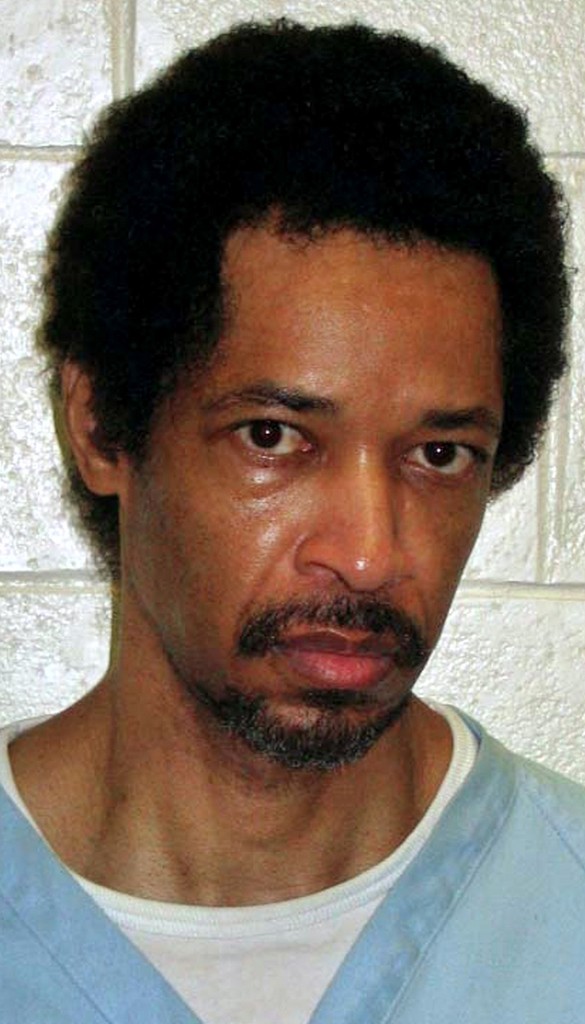
The card was found at one of the crime scenes, a piece of evidence among shell casings and police tape.
It carried a message written for the officers working the case: "Dear Policeman, I am God."
The words were there for anyone to read, yet the record does not establish what specific tarot card it was, where exactly it was left, or when police first found it.
For weeks, the investigation moved without that message pointing anywhere.
The shootings had begun on October 2, 2002, a fatal attack in a parking lot in Wheaton, Maryland.
Over the following days, the attacks spread across Maryland, Virginia, and the District of Columbia.
Ten more people were killed, three others wounded, at gas stations, bus stops, and other public locations.
Schools closed. Residents stayed inside. Police Chief Charles Moose became the public face of a region on edge.
And somewhere in that chaos sat a tarot card with a killer's taunt.
It was only later, according to investigation evidence, that the message was linked to the suspects: John Allen Muhammad and Lee Boyd Malvo.
Not because police decoded it in real time.
Not because the handwriting matched a file.
But because the card was found, and the men were arrested, and only then did the pieces connect.
What did the message mean?
Why did it take weeks to understand?
That would require evidence the record does not provide.
What is known is that the card existed.
It said what it said.
And the men charged in the attacks were linked to it after their arrest, not before.
OCTOBER 2–22 — THE SHOOTINGS
October 2.
A man was shot and killed in a parking lot in Wheaton, Maryland.
It was the first fatal attack.
Over the following weeks, ten more people were killed.
Three others were wounded.
The shootings seemed random.
A gas station. A bus stop. A parking lot. A school.
The case summary records the locations as public, and the victims as strangers to one another.
There was no pattern.
There was no suspect.
Schools closed.
Residents avoided outdoor activities.
The region held its breath.
Chief Charles Moose became the public face of the investigation.
He coordinated a multi-jurisdictional task force.
The FBI was involved. The ATF was involved.
Still, the shots came.
October 3.
October 9.
October 11.
October 14.
Each report landed the same way: another person down, another scene cordoned, another question with no answer.
The final shooting occurred on October 22.
A bus driver was killed in Aspen Hill, Maryland.
That made eleven dead.
That made three wounded.
It is not established which specific shooting the tarot card was left at.
It is not established when the card was discovered.
What is known is that the card existed.
It said what it said.
And the men charged in the attacks were linked to it after their arrest, not before.
THE BREAKTHROUGH — OCTOBER 24
The truck driver pulled off the interstate and made the call.
What he reported, and how he recognized the car, is not established in the record.
Police moved on the tip on October 24, 2002.
They found a Chevrolet Caprice at a rest stop in Myersville, Maryland.
Inside the car, two men were sleeping.
They were John Allen Muhammad and Lee Boyd Malvo, the men who would be charged with the attacks.
Inside the car, police also found a Bushmaster .223-caliber rifle.
They found a scope.
They found a tripod.
Ballistics evidence linked the rifle to the shootings.
The rifle was traced to Muhammad through a purchase made in Tacoma, Washington.
The random terror had a weapon.
It had faces.
It had a car.
Twenty-two days of shootings, ten people dead, three wounded.
And then a truck driver's call ended the hunt.
The relief was sudden.
It was also incomplete.
The card had been left at a scene.
The message said what it said.
But the link between the card and the men in the Caprice came after the arrest, not before.
The investigation had the rifle.
It had the ballistics.
It had the men.
What it did not have, yet, was a decoded message.
THE TRIALS — 2003
The trial began in the autumn of 2003, in Fairfax County, Virginia.
Muhammad was tried first, on charges of capital murder for the killing of a victim at a gas station on October 9.
The prosecution, led by Robert F. Horan Jr., argued that Muhammad was the mastermind of the attacks.
Horan laid out the case: the rifle, the car, the trail of shootings across the region.
The verdict came on November 17, 2003.
Muhammad was convicted.
He was sentenced to death.
The tarot card was not decoded during the investigation.
It is not established how the tarot card was used as evidence in either trial, or whether it was mentioned in court at all.
The message sat unexplained until after the arrests, when the link to the suspects was made.
Malvo was tried separately, in Chesapeake, Virginia, on charges of capital murder for the killing of a victim on October 14.
He was convicted.
The jury declined to impose the death penalty.
Malvo was sentenced to life in prison without the possibility of parole.
Two men, two trials, two fates.
One was sentenced to die.
The other was sentenced to live behind bars.
The prosecution argued the older man directed the younger.
The record shows the verdicts, not the hierarchy.
What the court established was that both were guilty of murder.
What it did not establish was the meaning of the card.
That meaning came later, from the men themselves, not from the evidence.
Muhammad's sentence was carried out in 2009.
Malvo remains in prison, serving life without parole.
The justice was delivered.
The message, in the end, was never needed to convict.
AND THE STORY STILL ISN'T OVER
Muhammad was executed by lethal injection on November 10, 2009, at Greensville Correctional Center in Virginia.
Malvo remains incarcerated in a Virginia prison, serving multiple life sentences without parole.
In 2017, Malvo's legal team sought to have his sentence reconsidered in light of a U.S. Supreme Court ruling on juvenile sentencing.
His life sentences were upheld.
The Chevrolet Caprice used in the attacks was destroyed by authorities after the trials.
The car is gone.
The rifle is gone.
The tarot card remains in the record.
It is not established whether either suspect ever fully explained the message, or what they intended it to mean.
That would require evidence.
The victims' families have continued to speak publicly about the case.
They have spoken at parole hearings.
They have spoken to reporters.
They have spoken about the card, the message, and the weeks when the region held its breath.
The case is studied now.
It is taught in criminology courses.
It is cited in debates about juvenile sentencing and the death penalty.
The shooting stopped on October 24, 2002.
The conviction came in 2003.
The execution came in 2009.
The appeals came later.
The card was left at the scene.
It said, "Dear Policeman, I am God."
Police could not decode it for weeks.
They linked it to the suspects only after their arrest.
The meaning was never decoded during the investigation.
It was never fully decoded after.
The record does not establish what the message meant.
The record does not establish who wrote it.
The record establishes only that it was there.
The justice was delivered.
The message, in the end, was never needed to convict.
It remains what it was at the scene: a card, a claim, a question left unanswered.
Advertisement
You may also like
The blood-stained knife found in Arthur Leigh Allen's home that never sealed the Zodiac case
The knife came out of Arthur Leigh Allen’s home in 1991, and it was bloody. A Vallejo task force found it during a search…
The DNA match that ended a 20-year manhunt for a killer the police had already cleared
He passed the polygraph. The truck painter from Auburn, Washington sat for the test early in the Green River Killer investigation, and the machine…
The FBI tape that captured what happened inside the Waco compound before the fire
The infrared footage was shot from above, by surveillance aircraft circling the compound. The audio recordings were captured the same way, microphones picking up…
The boat bought days before Laci vanished — and the alibi that unraveled in court
The mop sat in the garage of the Modesto home, and next to it, a boat trailer with fresh paint. Police found both during…
The beauty queen's parents who spent 25 years demanding a murder trial
On February 17, 1970, at Fort Bragg, North Carolina, Army Captain Jeffrey MacDonald, a Green Beret physician, reported that four intruders — three men…
The grand jury that reviewed Adam Walsh's evidence but issued no indictment
On July 27, 1981, six-year-old Adam Walsh was watching television with other children in the Sears department store at the Hollywood Mall in Hollywood,…