Two brothers, one boat, and the message that sealed a manhunt's end
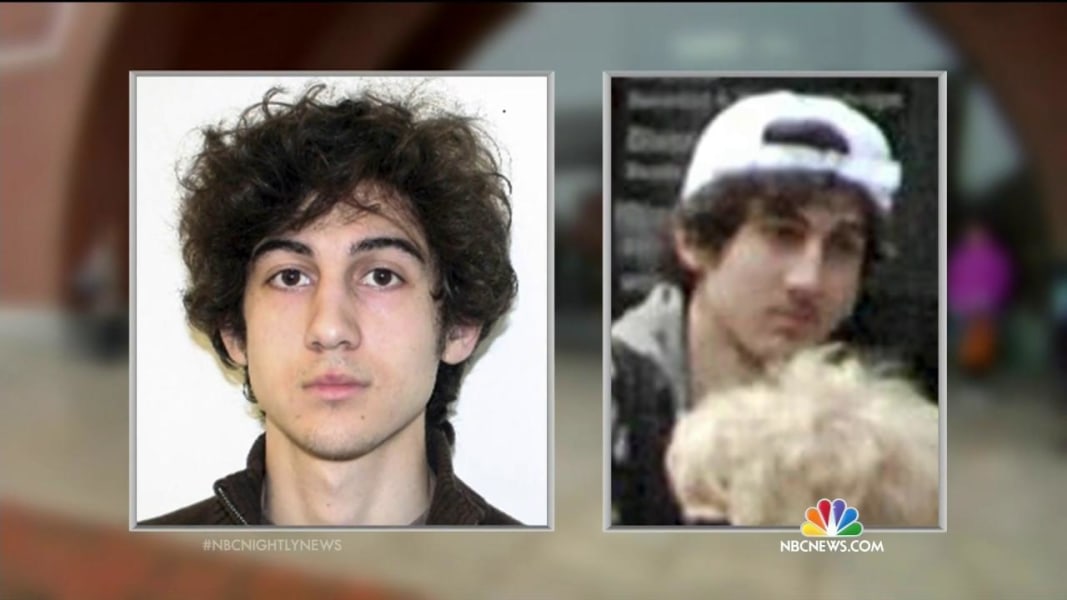
On April 19, 2013, Dzhokhar Tsarnaev was found hiding in a boat in a Watertown backyard.
He had been there for hours.
Inside the boat, investigators found a message.
It was scrawled in pencil on the boat's interior.
The message was later described in court as a confession.
That description came from testimony, not from the original document itself.
The full, verbatim text of the message is not in the public record.
Its exact meaning is not established.
What the record does show is that the boat became a central piece of evidence.
Prosecutors presented it as a statement of intent.
The defense argued it was the product of a wounded, frightened young man.
The public's understanding of the message is filtered through media reports and trial testimony.
It is not filtered through the original document.
The boat sat in that backyard as the manhunt reached its end.
The message inside it was found, photographed, and removed.
It was a piece of evidence that seemed to speak.
But what it truly says, and why it matters, remains a matter of interpretation.
That would require evidence.
The record does not provide it.
The boat's interior held a message that sealed the end of a manhunt.
But the message itself is not fully known.
It is a documented piece of evidence.
It is also a contested one.
THE BOMBS AND THE HUNT
The first explosion came at 2:49 p.m. on April 15, 2013, near the finish line of the Boston Marathon on Boylston Street.
A second blast followed seconds later.
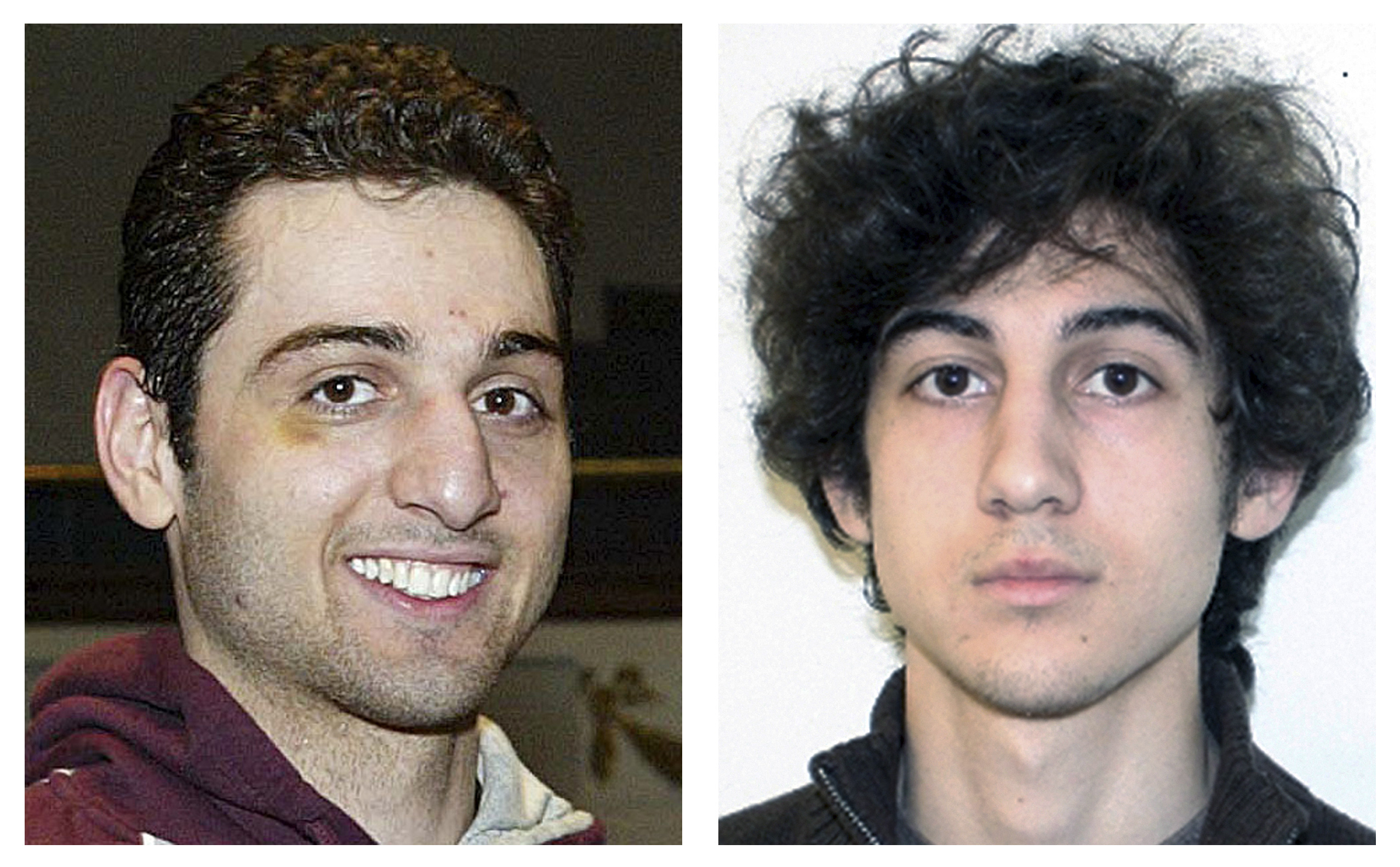
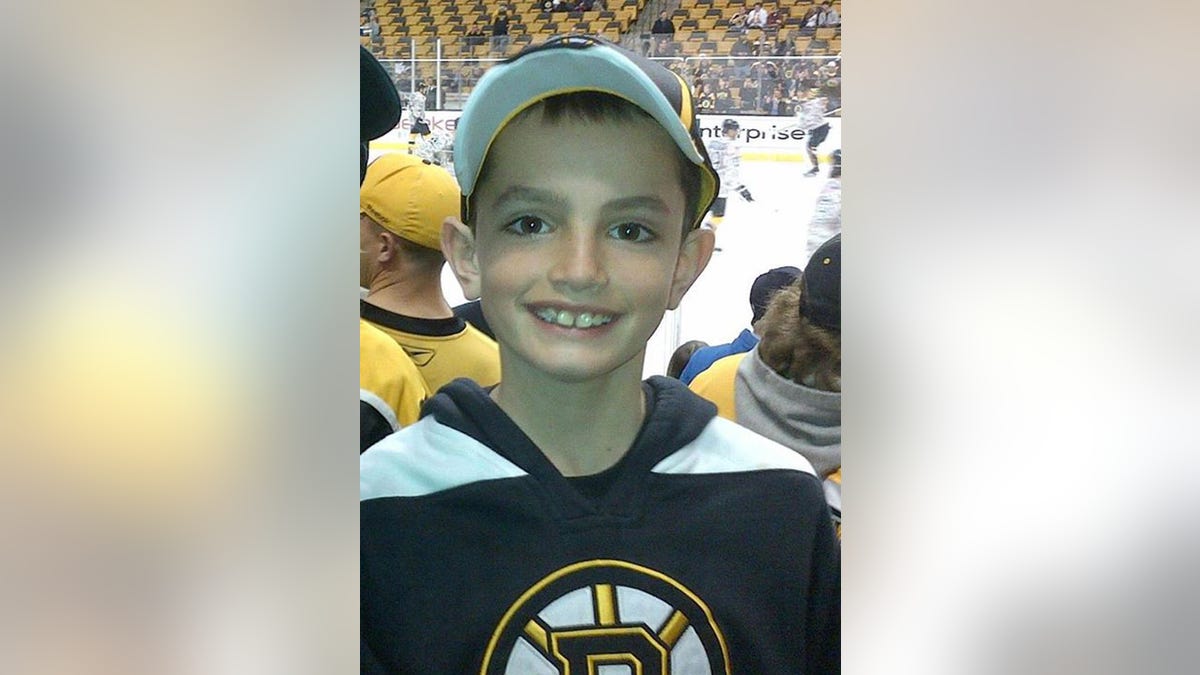
Three people were killed: Krystle Campbell, Lu Lingzi, and Martin Richard, an 8-year-old boy.
More than 260 others were injured, many with severe limb injuries.
The bombs were pressure cookers packed with shrapnel, left in backpacks on the sidewalk among spectators.
The FBI took the lead, with Special Agent in Charge Richard DesLauriers heading the Boston field office.
Surveillance footage from department stores captured two men carrying heavy backpacks.
On April 18, the FBI released images of Suspect 1 and Suspect 2.
Within hours, they were identified as Tamerlan and Dzhokhar Tsarnaev.
That night, the brothers allegedly killed MIT police officer Sean Collier, found shot in his patrol car.
They then carjacked a man, who escaped and alerted police.
The exact sequence of events during the carjacking is not fully established.
The carjacking victim's name is not in the record.
A chase led into Watertown.
A shootout followed.
Tamerlan was killed, reportedly run over by his brother as Dzhokhar fled in a vehicle.
That account comes from police reports.
The city was locked down as authorities searched for the remaining suspect.
It was a lockdown that turned a metropolitan area into a grid of empty streets and closed doors.
Hours later, Dzhokhar was found hiding in a boat in a Watertown backyard.
The manhunt had moved that fast.
The world had changed that fast.
THE BOAT AND THE CAPTURE
Hours after the shootout, Dzhokhar was found hiding in a boat in a Watertown backyard.
The police report places him there, curled in the dark, hours after his brother was killed.
He had written a message on the boat's interior, scrawled in pencil on the wood.

The investigation record lists that message as evidence.
It was described in court as a confession, but its exact words and full meaning remain a matter of interpretation.
The boat's owner is not named in the record.
The forensic analysis collected bomb fragments from the scene.
It found residue on the brothers' clothing.
It found residue in their apartment.
It found digital files showing extremist material.
The exact contents of those files are not detailed in the source.
The medical examiner's office confirmed the cause of death for the victims as blast injuries.
That confirmation came for all three.
The capture ended the manhunt.
It ended the lockdown.
It ended the fear that had emptied the streets of Boston.
But the investigation continued.
The FBI kept building the case against Dzhokhar.
The boat held the man.
The boat held the message.
The boat held the evidence that would follow him into the courtroom.
The man was alive.
The message was preserved.
The proof was gathered.
The relief was real.
The weight was heavy.
THE TRIAL AND THE VERDICT
The trial began in January 2015.

Prosecutors, led by Carmen Ortiz, argued that Dzhokhar was an equal participant in the plot.
The defense, led by Judy Clarke, conceded his involvement.
But Clarke argued that Tamerlan was the mastermind, and that Dzhokhar acted under his influence.
That distinction mattered.
The federal indictment charged Dzhokhar with 30 counts, including conspiracy to use a weapon of mass destruction, bombing a public place, and malicious destruction of property resulting in death.
He was also charged with the murder of Sean Collier.
In April 2015, the jury found him guilty on all 30 counts.
The verdict was a culmination of the evidence.
The bomb fragments, the residue, the boat's interior message — all of it had been put before the jury.
What the evidence showed was one thing.
What it meant was another.
The defense's interpretation of the brothers' relationship remained a point of contention throughout the trial testimony.
Was Dzhokhar a follower or a participant?
Was Tamerlan the force behind it all?
Those questions were argued, but the record does not establish a definitive answer.
In the penalty phase, the jury voted for the death penalty on 17 of the counts.
The judge formally sentenced him to death in June 2015.
The judge's name is not to be used here, and the specific jury instructions are not in the source.
The sentence was handed down.
The case moved to appeal.
AND THE STORY STILL ISN'T OVER
The sentence was handed down.
The case moved to appeal.
Dzhokhar Tsarnaev remains on federal death row at a federal supermax prison in Florence, Colorado.
His death sentence was overturned by a federal appeals court in 2020.
The court found that the trial judge had not adequately screened jurors for bias.
Then the U.S. Supreme Court reinstated the death sentence in 2022.
The case remains under further appeal.
The specific grounds for the current appeal are not detailed in the source.
Not because the record is empty. But because the record, as reported, stops there.
What comes next?
Another ruling. Another brief. Another waiting period.
That would require evidence.
Tamerlan’s widow, Katherine Russell, was never charged.
She has largely remained out of the public eye.
The Richard family continues advocacy through the Martin Richard Foundation.
A memorial stands at the finish line on Boylston Street.
The finish line where the bombs went off.
The finish line where three people died.
The finish line where more than 260 others were injured.
The memorial is permanent.
The appeal is not.
The case is still in motion.
Nothing is fully settled.
The conviction stands. The sentence stands. The review continues.
Dzhokhar Tsarnaev was convicted of 30 federal counts.
He was sentenced to death in June 2015.
The jury voted for the death penalty on 17 of those counts.
The appeals court overturned that sentence in 2020.
The Supreme Court reinstated it in 2022.

Now the case returns to the courts.
The brothers are no longer a pair.
Tamerlan was killed in the Watertown shootout.
Dzhokhar was found in the boat.
The boat with the message.
The message that was read in court.
The message that was called a confession.
The message whose full meaning remains a matter of interpretation.
That is what the record establishes.
That is also where the record ends.
The story continues.
It is a legal story now.
It is a story of filings and rulings.
It is a story of a family that keeps advocating.
Bill and Denise Richard testified at the trial.
Their son was eight years old.
Their foundation carries his name.
The memorial carries his name too.
The case carries his name as well.
Martin Richard is named in the charges.
The charges that led to the death sentence.
The death sentence that was overturned.
The death sentence that was reinstated.
The death sentence that is now under further appeal.
The appeal is the next chapter.
The chapter is not yet written.
The record does not say how it ends.
The record only says it is not over.
Advertisement
You may also like
The 1975 missing-person report that led police to Gacy — and why they never searched his home
The report was filed in 1975, for a 16-year-old named John Butkovich. It led police to John Wayne Gacy's door. Gacy told them Butkovich…
The cellphone video that caught Alex Murdaugh's voice at the kennels — after he said he wasn't there
The 911 call came at 10:06 p.m. on June 7, 2021. Alex Murdaugh told the dispatcher he had just found his wife and son…
The $5,800 ransom found by a boy on a riverbank — and the FBI clue it left behind
The bills were rotting, half-buried in the sand of the Columbia River, near Vancouver, Washington. A young boy named Brian Ingram found them in…
The jailhouse confession that finally broke the Manson case wide open
In October 1969, a woman in jail on an unrelated charge began talking to her cellmate. Her name was Susan Atkins, and the cellmate…
The confession that shifted: DeFeo Jr. led police to a river — but who else walked through 112 Ocean Avenue first?
The first call came on November 13, 1974, from a house at 112 Ocean Avenue in Amityville, a village on Long Island. A 23-year-old…
The Volkswagen Beetle that led police to Ted Bundy's trail
It was a Volkswagen Beetle. Widely reported as central to Bundy’s method of approach, the car appears again and again in retellings of the…