The Zodiac walked past cops at the Stine murder — why no one stopped him
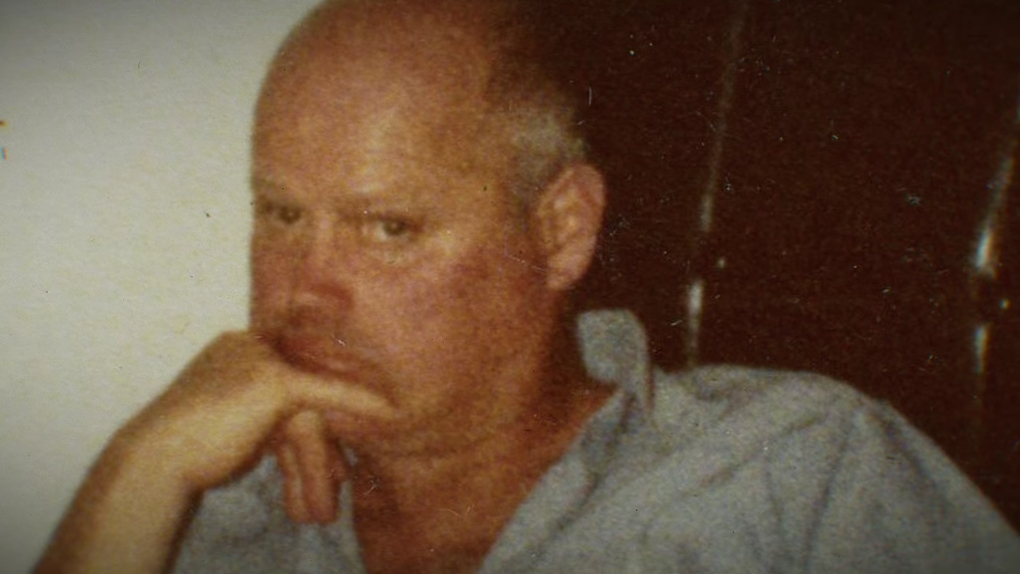
He stepped out of the house on Jackson Street and walked straight into the middle of the police response.
The taxi was still there, the driver dead inside it.
Officers were already on the scene, interviewing witnesses, taking statements.
The man walked past them.
He walked past them and kept walking, and no one stopped him.
The date was October 11, 1969.
The place was Presidio Heights, San Francisco.
The man in the street was the killer, according to the investigation summary.
The police had arrived within minutes of the shooting.
The killer was still there, moving through the same block where the officers stood.
He was close enough to be seen.
He was close enough to be stopped.
He was not stopped.
A composite sketch was later drawn from a witness description, according to the investigation summary.
The sketch went out to the press.
The sketch went out to the patrol units.
The sketch went out to a city that was already afraid.
No one matched it to the man who had walked past the officers.
Did any officer see his face?
Did anyone recognize him in the moment?
Did anyone think to ask why a man was walking away from a murder scene at that hour?
That would require evidence.
It is not established that any officer saw the killer's face that night.
It is not established that he was recognized at the time.
What is established is the proximity.
What is established is the gap between the killer and the handcuffs.
What is established is that he walked past them, and they kept talking to the witnesses.
The case summary states the killer was never identified.
He was in the middle of the investigation, and he was gone.
THE FIRST MISTAKES
The first shooting came on December 20, 1968, on a lovers' lane near Vallejo.
Two teenagers were shot that night. Both died.
Vallejo police had no reason yet to see a pattern. The case summary records that they initially treated the shooting as a possible gang or random attack.
That was the first mistake, or the first missed step.
On July 4, 1969, two people were shot at Blue Rock Springs Park in Vallejo. One died; one survived.
A .22-caliber pistol was used in both attacks, according to the case file. But the connection was not made at the time.
The investigation summary states the link between the two shootings was only made after the Zodiac's letters arrived.
Not because the evidence was hidden. Because no one was looking for a serial killer yet.
Two shootings, months apart, in the same small region. A detective might have asked if they were related.
They did not ask.
It is not established that the two shootings would have been linked without the letters. The record does not say that. It says only that the connection came after the letters.
So the killer named himself before the police named him.
He wrote to the newspapers, and the letters contained details of the crimes that only the killer could know. That confirmation came from his own words, not from the investigation.
The early missteps delayed the connection. That is what the record shows.
One shooting was treated as isolated. A second shooting was treated as isolated. The pattern existed, but it waited for the mailman.
THE LETTERS AND THE CODE
The letters arrived at three newspapers: the San Francisco Chronicle, the San Francisco Examiner, and the Vallejo Times-Herald.
Each envelope carried the same new name, a signature the killer had chosen for himself: Zodiac.
The case summary records that he coined the name in those letters.
The investigation summary records that the letters included details of the crimes that only the killer could know.
Not details a reporter had published. Not details a witness had guessed.
Details that confirmed his authorship, according to the investigation summary.
The first cryptogram was solved by a high school teacher and his wife in Salinas.
It read: “I like killing people because it is so much fun.”
That was the chilling intimacy of the taunt, delivered in code, meant to be decoded.
The second cryptogram was never definitively solved.
That is what the investigation summary states.
It is not established that the unsolved cryptogram contains the killer’s identity.
Not because it is disproven. Because the record does not show it.
The code sits there, unsolved, promising something it may never deliver.
He claimed the cryptograms contained his identity.
The first one did not.
The second one might.
That would require evidence.
The letters kept coming, each one a confirmation that the writer was the killer.
The pattern existed, and now it had a name.
THE STINE MURDER AND THE LOST EVIDENCE
October 11, 1969, a taxi driver was shot in San Francisco's Presidio Heights, according to the case summary.
Police arrived within minutes, but the killer walked past officers while they were interviewing witnesses, the investigation summary states.
A composite sketch was later drawn from a witness description.
Then came the mistake.
The San Francisco Police Department failed to preserve the taxi cab's fingerprints properly.
A palm print lifted from the cab door was later lost.
It is not established that the lost palm print would have identified the killer.
But it was evidence, and it was gone.
The inspector who became the public face of the case was Dave Toschi.
In the late 1970s, he was investigated over suspicions that he had forged some Zodiac letters.
He denied it, and no charges were brought.
But the episode damaged the investigation's credibility.
The man who knew the case best was now under suspicion.
The letters kept coming.
Each one a taunt.
Each one read by the man who was supposed to catch the writer.
What did the officers see when the killer walked past?
Did they look at his face?
Did he look back?
The record does not answer.
The record shows a walk past, a lost palm print, and an investigation that began to doubt itself.
Three failures.
A composite sketch that matched no one.
A palm print that vanished.
A lead investigator questioned over the very letters that named the killer.
The case was open, and it was already bleeding.
AND THE STORY STILL ISN'T OVER
There was no trial.
No suspect was ever charged with the Zodiac murders.
Arthur Leigh Allen was investigated repeatedly. He was never arrested for the Zodiac crimes. He died of a heart attack in 1992.
In 2002, DNA from the envelopes was tested against his DNA. It did not match. Some investigators noted the samples were degraded.
The San Francisco Police Department re-opened the case in 2007. It re-opened again in 2018, seeking new DNA testing.
In 2021, the Case Breakers, a volunteer group, named Gary Francis Poste as the killer. Their case was circumstantial. The FBI and local police did not endorse the claim. Poste's family denied it.
It is not established that Gary Francis Poste is the Zodiac. No charges have been filed.
The case remains officially open in multiple jurisdictions. Vallejo. Napa County. San Francisco.
What evidence is left to test? What witness is left to find? What letter is left to decode?
That would require evidence.
The mistakes are documented. The fingerprints lost. The palm print vanished. The letters suspected of being forged by the very inspector who led the case.
The case is open. It is also bleeding.
The next step is still pending. The killer's identity remains unknown.
Advertisement
You may also like
The tarot card left at a D.C. sniper crime scene that said 'Call me God'
The card was on the ground at a crime scene in Montgomery County. A tarot card, face up, with a message written across it:…
The cell phone records that placed a suspect near Leakin Park — but one witness kept changing his story
January 13, 1999, was a school day. Hae Min Lee, an 18-year-old senior at Woodlawn High School in Baltimore County, Maryland, was last seen…
The parole agent who saw a sketch and stopped a car — then Polly Klaas's killer led police to her body
The parole agent saw the car first. A sketch, a tip, and a car on the road — that was the break. On November…
The cellmate tip that cracked the Clutter case after investigators ignored a footprint
The footprint was there on the night of November 15, 1959, inside the farmhouse near Holcomb, Kansas. Four members of the Clutter family were…
The cell tower records that placed Adnan Syed at Leakin Park — and the witness who changed his story
The phone call came on February 12, 1999. Baltimore County police picked up an anonymous tip that day, and the voice on the line…
The jailhouse informant's testimony that could not save Casey Anthony
She sat in the witness box and testified that Casey Anthony had made incriminating statements while in jail. Her name was Robyn Adams, a…